


Oval Pedestal Centre Table
An oval pedestal centre table anchors a room with curved timber and a single stable column.
Oval Pedestal Centre Table
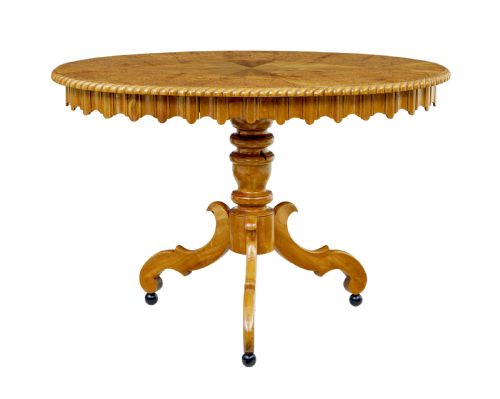
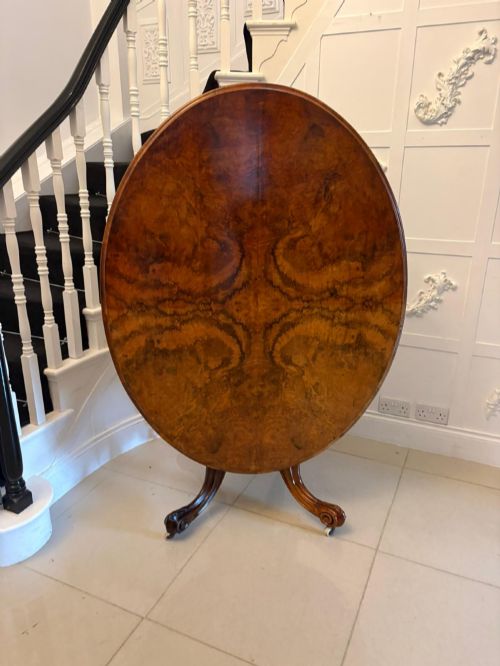
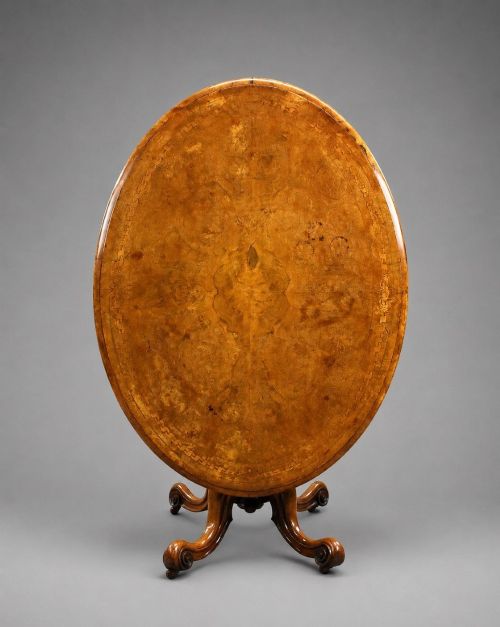
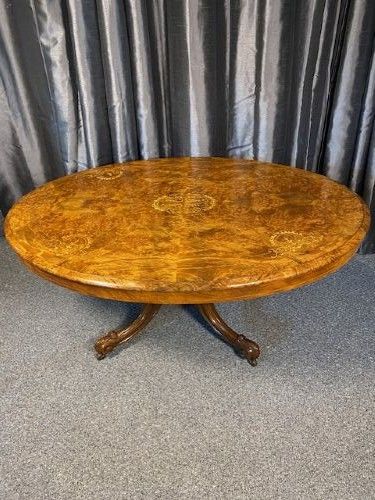
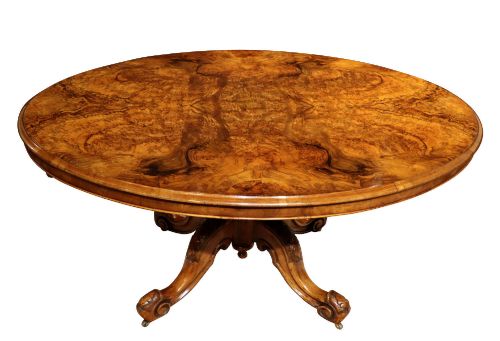
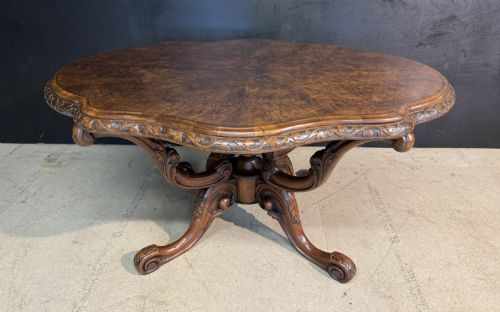
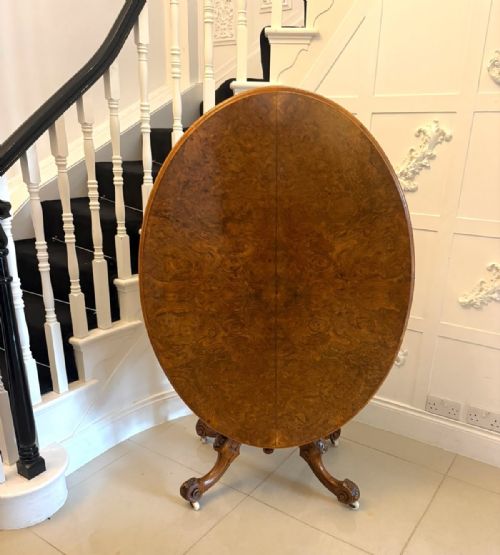
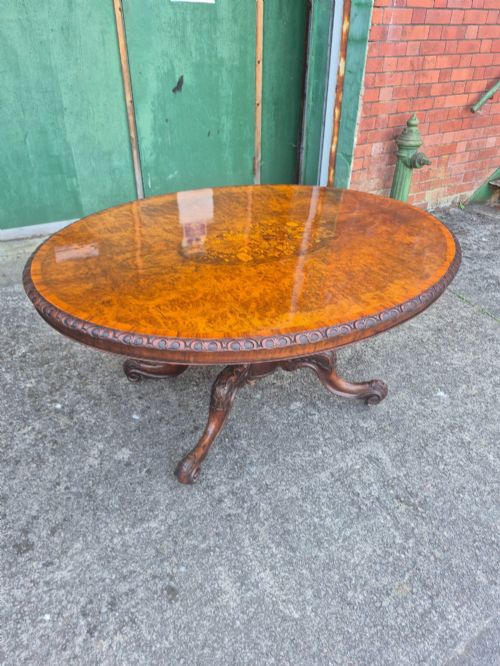
An oval pedestal centre table is a freestanding piece designed to sit in the middle of a room rather than against a wall. When you search for an oval pedestal centre table, you find pieces intended for display, dining, or gathering in nineteenth-century drawing rooms and libraries. The version you are most likely to meet on this page is the Victorian burr walnut example, often fitted with a tilt-top mechanism for easy storage.
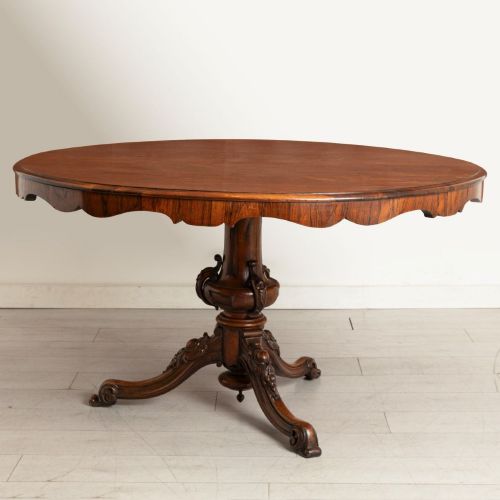
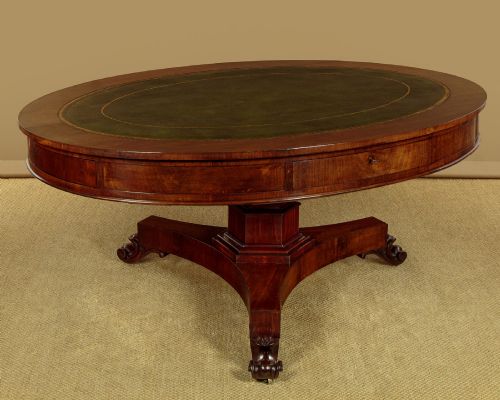
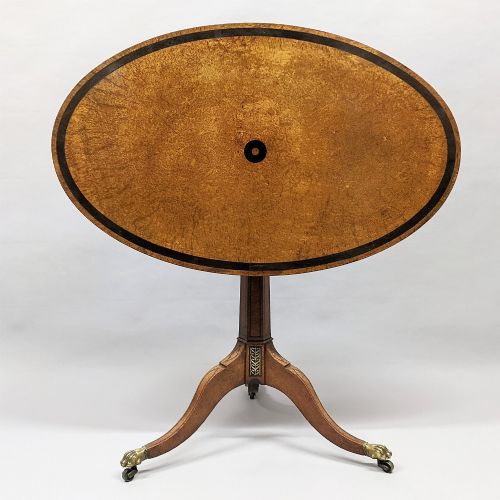
The evidence spans the George III period through to the Edwardian era, taking in William IV and Regency pieces alongside Scandinavian and Swedish birch variants. Forms range from large loo tables and breakfast tables down to compact occasional tables and low coffee tables. Walnut, mahogany, and rosewood dominate the selection, supported by specialised pedestal bases such as quadrapods and carved columns.
How they were made
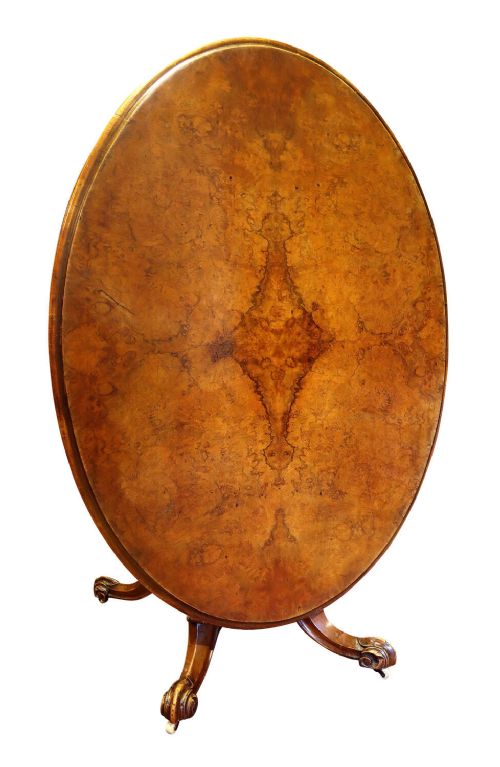
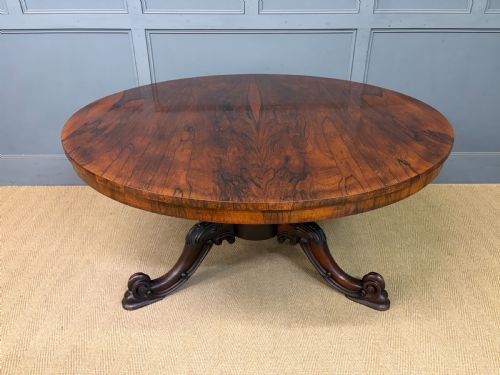
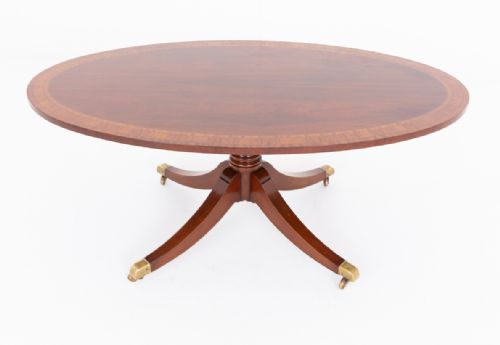
Cabinet makers utilised dense hardwoods like mahogany, walnut, and rosewood for the main structure, often applying thin veneers of burr walnut or amboyna to the top surface to display complex grain patterns. Boxwood and satinwood inlay formed delicate borders and marquetry motifs across the timber. Bases were constructed from solid turned or carved timbers to support the weight of the central column and heavy top.
Many larger examples incorporated a tilt-top mechanism using brass hinges and catches, allowing the table top to pivot vertically when not in use. Pedestal supports rested on tripod or quadrapod feet, frequently decorated with hand-carved scrolling foliage or simpler geometric mouldings.
Listings feature walnut, mahogany, and rosewood pieces spanning the George III, Regency, and Victorian periods.
What varies in quality
Quality rests in the selection of the timber veneer and the precision of the cabinet work. Pieces at the top of the range display symmetrical, highly figured burr walnut or amboyna with crisp marquetry inlay that remains flush with the surrounding wood. Lesser examples rely on plainer mahogany or simpler surface decoration with less attention paid to grain alignment.
The engineering of the pedestal and tilt mechanism also separates standard output from finer commissions. A well-made table stands firmly on its column without wobble at the pivot joint, and the carved details on the base show deep, sharp chisel work rather than shallow moulding.
Gillows
The Oval Pedestal Centre Table Glossary
- Tilt-top
- A table mechanism that allows the top to release and lock into a vertical position. This design saved floor space in smaller rooms.
- Loo table
- A large nineteenth-century centre table used for evening card games such as loo. These tables typically feature a circular or oval top on a heavy pedestal.
- Burr walnut
- A mottled timber grain taken from the wart-like growths on walnut trees. Cabinet makers prized it for decorative veneers.
- Quadrapod base
- A table support resting on four feet radiating from a central column. This configuration provided stability for wide oval tops.
Oval Pedestal Centre Table: Frequently Asked Questions
What is a tilt top table used for?
A tilt top table allowed owners to pivot the surface vertically when the room needed to clear space for other activities. During the day or evening, it functioned as a normal centre or dining table.
When tilted, the piece could rest flat against a wall or in a corner, showing off the decorative veneer of the timber top as a display panel.
Where should I place an oval centre table?
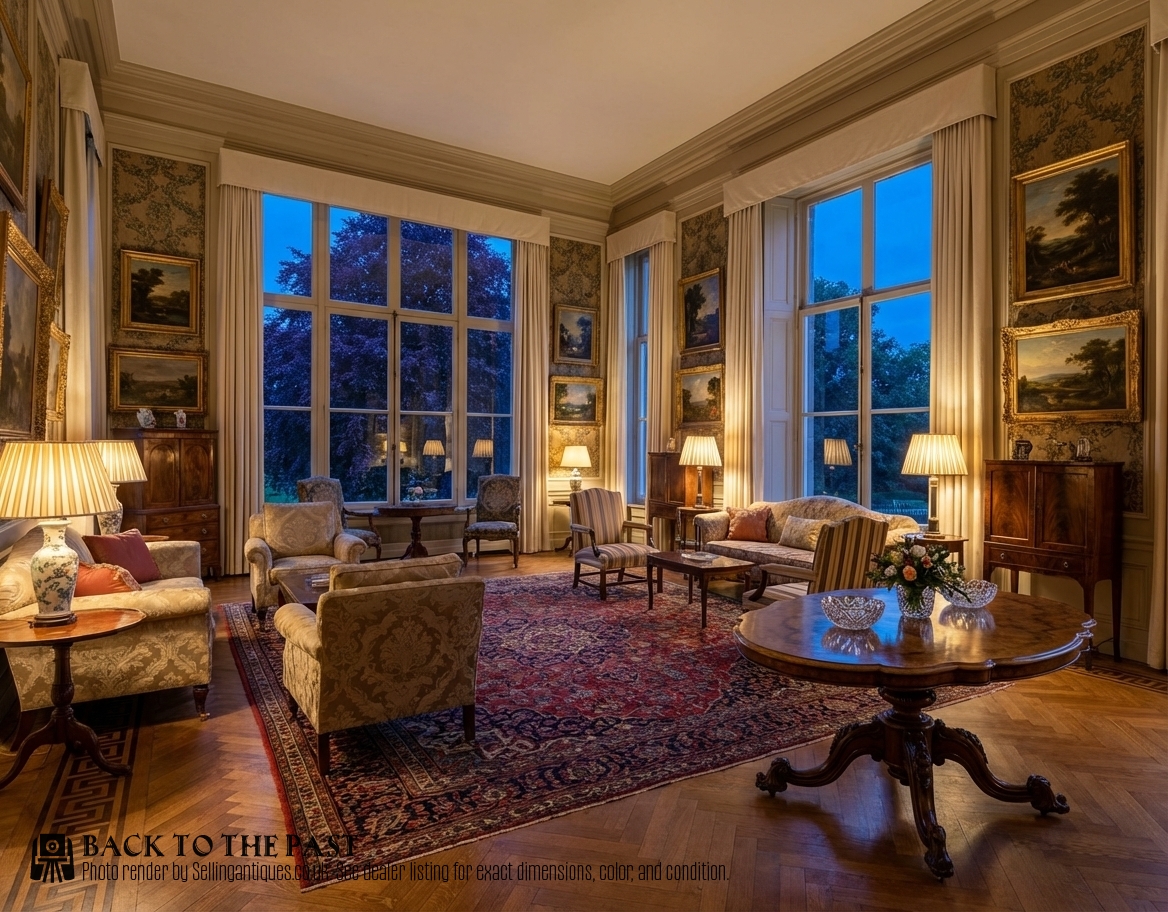
An oval centre table belongs in the middle of a room where people can walk entirely around it. It works well in large entrance halls, drawing rooms, or libraries.
Because the piece has no designated front or back, it provides balanced sightlines and anchors the surrounding furniture arrangement.
How do I date a Victorian walnut table?
Dating relies on the combination of timber choice, base carving, and construction details recorded in the style. Mid-nineteenth-century pieces frequently employ rich burr walnut veneers combined with heavy pedestal columns.
Later Victorian and revival pieces from the end of the century often incorporate lighter marquetry inlay and softer secondary timbers beneath the surface.
Can I use an antique table for daily dining?
Many of these tables were originally built as breakfast or dining pieces and easily accommodate daily use. Sturdy pedestal frames and solid mahogany or walnut structures provide durable support.
Care should be taken with polished wood surfaces by using mats and avoiding excessive moisture to protect the historic finish.