



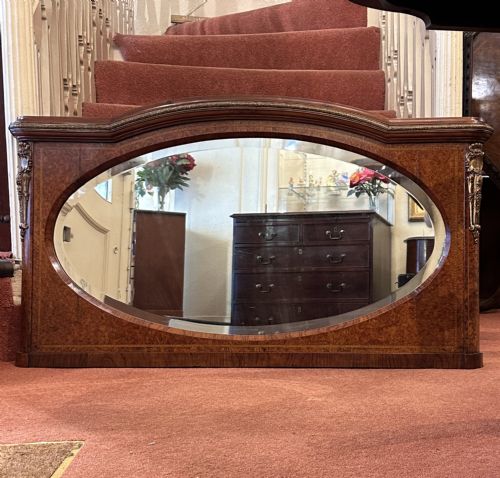


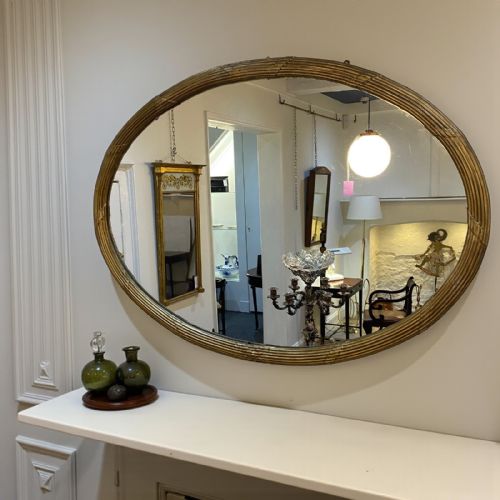
Oval Mantel Mirror
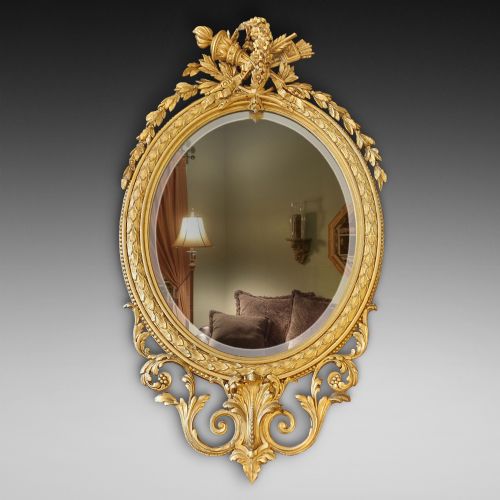
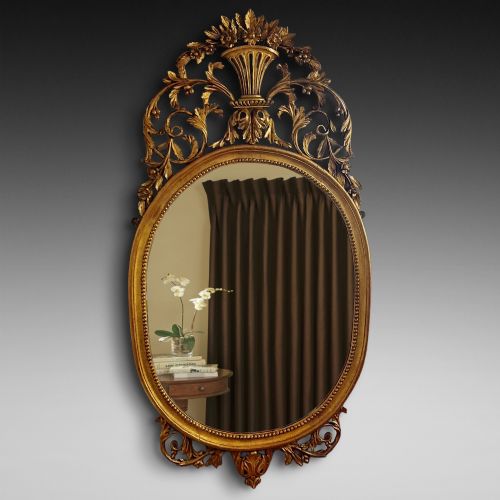
An oval mantel mirror brings balance and reflected light to a room, most commonly found here in nineteenth-century giltwood and gesso.
Oval Mantel Mirror
An oval mantel mirror sits above a fireplace or serves as a principal wall hanging, designed to draw the eye upwards and brighten smaller spaces. When you search for an oval mantel mirror, you encounter pieces that range from restrained eighteenth-century Georgian frames to ornate Victorian and Edwardian interpretations.
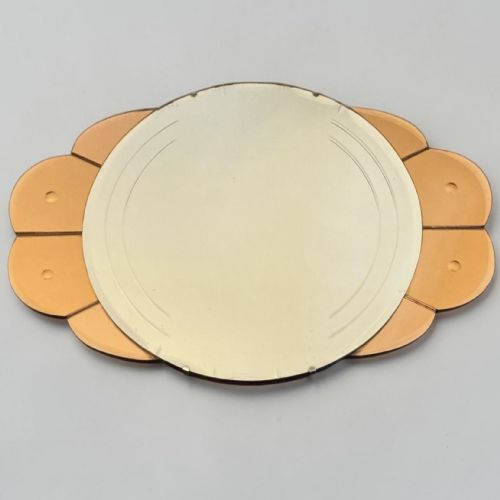
The selection on this page draws heavily from nineteenth-century examples alongside earlier Georgian and later Art Deco iterations. Surviving pieces frequently pair carved wooden structures with gilded finishes, while occasional Arts and Crafts examples utilise hammered copper and brass.
Overmantel formats dominate the available forms, shaped specifically to balance the horizontal proportions of a fireplace surround. These items function equally well mounted vertically as principal wall mirrors in entrance halls or reception rooms.
How they were made
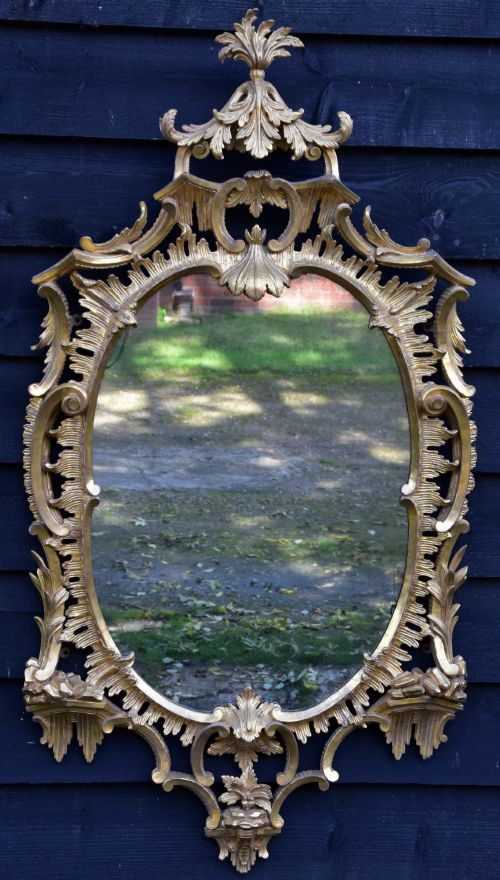
Traditional makers built these frames using seasoned timber carcasses, applying layers of gesso to build up intricate relief decoration before gilding with gold leaf. Carved giltwood and gesso require patient handwork, resulting in crisp foliate motifs, laurel wreaths, and decorative friezes.
Earlier examples rely on original mercury plates, which possess a characteristic mottled depth and soft reflection compared to later silvered mirror glass. Iron, copper, and ormolu also appear as structural or decorative elements in specific nineteenth-century and Arts and Crafts pieces.
Oval Mantel Mirror Retail Price Guide 2026
Typical asking prices for oval mantel mirror among the pieces listed under this phrase on Sellingantiques today, from the lower quarter to the upper quarter. They describe what is for sale here now, not the wider market.
Listings span the eighteenth to the twentieth centuries, featuring materials such as giltwood, gesso, peach glass, copper, and burr yew-wood.
What varies in quality
Quality rests primarily in the crispness of the hand-carved detail and the preservation of the original surface, whether that is burnished gold leaf or distressed gesso. Superior pieces retain their original mirror plates and structural joinery without heavy re-gilding that obscures the underlying carving.
The depth and complexity of the frame moulding separate standard production items from master-carved pieces featuring specialised motifs like griffins or fern fronds. Proportion also dictates value, as exceptionally large formats require robust internal bracing to support the heavy glass safely over time.
The Oval Mantel Mirror Glossary
- Gesso
- A plaster-like mixture applied to wood frames to create a smooth surface for gilding or carving. It accepts fine detail work exceptionally well.
- Giltwood
- Timber coated with a thin layer of gold leaf or metallic powder. It provides a luminous finish that reflects candlelight and daylight.
- Mercury Plate
- An early type of mirror glass made using a tin and mercury amalgam. It creates a warm, slightly uneven reflection prized by collectors.
- Overmantel Mirror
- A large mirror specifically proportioned to hang above a fireplace mantelpiece. These pieces often feature horizontal emphasis or arched tops.
- Ormolu
- Finely chased and gilt bronze used for decorative mounts on furniture and frames. It adds contrasting metallic texture to wooden surfaces.
- Regency
- A British design period spanning the early nineteenth century known for neoclassical restraint and classical motifs. Pieces from this era often incorporate academic symmetry.
Oval Mantel Mirror: Frequently Asked Questions
Where should I hang an oval mantel mirror?
These mirrors work best centred directly above a fireplace mantel where their curved frame softens the hard lines of the hearth. They also suit entrance halls above a console table to bounce light into darker corridors.
Ensure the wall fixings match the substantial weight of these frames, particularly for large nineteenth-century giltwood pieces. Hanging them at eye level maximises both their practical reflection and decorative impact.
How do I identify a period frame?
Examine the construction materials at the back of the frame, where old timbers, handmade nails, and aged gesso indicate true age. Eighteenth and nineteenth-century pieces display hand-carved details rather than the uniform cast resin found in later reproductions.
The presence of an original mercury plate with minor foxing points strongly towards an authentic early date. Style markers like neoclassical swags or Arts and Crafts hammered metal also help anchor the piece to a specific era.
Can I clean the original glass?
Clean the glass gently using a soft cloth and a mild, non-ammonia cleaner sprayed onto the cloth rather than directly onto the mirror. This prevents moisture from seeping behind the plate and damaging the silvering or old mercury backing.
Avoid harsh scrubbing on antique giltwood or gesso surfaces, as moisture can lift the delicate gold leaf. Dust the carved ornament softly with a dry, feather duster.