


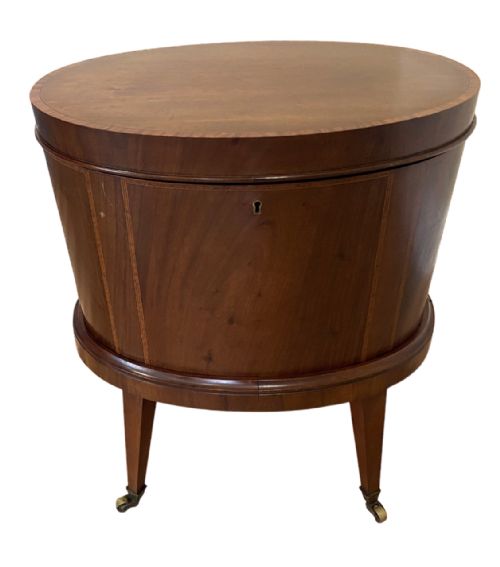
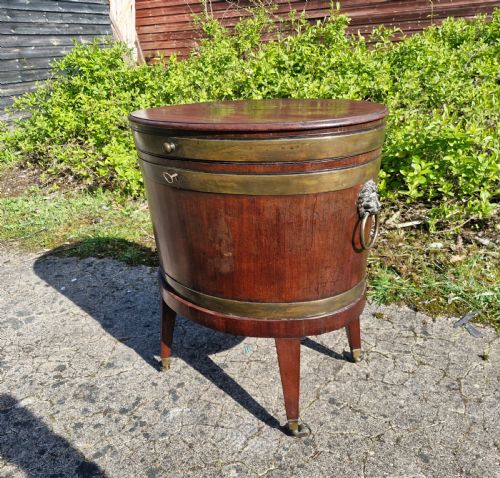


Oval Mahogany Wine Cooler
An oval mahogany wine cooler brings Georgian craftsmanship into a dining room as a practical container for bottles.
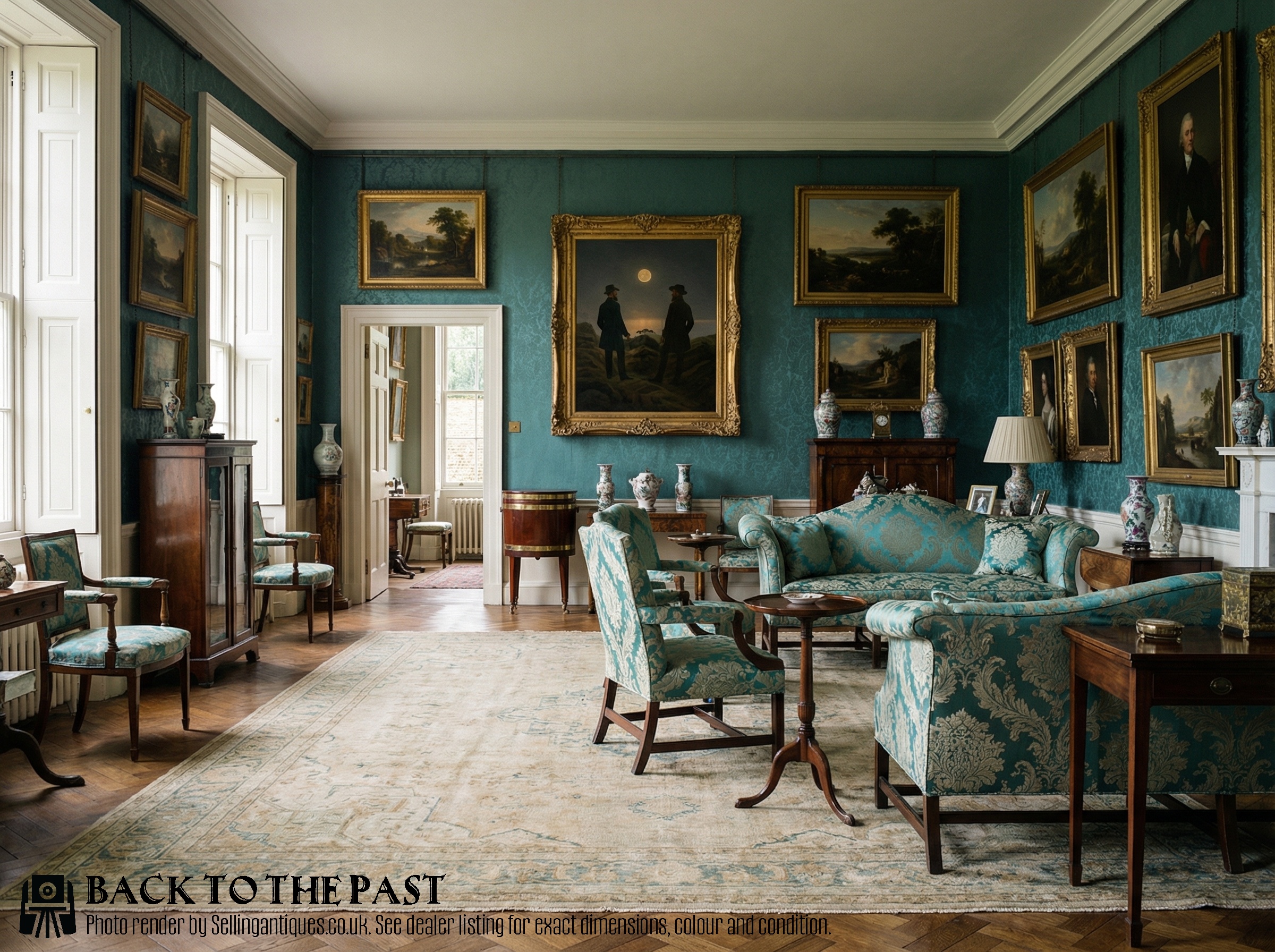
Oval Mahogany Wine Cooler
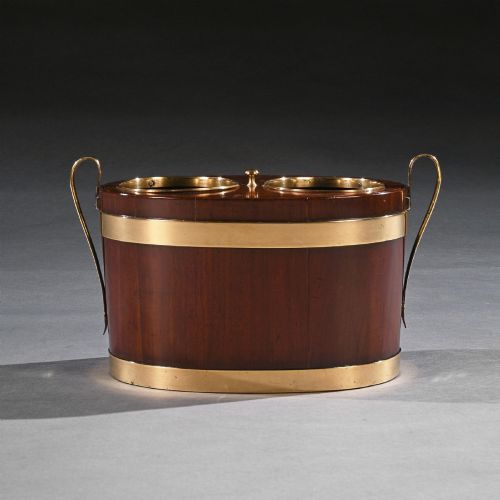
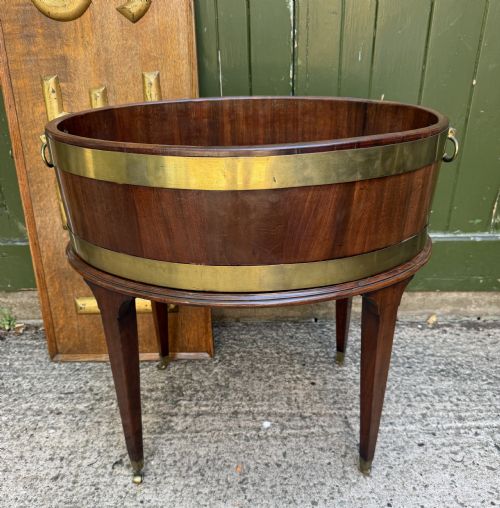
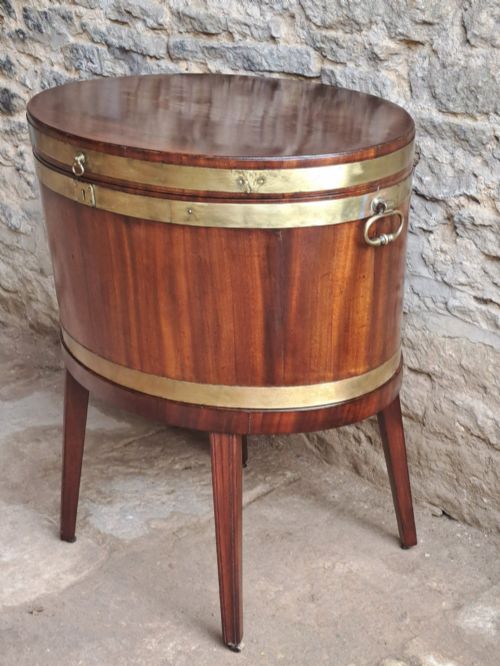
An oval mahogany wine cooler is a timber vessel designed to chill bottles for the dining table during the eighteenth and nineteenth centuries. The pieces on this page span the Georgian, Regency, and Victorian periods, including later revivals from the nineteenth and twentieth centuries. These objects frequently appear as coopered buckets banded in brass or metal, sometimes resting upon dedicated stands with square or turned legs.
Many examples double as plant jardinières or planters due to their waterproof linings of metal or zinc. The dominant form is oval or elliptical, constructed from rich timbers like mahogany and walnut, occasionally accented with boxwood and satinwood inlay. Buyers will find both open tubs and pieces fitted with original or replacement stands.
How They Were Made
Cabinetmakers constructed these vessels using traditional cooperage techniques, shaping individual staves of mahogany to form the curved oval body. These staves were tightly bound together with heavy brass bands or metal hoops to secure the structure against moisture and weight.
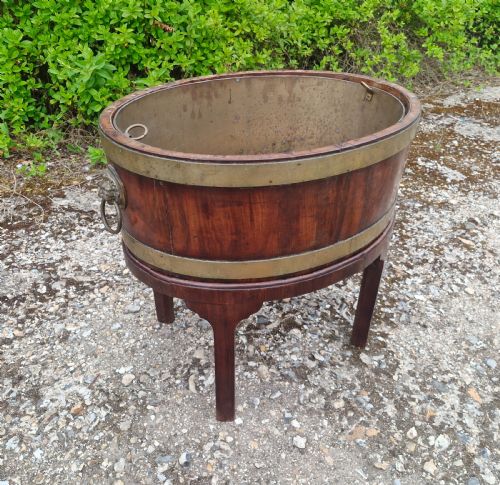
Makers lined the interiors with lead, zinc, or metal to hold ice and water safely without damaging the surrounding wood. Finer examples integrated decorative details such as boxwood inlay, satinwood banding, or fitted stands matching the main timber.
Listings feature eighteenth-century Georgian items alongside nineteenth-century Victorian revivals in mahogany, walnut, and satinwood.
What Varies in Quality
Quality depends upon the depth of the timber's grain and the crispness of the brass work binding the staves. Superior pieces display carefully chosen Cuban mahogany with a rich natural patina rather than flat, uniform boards.
The presence of an original matching stand alters the desirability and character of the piece significantly. Subtle details like fine boxwood inlay and intact metal linings distinguish superior workshop output from simpler utilitarian buckets.
Samual Norman
The Oval Mahogany Wine Cooler Glossary
- Cellarette
- A lockable container or freestanding box used to store wine bottles near the dining table. They share a close history with portable coolers.
- Coopered
- Constructed from curved wooden staves joined together like a barrel by a craftsman known as a cooper. This method provides structural strength for holding liquids.
- Jardiniere
- An ornamental pot or stand designed to hold growing plants or flowers. Many wine coolers were adapted for this purpose in later decades.
- Stand
- A dedicated matching frame with legs that elevates the cooler off the floor. These can feature straight square legs or turned supports.
Oval Mahogany Wine Cooler: Frequently Asked Questions
What is an oval mahogany wine cooler used for today?
These vessels serve well as decorative plant holders, umbrella stands, or striking containers for logs by a fireplace. Their waterproof interiors make them practical for modern botanical displays.
Collectors also utilise them as traditional drinks coolers during dinner parties by filling the metal or zinc liner with ice.
How can I tell if the stand is original?
Examine the timber species, wear patterns, and construction methods of both the bucket and the stand to check for consistency. Original stands often show matching patination and appropriate pegging relative to the upper body.
Many coolers were separated from their bases over the centuries, meaning replacement stands appear frequently in the antiques trade.
Did all wine coolers have metal linings?
Most genuine period examples feature lead, zinc, or copper linings designed to retain ice water without rotting the wooden staves. These linings may show historical repairs or replacement over centuries of active use.
Unlined open versions exist, though surviving pieces intended for chilling bottles almost invariably retained some form of protective interior.
How do I date a mahogany wine cooler?
Dating relies upon timber choice, such as dense Cuban mahogany favoured in the eighteenth century, alongside the style of brass banding and joinery. Georgian items tend to feature elegant proportions and precise cooperage.
Victorian and later revival pieces often incorporate heavier brass mounts and alternative secondary woods that distinguish them from earlier Georgian work.