


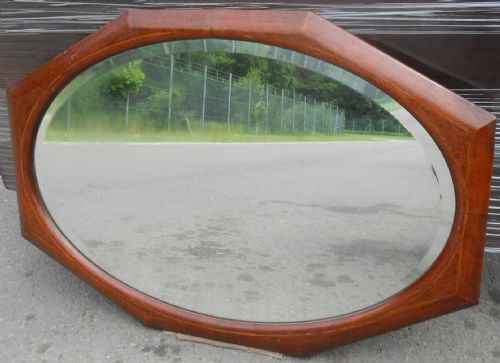

Oval Mahogany Mirror Frame
An oval mahogany mirror frame brings warmth and historic proportion to a wall, offering rich grain and classic curved lines.
Oval Mahogany Mirror Frame
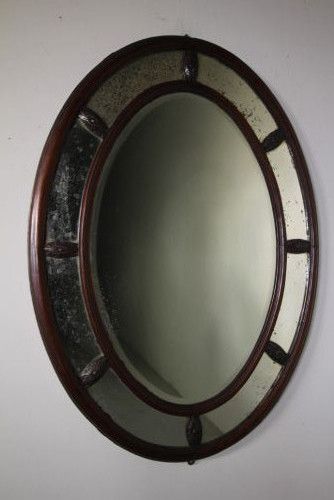
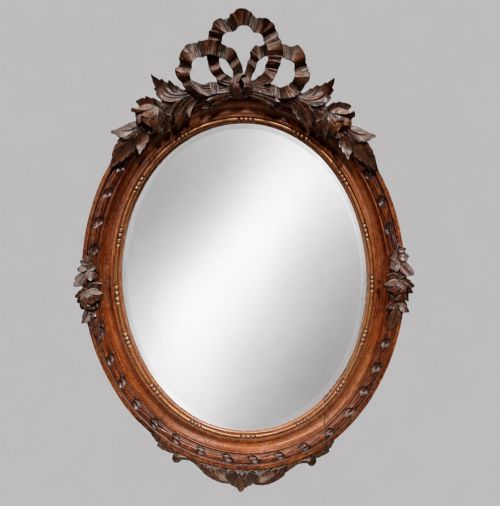
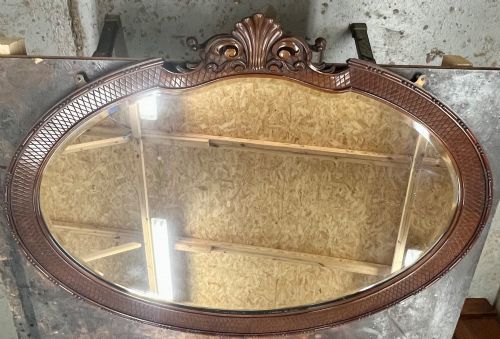
When you search for an oval mahogany mirror frame, you are looking at wall-hanging mirrors framed in rich timber dating from the Georgian period through the Edwardian era and the late nineteenth century. These items include country house examples, fretwork designs, and parcel-gilt decorative pieces.
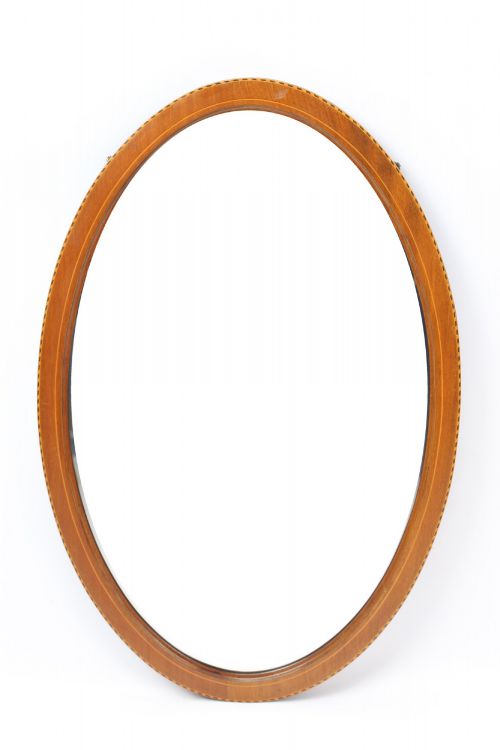
The version you are most likely to meet on this page is the Edwardian wall-hanging mirror, often featuring simple mahogany frames or delicate inlay work. Larger nineteenth-century country house models and Georgian style revivals also appear frequently.
Most pieces function as wall mirrors designed for hanging in hallways, living rooms, and bedrooms. Some examples incorporate bevelled glass or decorative marquetry to enhance their visual depth.
How they were made
Cabinet makers utilised solid mahogany and wood veneers, shaping the timber into curved frames using traditional joinery techniques. Frames were frequently enhanced with hand carving, fretwork piercing, or parcel-gilding.
Inlay and marquetry details were carefully embedded into the timber surface during the Edwardian period, often incorporating contrasting lighter woods. Mirror glass was then fitted securely into the rebate, with bevelled edges appearing on many nineteenth-century and later examples.
Many Edwardian mirrors spent a century quietly reflecting hallway wallpaper before finding their way onto modern digital screens.
What varies in quality
Quality depends upon the depth of the mahogany grain, the crispness of the hand carving, and the sophistication of any inlay work. Finer frames display balanced proportions and refined timber selection.
The execution of decorative elements such as fretwork or parcel-gilding separates standard production items from finer workshop pieces. Original mirror glass and well-preserved timber patination also distinguish superior examples.
The Oval Mahogany Mirror Frame Glossary
- Mahogany
- A durable tropical hardwood known for its deep reddish-brown colour and fine grain. It served as the primary timber for quality mirror frames across the eighteenth and nineteenth centuries.
- Bevelled glass
- Mirror glass with an angled, polished edge that catches the light. This technique adds a refined decorative dimension to the reflective surface.
- Marquetry
- Decorative patterns formed by fitting pieces of veneer into a timber backing. Edwardian makers utilised this technique to adorn mirror frames with floral or geometric motifs.
- Parcel-gilt
- A finish where specific carved details of a wooden frame are highlighted with gold leaf. This technique contrasts brightly against the dark mahogany timber.
- Fretwork
- Openwork patterns carved through thin boards of wood. Georgian style and nineteenth-century frames frequently employ this technique along the outer edges.
Oval Mahogany Mirror Frame: Frequently Asked Questions
How do I hang a heavy mahogany wall mirror?
Heavy oval wall mirrors require secure fixings screwed directly into wall studs or heavy-duty wall anchors suitable for the weight of the timber and glass.
Check that the hanging cord or D-rings affixed to the back of the frame are robust enough to support the piece safely before mounting.
Are these mirrors suitable for bathrooms?
Mahogany mirror frames can tolerate normal room humidity, but excessive moisture and steam from bathrooms may damage the timber and silvering on older mirror glass.
It is generally wiser to place antique mahogany mirrors in dry living areas, hallways, or bedrooms to preserve the finish.
How do I clean an antique mahogany frame?
Dust the mahogany frame regularly with a soft, dry cloth to prevent dirt accumulation in the carved details and grain.
Avoid using harsh chemical sprays or silicone polishes, as these can degrade the aged wax finish and patination of the timber.
How can I tell a Georgian piece from an Edwardian revival?
Georgian and Georgian style revival mirrors often feature intricate fretwork, parcel-gilding, and heavier timber construction suited to large country house proportions.
Edwardian pieces tend to be lighter in build, frequently incorporating subtle string inlay, marquetry, and simpler oval wooden bezels.