



Oval Leather Top Desk
An oval leather top desk brings a curved silhouette and a tactile writing surface to a study, drawing on Georgian, Victorian and Edwardian craftsmanship.
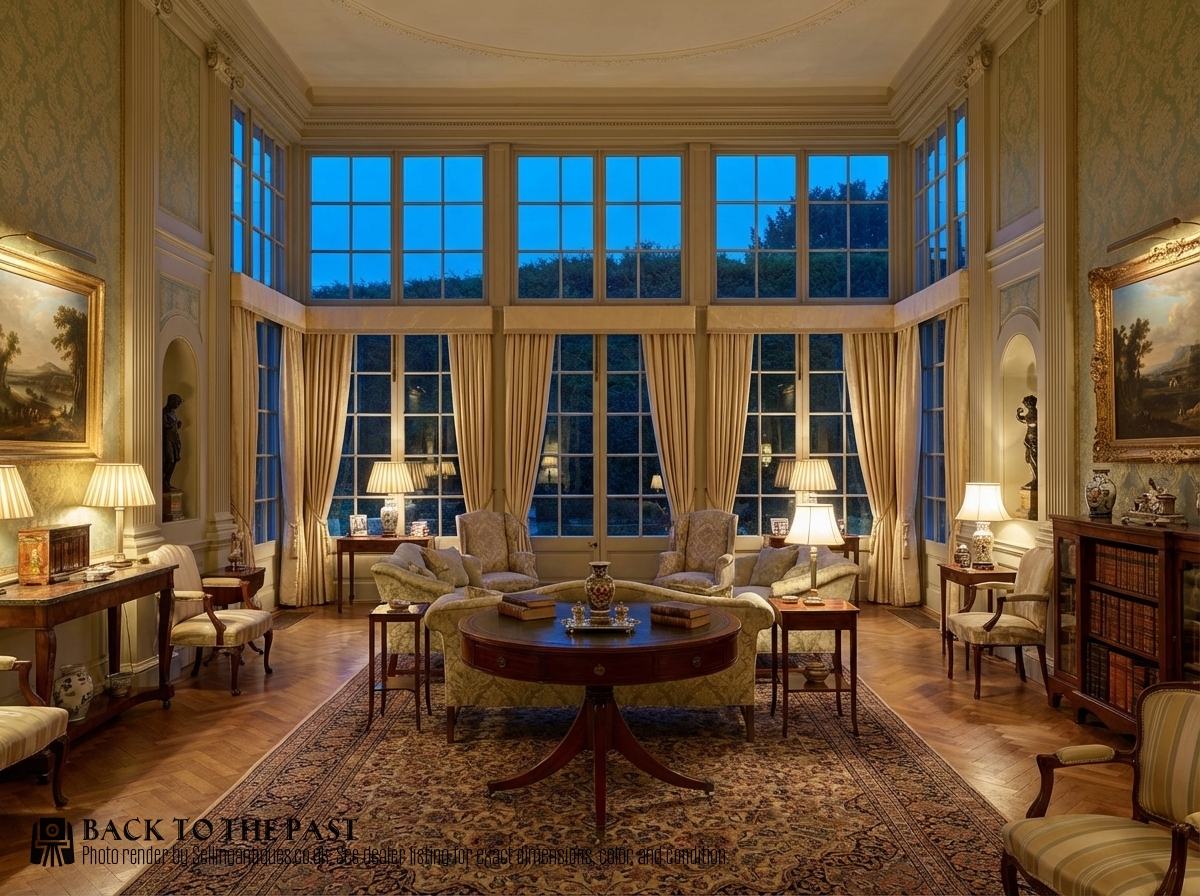
Oval Leather Top Desk
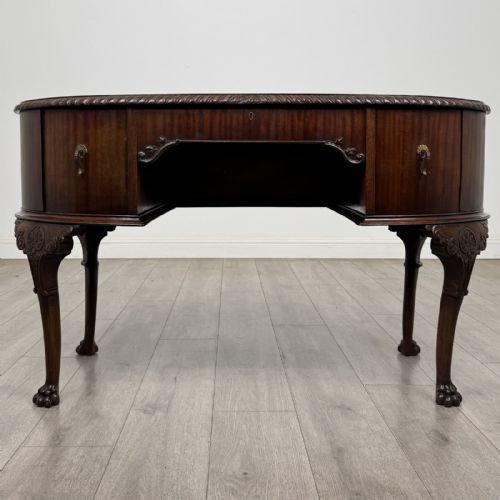
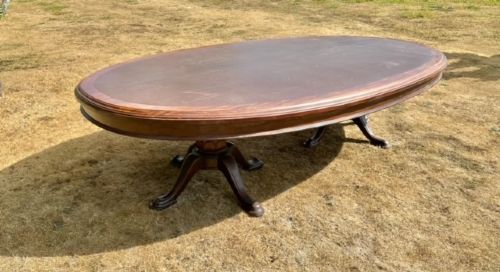
Most examples found here date from the Victorian and Edwardian eras, alongside earlier Georgian and Sheraton period pieces. They function as freestanding library tables or writing desks, offering generous proportions and finished backs intended to sit proudly in the centre of a room.
How these desks were made
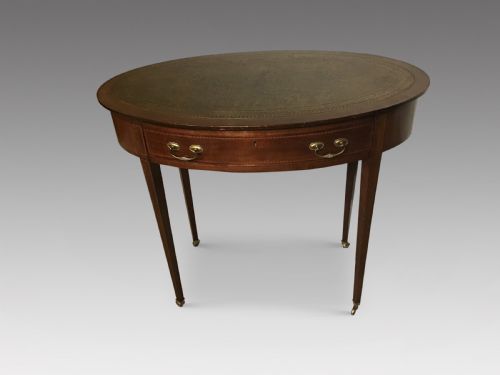
Cabinet makers utilised dense timbers including mahogany, walnut, burr walnut, satinwood and oak to build the foundational carcases and frames. Inlaid details in contrasting woods often embellish the friezes and tabletops of Edwardian and Sheraton period examples.
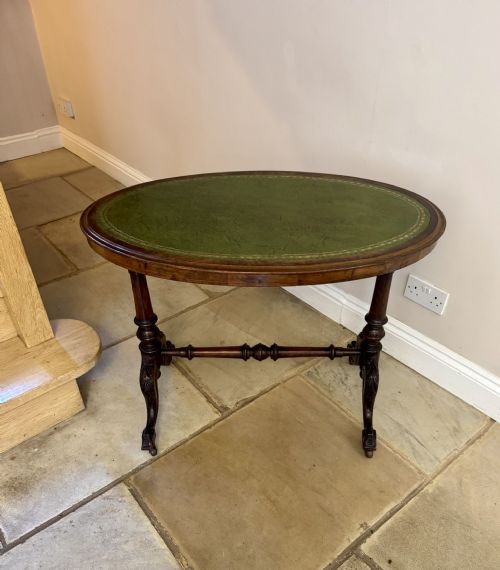
Writing surfaces were lined with supple leather, frequently bordered by gilt tooling. Drum tables and pedestal formats employed sturdy internal framing to support heavy timber tops and revolving mechanisms where applicable.
Oval Leather Top Desk Retail Price Guide 2026
Typical asking prices for oval leather top desk among the pieces listed under this phrase on Sellingantiques today, from the lower quarter to the upper quarter. They describe what is for sale here now, not the wider market.
Library tables often double as generous dining spaces when books are cleared away.
What varies in quality
Quality rests in the selection of figured timber veneers, such as burr walnut or satinwood, and the precision of inlaid woodwork. Superior pieces display harmonious proportions and careful attention to secondary timbers used in drawer construction.
The finesse of the leather insert and its surrounding gilt tooling distinguish standard items from exhibition quality works. Structural integrity in the pedestals and smooth operation of drawers further separate standard production from finer craftsmanship.
The Oval Leather Top Desk Glossary
- Drum table
- A circular or oval library table with a deep frieze containing drawers, usually supported by a single central pillar and splayed legs. This form became popular during the Georgian and Victorian periods.
- Inlay
- A technique where pieces of contrasting wood or other materials are fitted into depressions in the carcase wood to form a decorative pattern. Sheraton period and Edwardian pieces frequently employ this method.
- Pedestal desk
- A heavy freestanding desk comprising two supporting pedestals of drawers with a central desktop spanning across. Some interpretations incorporate curved or oval top configurations.
- Frieze
- The horizontal band situated directly beneath the tabletop, which often houses one or more concealed drawers. Cabinet makers frequently decorated this area with crossbanding or inlay.
Oval Leather Top Desk: Frequently Asked Questions
Where should I place an oval desk?
Because these desks often feature finished backs and freestanding pedestal or drum designs, they sit comfortably in the middle of a study or library rather than pushed against a wall.
Allow enough space around the curved edges for chairs to pull out easily, ensuring the piece commands the room properly.
How do I care for the leather top?
The leather writing surface requires gentle cleaning with a dry or barely damp cloth, avoiding harsh chemical sprays that can strip the original finish and dry out the hide.
Applying a specialist leather balsam periodically helps maintain suppleness and preserves any decorative gilt tooling along the borders.
Are these desks suitable for daily work?
Most antique writing tables and library desks offer sturdy timber construction and ample surface area for modern writing tasks and laptops.
Checking the kneehole height and drawer clearance ensures the piece matches your seating and ergonomic requirements for regular use.
How do I distinguish Edwardian from Georgian pieces?
Georgian and Sheraton period pieces from the eighteenth century typically rely on rich mahogany or satinwood with restrained, high-status proportions and precise craftsmanship.
Edwardian examples often showcase lighter inlaid mahogany or burr walnut with a slightly more decorative domestic character reflecting early twentieth century revival styles.