

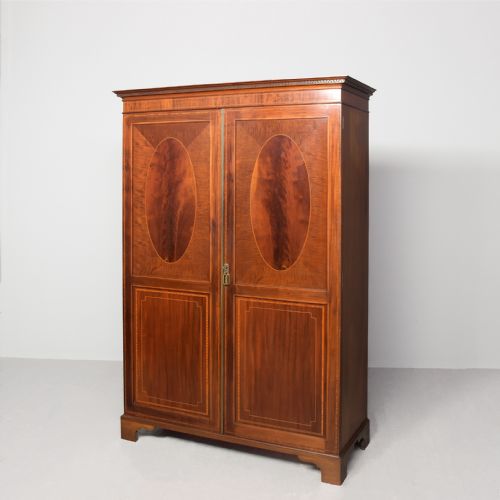

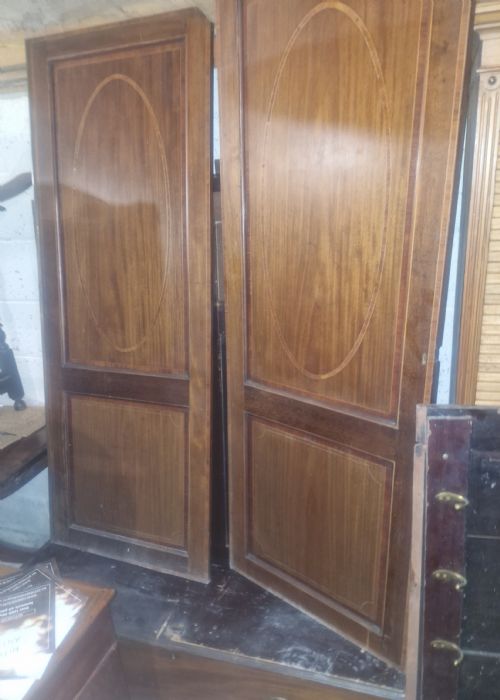


Oval Inlay Wardrobe
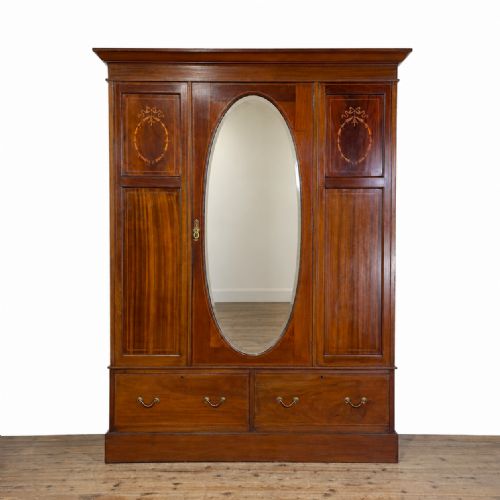
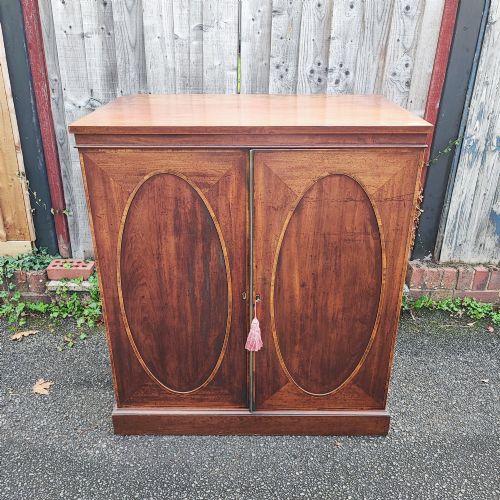
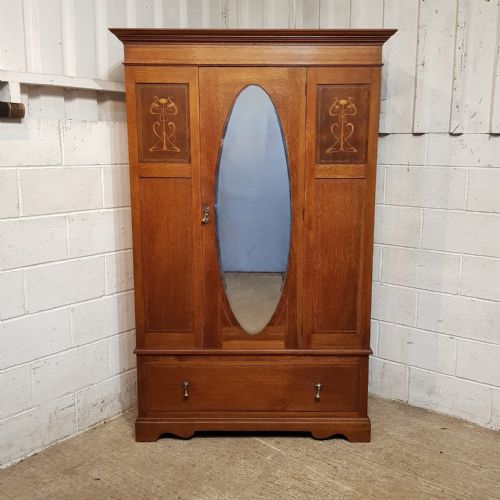
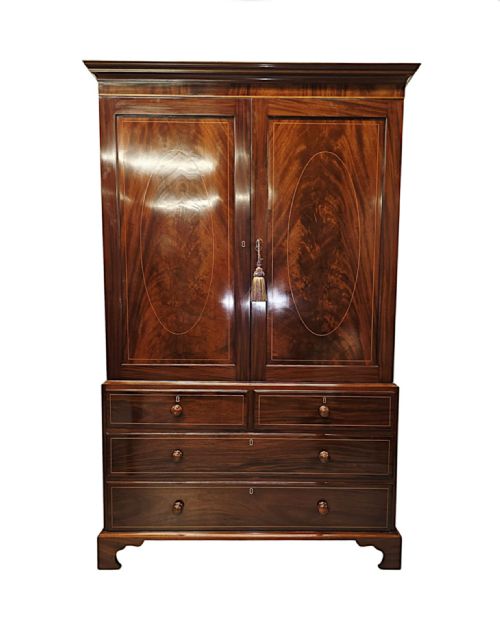
An oval inlay wardrobe brings together fine timber and careful banding, offering a generous hanging space for the bedroom.
Oval Inlay Wardrobe
The oval inlay wardrobe appears primarily in Georgian and Edwardian forms, spanning the eighteenth and nineteenth centuries. These pieces function as substantial storage furniture, often taking the form of linen presses, gentleman's presses, and traditional wardrobes.
Makers constructed these cabinets using rich timbers such as mahogany and flame mahogany veneer, complemented by contrasting lighter woods. Buyers encounter tall cupboards and panelled presses, frequently embellished with satinwood banding and boxwood details.
Dating ranges from the mid-eighteenth century through to the early twentieth century, taking in George III periods and later Edwardian revivals. Each example provides a commanding presence in a room, combining hanging space with internal sliding trays or lower drawers.
Materials and Construction
Cabinet makers utilised solid mahogany and oak for the main carcase, applying flame mahogany veneer to the prominent exterior surfaces to create striking grain patterns. Selected panels receive delicate boxwood and satinwood inlay, requiring skilled hand-cutting and fitting.
Brass hardware secures the doors and drawers, while glass occasionally appears in associated cabinet doors. Structural elements rely on traditional joinery, ensuring stability across the tall frameworks of these substantial pieces.
Oval Inlay Wardrobe Retail Price Guide 2026
Typical asking prices for oval inlay wardrobe among the pieces listed under this phrase on Sellingantiques today, from the lower quarter to the upper quarter. They describe what is for sale here now, not the wider market.
Some gentlemen managed their linen with such architectural devotion that their wardrobes required swan-neck pediments to reach proper dignity.
Judging Quality and Craftsmanship
Quality rests in the choice of timber and the precision of the contrasting inlay work around the panels. Well-executed pieces display continuous grain matching across the doors and crisp, clean lines in the boxwood banding.
The integrity of the internal fittings, such as sliding linen trays and original brass handles, dictates the standing of a piece. Finer examples maintain proportional balance in cornices and pediments, whether simple or formed with swan-neck details.
The Oval Inlay Wardrobe Glossary
- Linen Press
- A tall storage piece comprising upper cupboard doors enclosing sliding trays, positioned above a chest of base drawers. This form was originally designed for storing folded household linen.
- Flame Mahogany
- A figural veneer cut from timber where the branches join the main trunk, producing a distinctive flickering flame pattern. Cabinet makers used this to create decorative central panels.
- Satinwood
- A pale, hard wood sourced from tropical trees, utilised for contrasting stringing and banded borders on darker mahogany furniture. Its bright yellow tone highlights door margins and drawer fronts.
- Gentleman's Press
- A specialised wardrobe cabinet featuring sliding trays for shirts and waistcoats in the upper section. These pieces served domestic storage needs in Georgian bedrooms.
- Swan-Neck Pediment
- A broken arch top moulding curving outwards like the neck of a swan, frequently terminating in a scroll. This classical architectural feature crowns large eighteenth-century wardrobes.
Oval Inlay Wardrobe: Frequently Asked Questions
What is an oval inlay wardrobe?
An oval inlay wardrobe is a large timber storage cabinet decorated with contrasting wood veneers arranged in oval motifs. These pieces date across the Georgian and Edwardian eras.
They provide deep hanging space and internal shelving, serving as a focal point in a traditional bedroom layout.
How do linen presses differ from wardrobes?
Linen presses divide their interior space between sliding wooden trays at the top and deep drawers at the base. Standard wardrobes focus primarily on vertical hanging height.
Both forms utilise similar mahogany and satinwood construction techniques across the Georgian period.
Which woods are common in these cabinets?
Mahogany and oak form the structural foundation of these pieces, often enhanced with flame mahogany veneer across the main doors. Satinwood and boxwood provide the pale contrast for stringing and inlay.
Walnut also appears in certain mid-eighteenth century examples within the listings.
How do I date a Georgian wardrobe?
Dating relies on timber selection, structural joinery, and the style of decorative banding like boxwood inlay. George III examples from the eighteenth century show different proportions compared to Edwardian revivals.
Pediment shapes and brass hardware styles further indicate the specific decade of manufacture.