


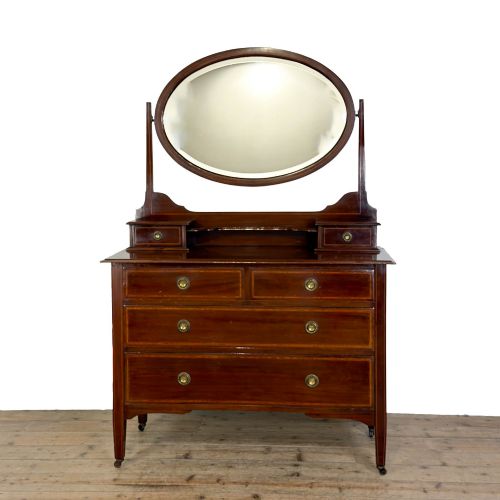


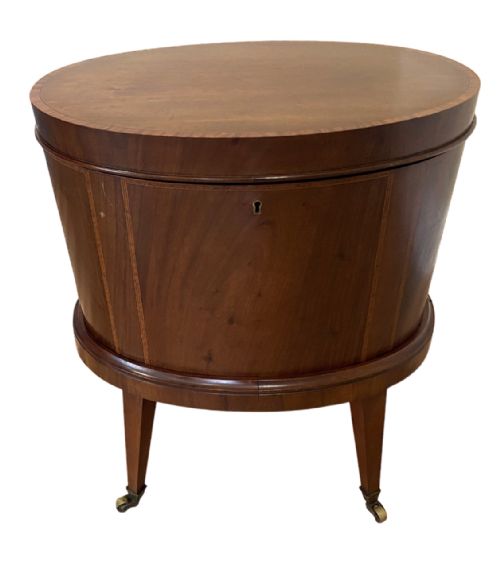


Oval Inlaid Mahogany Chest
An oval inlaid mahogany chest offers tactile warmth and classical line, drawing the eye with contrasting stringing and rich timber grain.
Oval Inlaid Mahogany Chest
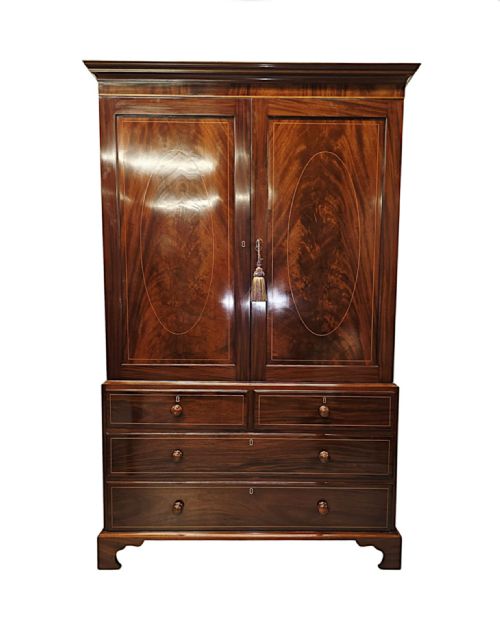
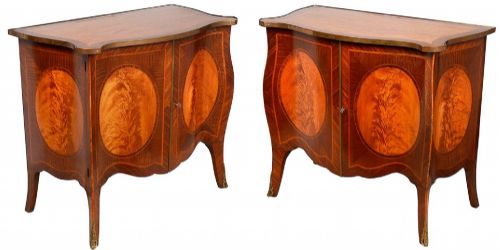
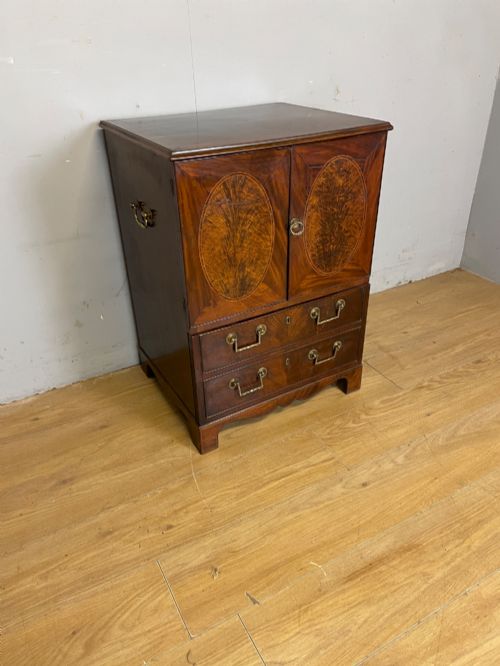
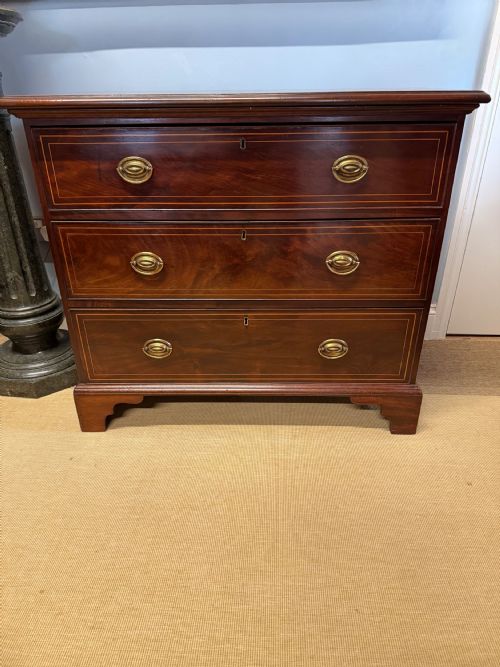
An oval inlaid mahogany chest encompasses a range of refined storage forms, from diminutive cellarettes to grand linen presses and commodes created during the Georgian, Regency, and Edwardian periods. Buyers investigating an oval inlaid mahogany chest encounter pieces defined by figured timber and geometric or floral stringing in contrasting woods.
The selection on this page demonstrates the enduring appeal of Sheraton and Sheraton Revival designs, where cabinetmakers deployed satinwood and boxwood to frame curved drawer fronts. These forms range from tall gentleman's cabinets and serpentine commodes to compact tea caddies and spice cabinets.
Originating primarily from eighteenth and nineteenth-century British workshops, alongside later revival iterations, these items served elite domestic interiors for linen storage, refreshment, and correspondence. Their varied proportions allow them to function successfully as focal points in modern hallways, drawing rooms, and bedrooms.
Factors that separate the finest examples
Quality rests significantly on the selection of the mahogany veneer and the crispness of the contrasting inlay work. Superior examples display symmetrical flame figures and tightly packed boxwood stringing that remains flush with the surrounding timber.
Oval Inlaid Mahogany Chest Retail Price Guide 2026
Typical asking prices for oval inlaid mahogany chest among the pieces listed under this phrase on Sellingantiques today, from the lower quarter to the upper quarter. They describe what is for sale here now, not the wider market.
Current listings span the Georgian, Regency, and Edwardian periods, featuring mahogany, satinwood, boxwood, and brass materials.
The Oval Inlaid Mahogany Chest Glossary
- Flame mahogany
- A highly figured timber cut from the fork of the tree where branches meet the trunk. This creates a distinctive, feather-like pattern prized by period cabinetmakers.
- Stringing
- A thin, linear inlay of contrasting wood inserted into channels on a furniture surface. It defines borders and creates geometric panels on drawer fronts and tabletops.
- Cellarette
- A dedicated container or cabinet designed to hold bottles of wine or spirits securely. They frequently feature lead-lined interiors and partitioned compartments.
- Linen press
- A tall storage case featuring upper doors enclosing sliding trays for textiles, positioned above a base of lower drawers. They became central fixtures in Georgian bedrooms.
- Serpentine front
- A furniture front configuration curving outward in the centre and inward at the ends. It requires advanced woodworking skill to construct accurately.
Oval Inlaid Mahogany Chest: Frequently Asked Questions
What is an oval inlaid mahogany chest?
An oval inlaid mahogany chest is a storage piece constructed from tropical hardwood and detailed with contrasting lighter wood veneers. These items range from small cellarettes and tea caddies to larger case furniture.
Cabinetmakers built these objects across the Georgian and Edwardian eras, incorporating decorative stringing and figured timber surfaces. They provide functional storage while displaying classical design motifs.
How do I date a mahogany chest?
Dating relies on examining construction techniques, timber selection, and hardware styles. Eighteenth-century pieces often feature hand-cut dovetails and solid secondary woods, whereas revival pieces from the twentieth century show different machining marks.
Stylistic cues such as Sheraton proportions and specific inlay patterns also help establish the era of manufacture. Comparing the secondary timbers inside drawers offers further confirmation of age.
Where were these pieces used?
These items occupied principal rooms in domestic residences, including bedrooms, dining parlours, and entrance halls. Linen presses stored household textiles, while cellarettes stood in dining spaces to hold bottled beverages.
Smaller caddies and cabinets sat on side tables or desks to organise valuables and documents. Their decorative exteriors ensured they contributed to the aesthetic of polite company.
How do I care for mahogany furniture?
Mahogany requires stable indoor humidity and protection from direct sunlight to prevent timber splitting and fading. Applying natural beeswax periodically maintains the lustre of the finish.
Avoid placing damp items or heavy heat sources directly onto polished surfaces. Gentle dusting with a dry, soft cloth preserves the historic patination accumulated over centuries.