



Oval Glass Vitrine
An oval glass vitrine stands ready to hold small treasures, bringing slender curves and clear panels to a room.

Oval Glass Vitrine
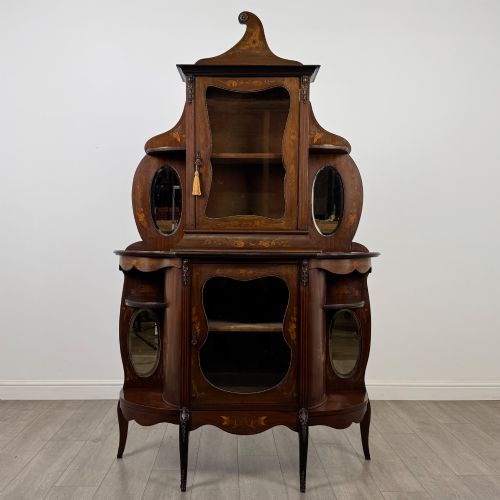
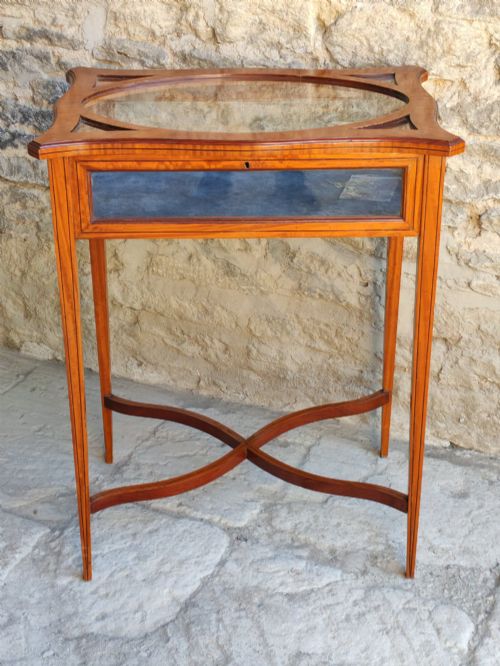
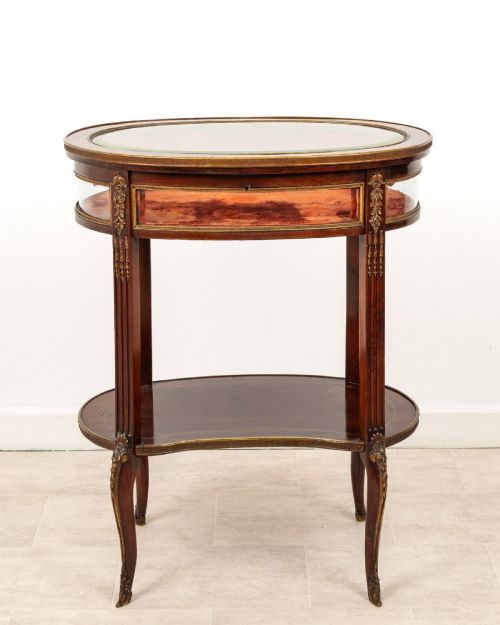
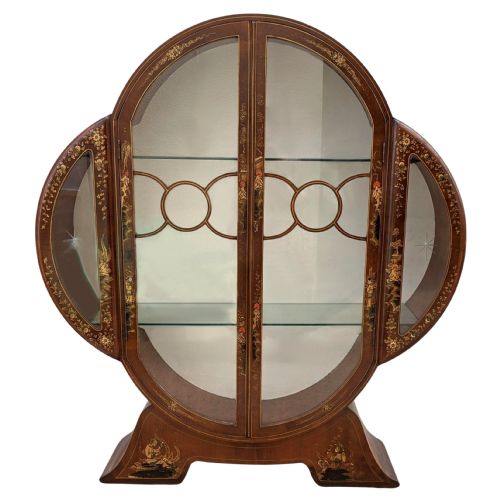
An oval glass vitrine is a piece designed for display, taking the form of cabinets, bijouterie tables, and curio holders. You will find these pieces spanning the late nineteenth century, the Edwardian era, and the art deco period of nineteen thirty.
The pieces on this page include French designs with ormolu mounts, English mahogany and satinwood tables, and shop display counters. They serve to exhibit small collections while occupying modest floor space through their curved glass profiles.
Cabinets stand upright on slender legs, whilst bijouterie tables lift display surfaces to waist height beneath glazed lids. Both types employ glazed panels to let light reach the objects kept within.
Materials and construction
Framing relies upon timbers such as mahogany, satinwood, and walnut, often shaped to form continuous curves. Inlaid marquetry and polished finishes provide decorative surface detail across the wooden frames.
Glazing forms the principal viewing area, held within wooden or metal bars. Ormolu and brass mounts furnish decorative highlights and protect corners on French models.
Interior surfaces frequently feature velvet or other fabrics to cushion displayed items and provide a contrasting background. Freestanding structures rest on tapered legs or cabriole supports suited to each period style.
Oval Glass Vitrine Retail Price Guide 2026
Typical asking prices for oval glass vitrine among the pieces listed under this phrase on Sellingantiques today, from the lower quarter to the upper quarter. They describe what is for sale here now, not the wider market.
Listings feature items from the late Victorian period, the Edwardian era, and nineteen thirty, utilising mahogany, satinwood, glass, and ormolu.
Judging quality and craftsmanship
Quality rests in the precision of the curved woodwork and the integrity of the glass housing. Finer pieces demonstrate seamless joints where the oval frame meets the uprights or legs.
Mounts of ormolu or cast brass show crisp chasing and secure attachment rather than simple surface plating. The choice of timber grain, particularly in figured mahogany and satinwood, distinguishes standard workshop production from finer cabinet work.
The Oval Glass Vitrine Glossary
- Vitrine
- A glass-fronted cabinet designed for displaying fine objects or porcelain. These cases protect items from dust while offering all-round visibility.
- Bijouterie table
- A display table with a glazed top and shallow compartment intended for jewellery and small curiosities. They often stand on slender legs at a height convenient for inspection.
- Ormolu
- Gilt bronze ornamentation applied to furniture mounts and decorative hardware. It provides a bright metallic contrast against dark woods.
- Marquetry
- Decorative woodwork where small pieces of veneer are fitted into patterns. It creates pictorial or geometric designs across tabletops and cabinet fronts.
- Vernis Martin
- A type of simulated Japanese lacquer developed in France during the eighteenth century. It employs layered varnishes to produce a smooth, lustrous finish.
Oval Glass Vitrine: Frequently Asked Questions
What fits inside an oval glass vitrine?
These cabinets and tables suit small collections such as pocket watches, medals, porcelain figures, and jewellery. The glass shelves or fabric-lined wells keep individual items separated and visible.
Larger pieces of silver or ceramics belong in broader cabinets, whilst these curved cases handle delicate curiosities best.
How do I care for the wood and glass?
Dust the glass regularly with a soft cloth and non-ammonia cleaner to keep the view clear. Feed the mahogany or satinwood frames periodically with suitable wax to prevent the timber from drying.
Avoid placing the cabinet in direct sunlight to protect interior fabrics and polished wood surfaces from fading.
Are these pieces French or English?
The selection includes examples from both origins, with French pieces frequently featuring ormolu mounts and vernis martin finishes. English makers often favoured inlaid mahogany and satinwood.
Both traditions utilised the oval glass form to maximise light distribution across the items on display.
How do I date an Edwardian vitrine?
Edwardian pieces often display lighter timbers like satinwood, subtle marquetry inlay, and refined Edwardian styling characteristic of the early twentieth century. Construction techniques blend traditional cabinet making with machine-sawn components.
Comparing the timber finish and hardware style against dated examples helps confirm the period.