
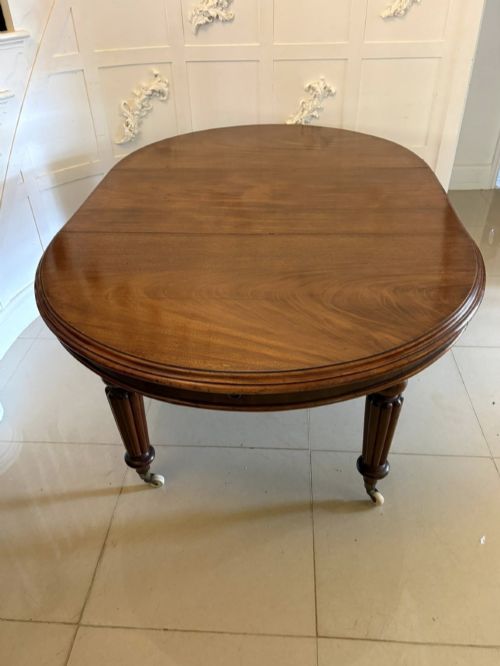
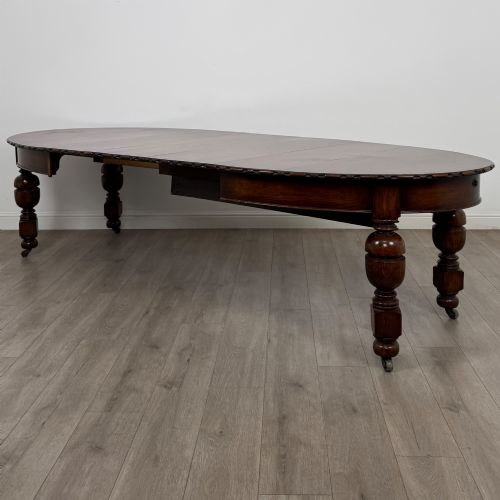
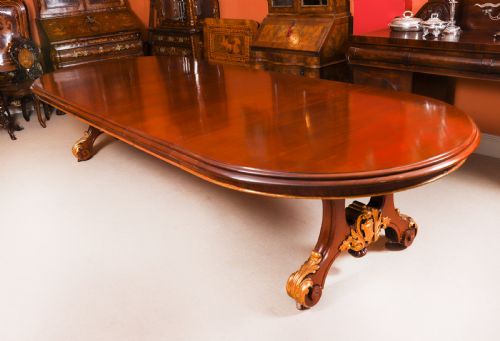
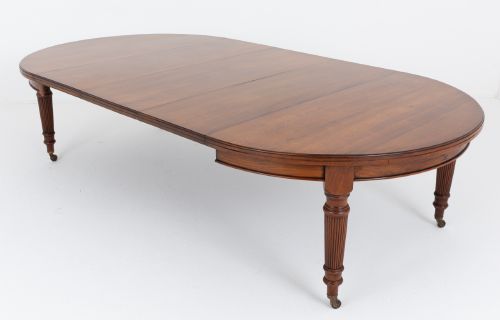




Oval Extendable Table
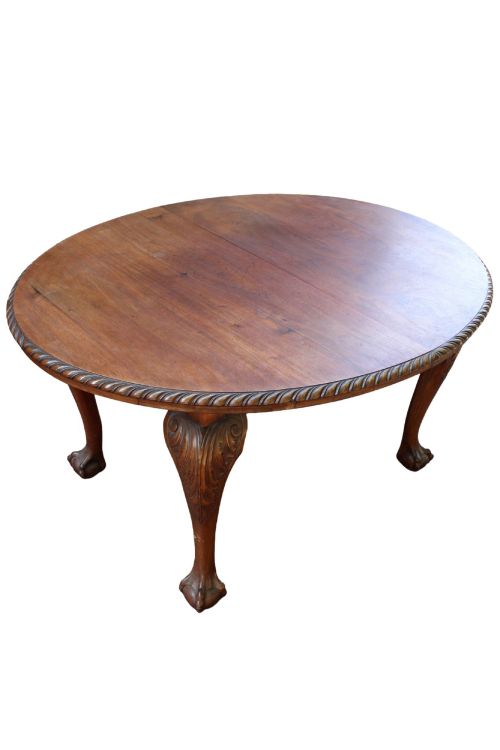
An oval extendable table brings people together for dining, offering adaptable proportions crafted in rich mahogany, oak, and walnut.
Oval Extendable Table
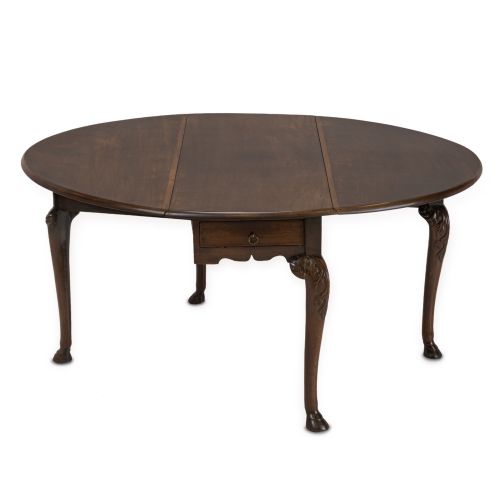
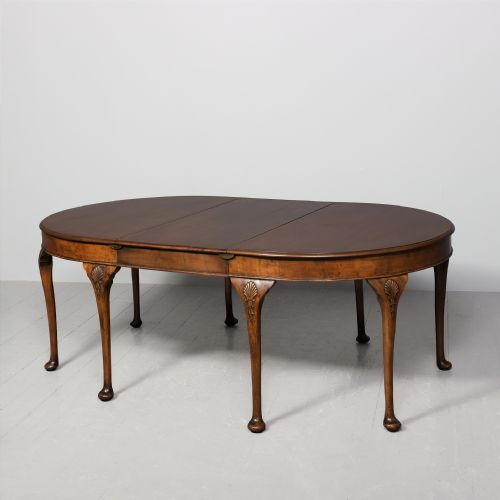
An oval extendable table provides a flexible surface for hosting, expanding easily to accommodate extra guests when needed. These pieces take several distinct structural forms, most notably drop-leaf gateleg designs, twin pedestal arrangements, and winding mechanisms with multiple leaves.
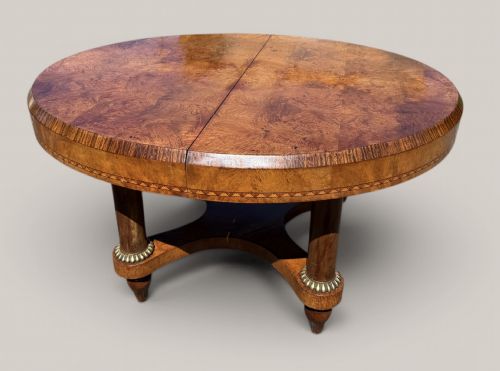
The selections span multiple eras, with Victorian and Georgian pieces appearing alongside 17th-century oak examples and early 20th-century variations. Mahogany and oak dominate the offerings, occasionally accented with walnut, burr walnut, and satinwood inlay.
Gateleg tables utilise hinged flaps supported by swing-out legs to alter their footprint, while extending versions rely on internal leaves. Buyers meet both grand formal dining furniture and sturdier English country pieces across these periods.
How they were made
Cabinetmakers constructed these frames primarily from solid timbers like mahogany and oak, utilising sturdy joinery to withstand daily use. Walnut and burr walnut veneers added decorative grain patterns to tabletops, sometimes enhanced by satinwood inlay or brass fittings.
Extending mechanisms relied on heavy wooden runners, winding systems, or drop-leaf hinges that allowed sections to fold or separate smoothly. Early examples incorporated swing-out gatelegs for support, while later Victorian designs moved towards pedestal bases and castors for mobility.
Several tables retain their original winding handles, ensuring the nineteenth-century mechanics still adjust the dining space today.
What varies in quality
Quality shows in the selection of timber grain, the precision of the extending mechanism, and the crispness of any carved details such as cabriole legs or hoof feet. Superior examples retain matching timber across added leaves and original brass components.
The integrity of the structural joints and the smoothness of the drop-leaf or wind-out action separate finer workshop productions from simpler utility pieces. Patina built up through generations of polishing also marks the distinction between well-preserved antiques and later replacements.
Wylie & Lochead·Whytock & Reid·Waring and Gillow
The Oval Extendable Table Glossary
- Gateleg table
- A table with hinged leaves supported by legs that swing outward like a gate. This design allows the sides to fold down when space is required.
- Drop-leaf table
- A table featuring fixed centre sections and movable flaps on the sides. The flaps drop down to reduce the overall footprint.
- Wind out table
- An extending table operated by a mechanical handle that turns a central screw thread. This mechanism pulls the halves apart to insert additional leaves.
- Twin pedestal table
- A dining table supported by two separate column bases, often resting on splayed legs with castors. This construction provides stability and legroom for seated guests.
- Cabriole leg
- A furniture leg that curves outward at the knee and inward at the ankle, mimicking an animal shape. It frequently terminates in a hoof or pad foot.
Oval Extendable Table: Frequently Asked Questions
How do extendable leaves work?
Many tables utilise a winding handle that separates the main sections to accept extra leaves. Other variants rely on drop-leaf flaps supported by folding wooden gates.
These mechanical systems allow the surface area to expand or contract depending on the dining requirements of the household.
What rooms suit a gateleg table?
Gateleg tables suit dining rooms or kitchens where floor space needs to change frequently. Folding down the leaves transforms a large dining surface into a compact console.
This versatility makes them practical for everyday living without sacrificing hospitality capacity.
How are different periods identified?
Cabinetmaking styles, timber choices, and leg shapes provide clear indicators of a table's period. Early pieces often feature heavy oak frames and gateleg supports, while Georgian and Victorian versions frequently use mahogany and sophisticated pedestal bases.
Hardware components and joinery techniques further clarify the age of the piece.
How do I care for timber surfaces?
Natural wood surfaces require regular dusting and occasional polishing with appropriate waxes to maintain their finish. Avoiding direct sunlight and extreme temperature changes prevents the timber from warping or drying out.
Proper maintenance preserves the patina built up over centuries of use.