

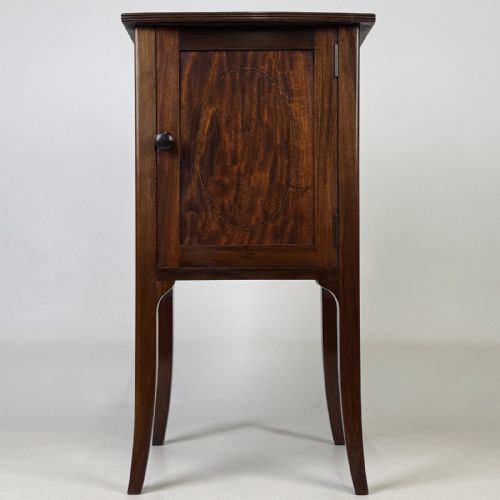
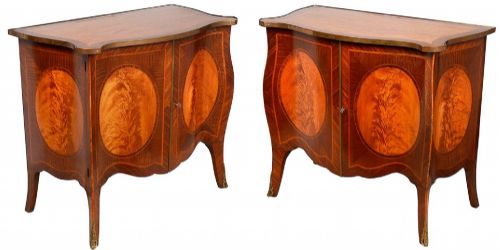
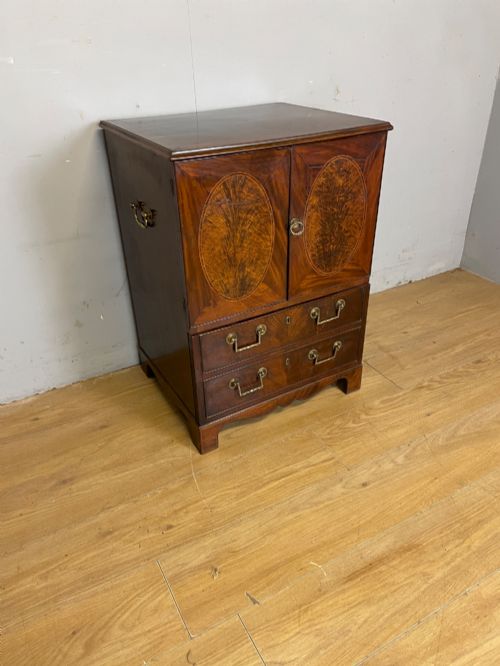


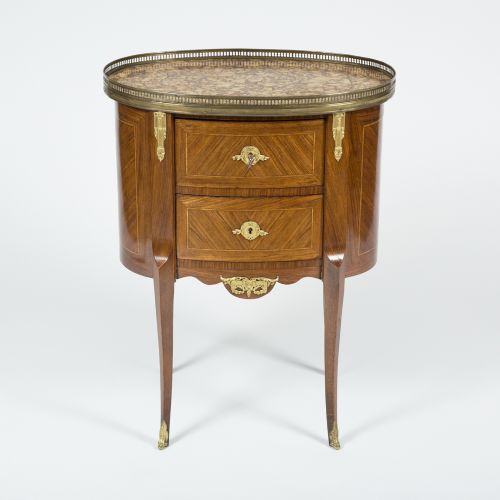


Oval Bedside Cabinet
An oval bedside cabinet brings curved elegance and hidden storage to a bedroom, combining practical surfaces with refined proportions.
Oval Bedside Cabinet
The oval bedside cabinet search phrase leads you directly to compact, curved storage pieces designed to sit beside a bed. You are most likely to encounter French styles from the nineteenth and early twentieth centuries, alongside Georgian and revival pieces.
These items take various forms, including pedestal cabinets, commodes, and bedside tables, often featuring marble tops or tambour doors. The selection spans periods from the nineteenth century to the early twentieth century, with materials like mahogany and painted wood appearing frequently.
Materials and Construction
Cabinet makers built these pieces using solid and veneered timbers such as mahogany, kingwood, and satinwood, frequently enhanced by intricate marquetry inlays. Ormolu mounts and brass galleries add decorative metalwork to the wooden frames.
Many examples incorporate inset marble tops in varieties such as breche d'alep, providing a durable and smooth upper surface. Painted finishes and delicate cane work also appear across the selection, showcasing varied workshop traditions.
Oval Bedside Cabinet Retail Price Guide 2026
Typical asking prices for oval bedside cabinet among the pieces listed under this phrase on Sellingantiques today, from the lower quarter to the upper quarter. They describe what is for sale here now, not the wider market.
French revival styles dominate the selection, alongside Georgian and Danish pedestal cabinet designs.
Judging Quality and Craftsmanship
The distinction between standard and superior pieces rests on the precision of the cabinet work and the choice of materials. Fine timber selections, crisp marquetry, and well-fitted marble tops elevate a piece significantly.
Attention to detail in the mounts, such as cast ormolu, and the smooth operation of drawers or tambour doors indicate higher craftsmanship. The harmony of the curved proportions defines the most successful examples.
François Linke·Charles Topino
The Oval Bedside Cabinet Glossary
- Tambour
- A flexible shutter door made of narrow strips of wood glued to canvas, allowing smooth access to curved cabinet interiors. This technique requires exceptional skill to prevent jamming.
- Marquetry
- Decorative patterns formed by fitting contrasting veneers onto a wood structure. Artisans cut these delicate wood pieces by hand.
- Ormolu
- Gilded bronze ornamentation applied to furniture, popular in French designs. It adds a bright metallic contrast to dark woods.
- Commode
- A low cabinet with drawers or doors, often fitted with a marble top. The term originates from French furniture terminology.
- Pedestal cabinet
- A freestanding piece of furniture built on a column or plinth base, offering enclosed storage within a compact footprint.
Oval Bedside Cabinet: Frequently Asked Questions
What is an oval bedside cabinet used for?
These cabinets serve as bedside storage for nighttime essentials while offering a decorative surface for lamps or books. Their curved profile softens the geometry of a bedroom.
They also function as small side tables in tighter spaces where sharp corners would obstruct movement.
Are marble tops original to these cabinets?
Many French and continental cabinets were manufactured with fitted marble slabs to provide a robust, wipe-clean surface. These stone tops are generally integral to the design.
Different types of marble, such as breche d'alep, indicate the regional origin or period of the piece.
How do I care for mahogany and marquetry?
Keep wooden surfaces away from direct sunlight and excessive heat fluctuations to prevent the veneer from lifting. Regular dusting with a soft, dry cloth preserves the finish.
Apply high-quality beeswax sparingly when the wood appears dry, buffing gently to maintain a soft sheen.
How do I distinguish French styles from Georgian ones?
French pieces often display marquetry, painted finishes, or ormolu mounts, frequently following Louis XVI or Belle Epoque revivals. They tend to embrace curved lines and decorative excess.
Georgian examples lean towards architectural restraint, utilising flame mahogany, subtle inlays, and straightforward joinery.