




Outdoor Urns on Pedestals
Outdoor urns on pedestals anchor a garden scheme with classical proportion, combining heavy metal or stone vessels with matching raised plinths.
Outdoor Urns on Pedestals
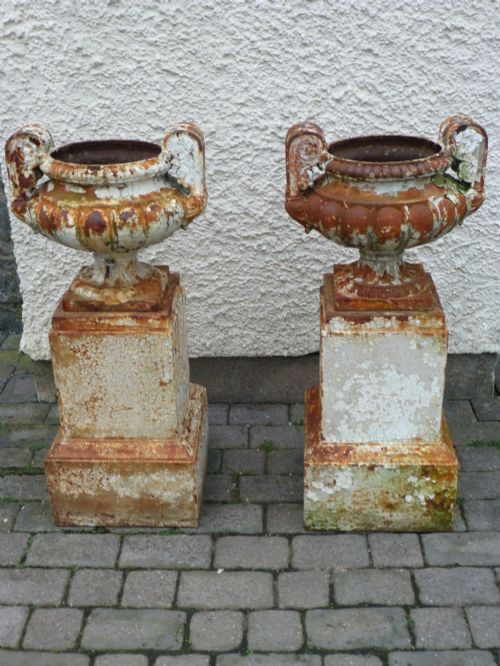
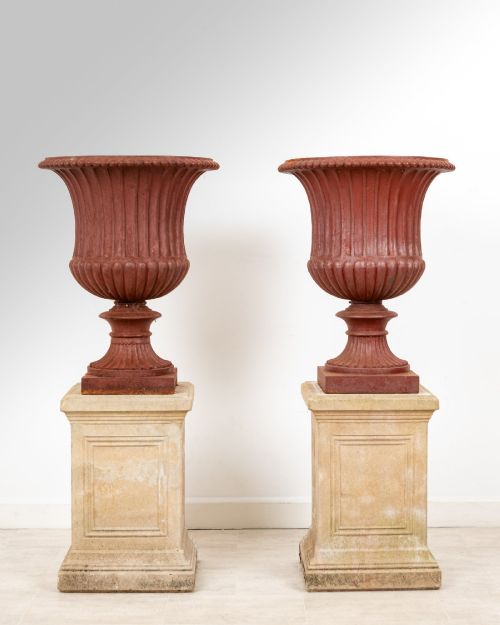
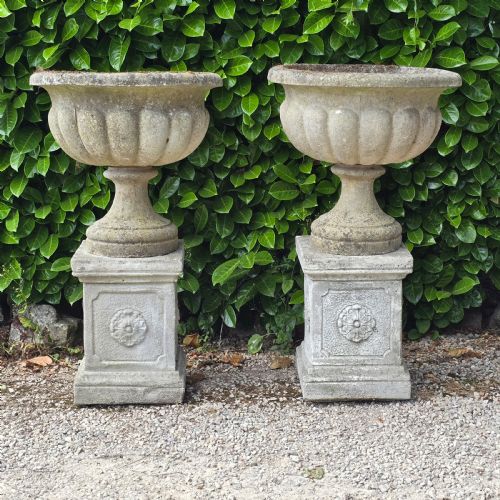
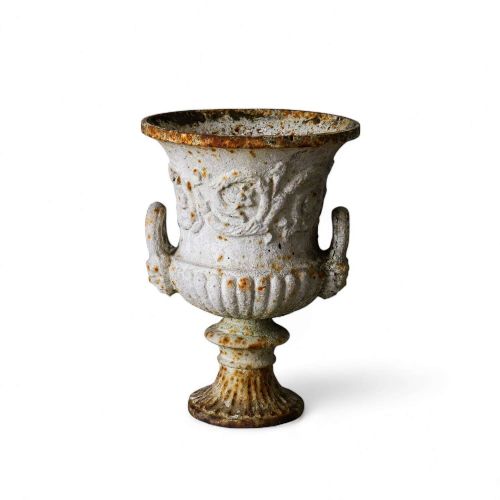
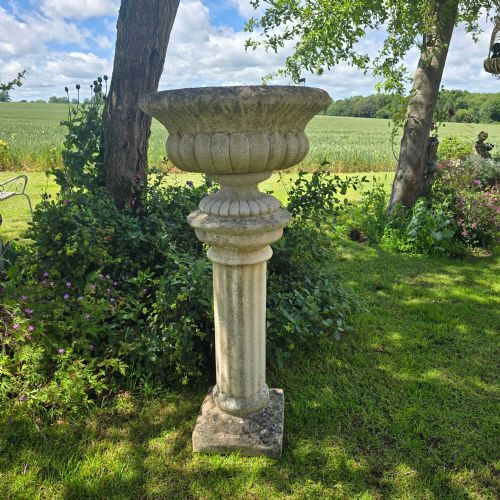
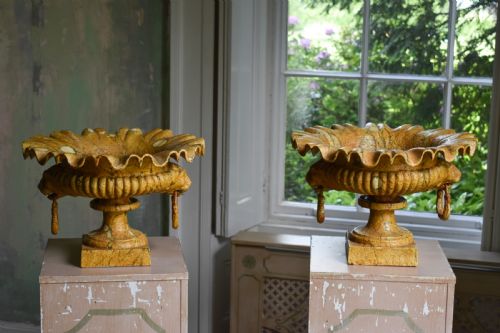
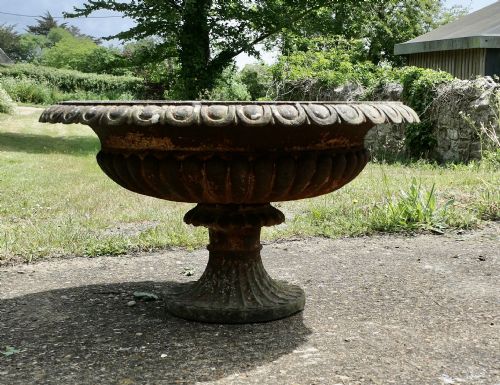
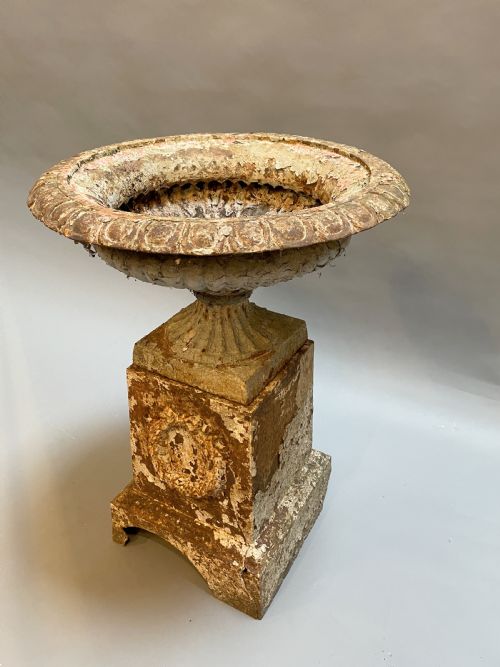
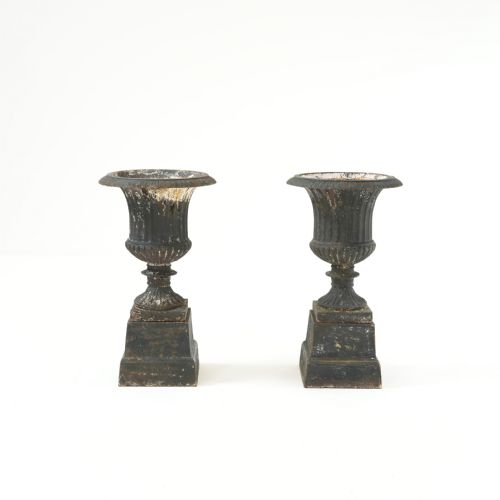
Outdoor urns on pedestals combine a deep planting vessel with a matching elevated base, creating a focal point for gardens, terraces and pathways. These compositions appear in forms ranging from campana profiles to gadrooned bowls supported by columns, square plinths or stepped pedestals.
The selection on this page spans the eighteenth century through to the mid-twentieth century, encompassing Georgian, Regency and Victorian eras alongside later twentieth-century interpretations. Makers such as Falkirk Carron, Coalbrookdale and Andrew Handyside produced robust metal examples that survive alongside terracotta and cast stone variants.
How they were made
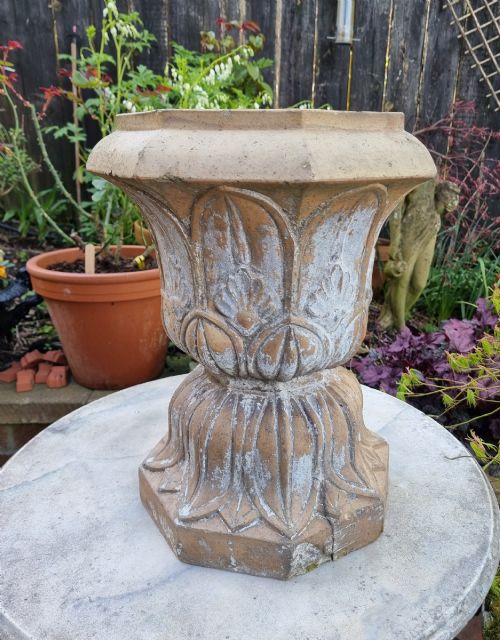
Foundries utilised heavy cast iron poured into sand moulds to create durable campana urns and structural stands, often finished with protective paint or left to weather naturally. Alternatively, potteries shaped terracotta and salt-glazed clays before kiln firing, yielding porous vessels suited to exterior display.
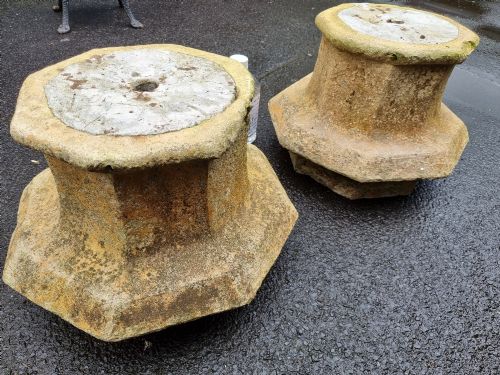
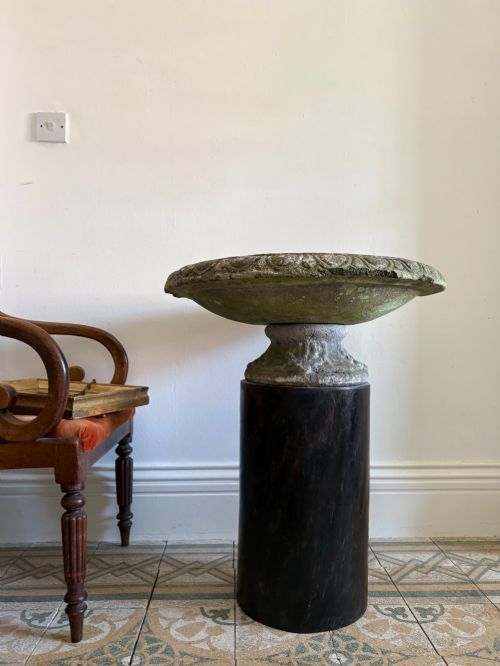
Masons carved solid stone and limestone or cast composite stone, reconstituted stone and concrete into architectural plinths, columns and garden pedestals. These methods produced substantial weights capable of anchoring large planting bowls securely against wind and weather.
Several heavy iron urns weigh more than a grand piano, requiring a stout team of strong gardeners to shift them.
What varies in quality
Quality rests in the crispness of the casting detail, such as the depth of acanthus leaves, gadrooning and classical friezes on iron or stone. Finer examples display sharp, well-defined ornament rather than softened edges resulting from worn moulds.
Original matching pairs mounted upon their correct contemporary plinths command greater architectural integrity than assembled combinations. The thickness of the metal or density of the stone also dictates longevity and resistance to frost.
Falkirk Carron foundry·Coalbrookdale·Andrew Handyside
The Outdoor Urns on Pedestals Glossary
- Campana urn
- A bell-shaped garden vessel with an everted rim, tapering lower body and foot, commonly mounted on a stem and square base.
- Gadrooned
- Decorated with a series of convex curves or flutes moulded in a parallel pattern around the body of the urn.
- Plinth
- A heavy rectangular or square block supporting an urn or column, elevating the vessel above ground level.
- Salt-glazed
- Fired at high temperatures with salt thrown into the kiln, producing a hard, glossy, vitrified ceramic surface resistant to moisture.
Outdoor Urns on Pedestals: Frequently Asked Questions
Are cast iron urns frost proof?
Cast iron withstands freezing temperatures well, though trapped water inside soil-filled vessels can expand and crack older metal if drainage holes become blocked.
Raising the base slightly off the ground during hard winters prevents moisture retention against the bottom of the plinth.
How do I secure heavy stone pedestals?
Due to substantial weight, most large stone and cast iron pedestals remain stable under their own mass without requiring mechanical fixings on level ground.
For exposed hilltop sites, landscape mortar or discreet stainless steel dowels provide extra stability between the plinth and the urn.
Can terracotta urns stay outside all year?
Terracotta absorbs moisture, meaning porous nineteenth-century clay vessels are vulnerable to frost damage if left saturated during freezing weather.
Many gardeners line the interior with protective material or move terracotta urns under covered terraces during the coldest months.
How do I date an iron garden urn?
Nineteenth-century iron urns often feature foundry marks, registration diamonds or distinct construction methods using bolted internal sections rather than modern welding.
Surface patination, layers of historic paint and the sharpness of classical ornamentation also help indicate the manufacturing period.