

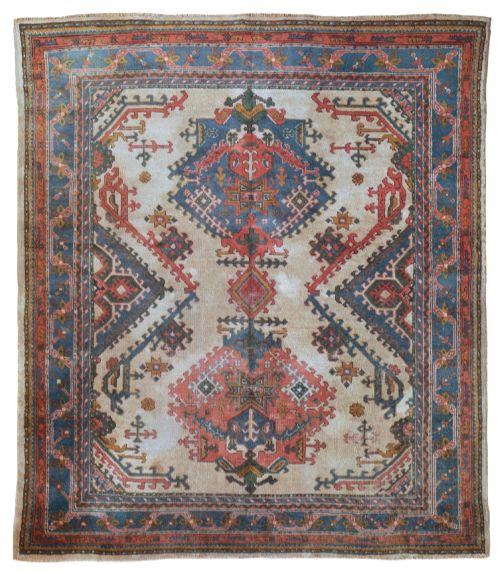
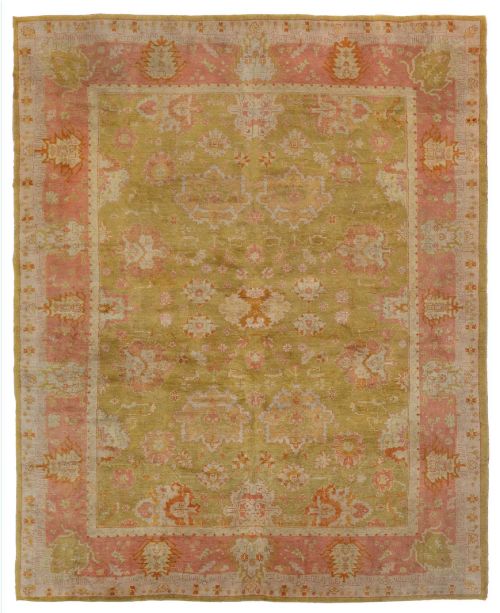
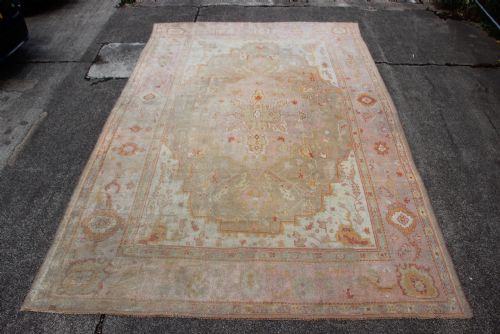
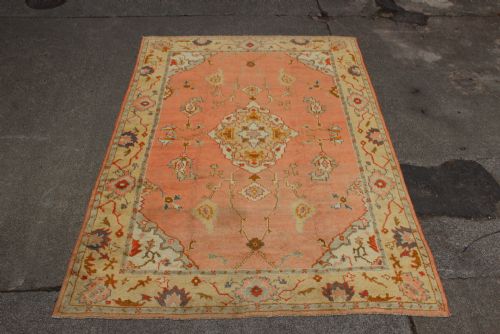
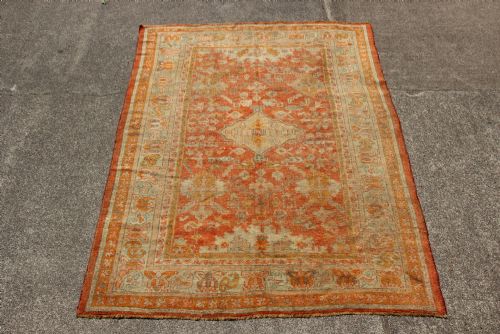


Oushak Medallion Area Rug
An oushak medallion area rug brings softly muted Turkish wool and traditional Anatolian design into a room with understated grace.
Oushak Medallion Area Rug
An oushak medallion area rug represents a distinct tradition of Turkish carpet weaving that dates back through the nineteenth and early twentieth centuries. These pieces carry regional designations such as Ghiordes, Kula, or broader Ottoman and Anatolian stylistic roots.
The version most commonly encountered on this page is the room-sized or smaller antique carpet, typically woven between eighteen-seventy and nineteen-twenty. They feature characteristic central motifs set against pale, ivory, beige, or occasionally green fields.
Makers utilised traditional knotting techniques to produce both large carpets and smaller area formats, including kilim variants. Their appeal lies in the weathered palette and historic design vocabulary developed across generations in western Anatolia.
How they were made
Weavers constructed these rugs using wool foundation threads and pile, frequently incorporating angora wool for added softness and sheen. Cotton also appears in the structural warp and weft of specific examples.
Hand-knotting formed the core technique, executed on upright looms in the towns and villages surrounding Oushak. Natural dyes yielded the characteristic faded terracotta, pale gold, and muted blue tones seen across the inventory.
Oushak Medallion Area Rug Retail Price Guide 2026
Typical asking prices for oushak medallion area rug among the pieces listed under this phrase on Sellingantiques today, from the lower quarter to the upper quarter. They describe what is for sale here now, not the wider market.
Several carpets preserve the subtle track marks of nineteenth-century loom adjustments where weavers changed wool batches mid-project.
What varies in quality
The distinction between standard examples and superior ones rests on knot density, pile preservation, and the clarity of the central medallion design. Finer wool selection and more nuanced dye saturation elevate certain pieces above others.
Proportion and the handling of secondary borders also dictate the visual strength of a rug. Scarce field colours, such as green or unusual ivory grounds, command particular attention from collectors.
The Oushak Medallion Area Rug Glossary
- Oushak
- A town in western Anatolia renowned for major carpet production. Its workshops developed large-scale floral and medallion patterns that influenced European interior design.
- Medallion
- The central ornamental motif placed in the field of a carpet. In these rugs, it often takes a geometric or star-influenced form.
- Kilim
- A flat-weave carpet produced without a pile. These pieces rely on interlocking weft threads to create pattern.
- Angora wool
- A fine fibre utilised in specific nineteenth-century pieces to impart a lustrous surface texture. It distinguishes particular weaving traditions within the region.
- Ghiordes
- A town associated with distinctive Turkish rug weaving traditions. Pieces bearing this attribution share stylistic traits with broader Oushak production.
Oushak Medallion Area Rug: Frequently Asked Questions
How do I clean an antique oushak rug?
Vacuum gently without a rotating brush head to protect the old wool pile. Professional specialist cleaning remains essential for removing deep dust safely.
Avoid exposing these textiles to harsh chemical detergents or soaking them in water. Natural dyes can react unpredictably to aggressive cleaning methods.
Are these rugs durable enough for daily use?
Nineteenth and early twentieth-century wool rugs withstand normal domestic traffic when placed over a quality underlay. Lower pile areas require sensible placement away from heavy furniture legs.
Rotating the rug periodically ensures even wear patterns develop across the wool and cotton foundation over the years.
How can I date an antique oushak carpet?
Dating relies on examining the wool quality, natural dye palette, and structural weave characteristics. Pieces from eighteen-seventy to nineteen-twenty often display specific regional nuances in knotting.
Comparing border motifs and secondary ornaments against documented examples helps narrow down the period of manufacture.
Why do oushak rugs look faded?
The muted aesthetic stems from vegetable and natural dye formulas that mellow softly over decades of light exposure and gentle washing. This patination represents a desired characteristic of nineteenth-century Turkish weaving.
Subtle colour variations across the field demonstrate the hand-dyed nature of the wool before weaving began.