



Ottoman Inlaid Side Table
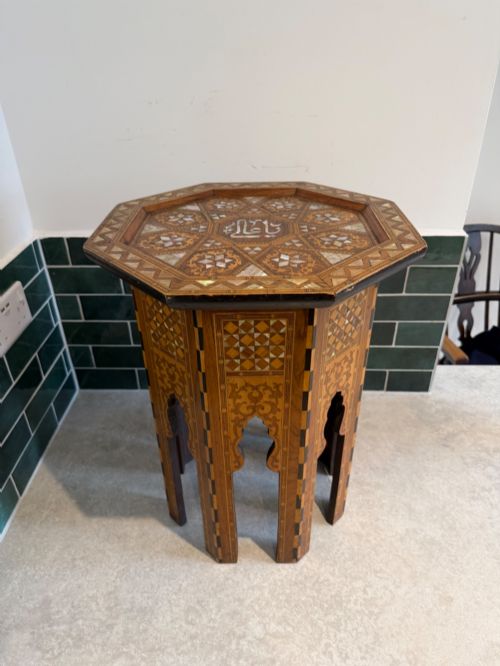
These ottoman inlaid side table pieces bring intricate geometric decoration and rich materials straight into a room.
Ottoman Inlaid Side Table
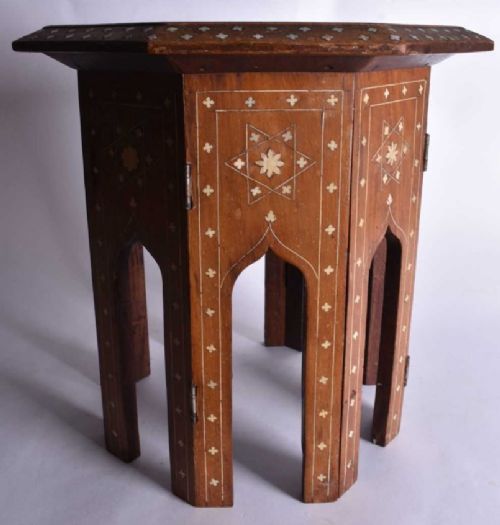
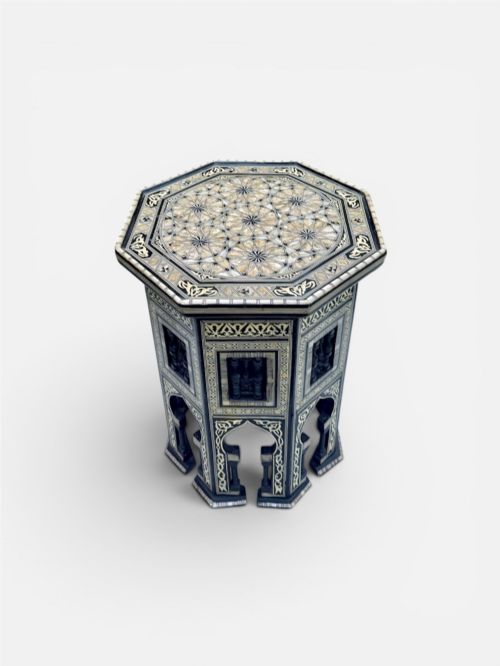
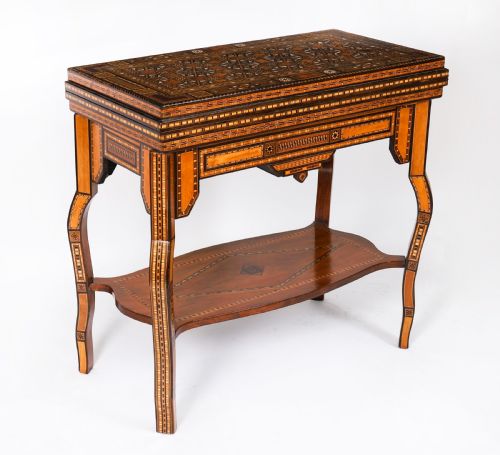
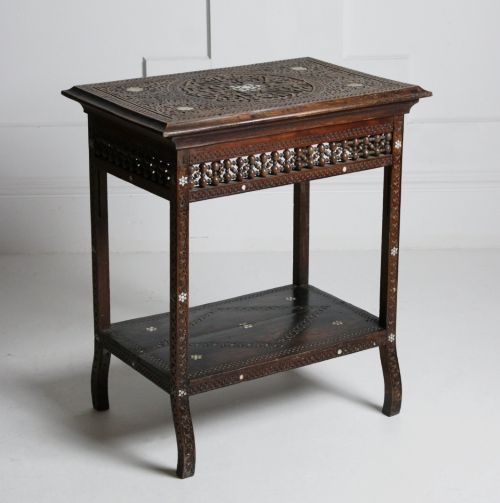
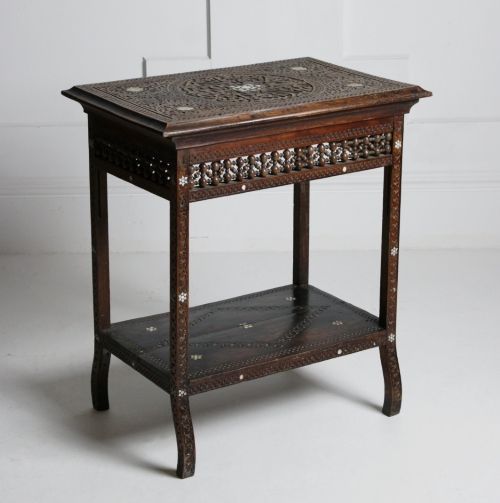
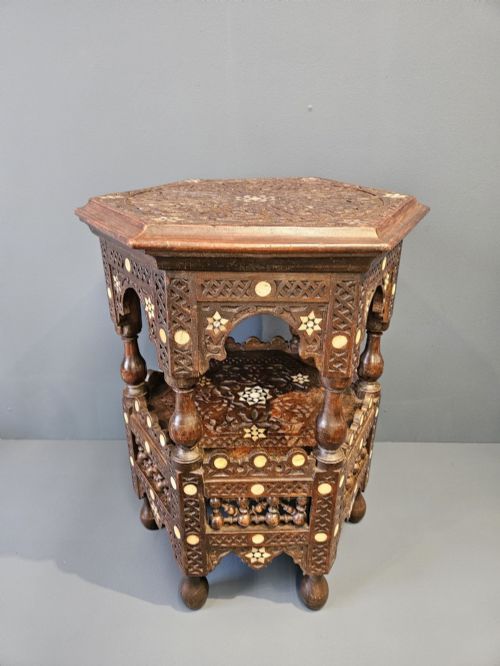
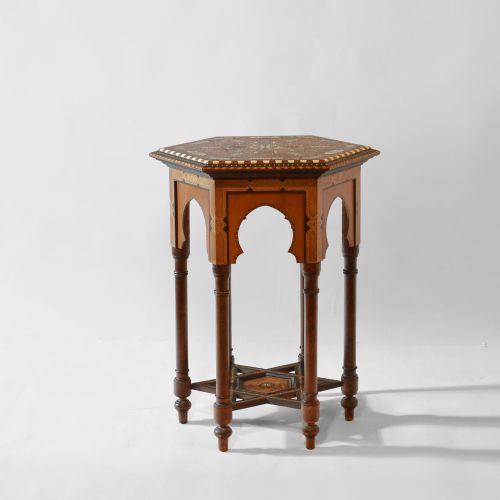
An ottoman inlaid side table draws on Syrian, Levantine, and Moorish traditions, taking the form of octagonal or hexagonal tables with folding bases or tiered surfaces. You will frequently meet pieces featuring detailed geometric woodwork designed to serve as lamp tables or occasional surfaces.
The materials span walnut, fruitwood, and ebonised wood, heavily embellished with reflective details that catch the light in a hallway or sitting room. Many surviving examples date from the nineteenth century through the early twentieth century, showing distinct regional styles from Damascus and the wider Islamic world.
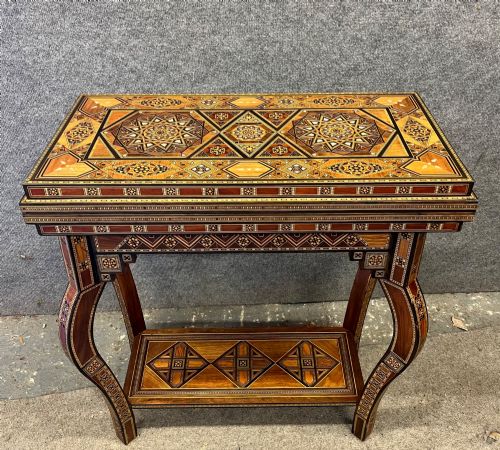
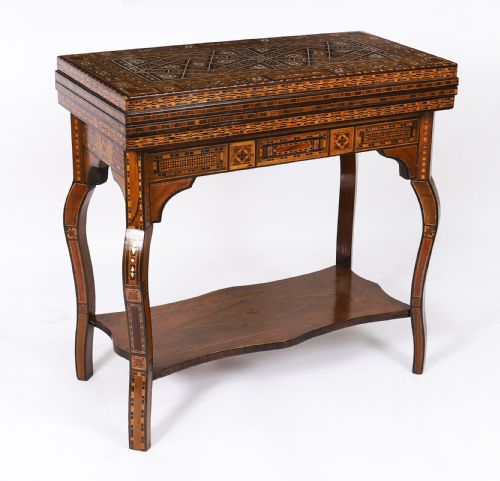
Games tables also appear within this group, offering folding tops that reveal spaces for card play, chess, or backgammon alongside the standard side table forms. These pieces combine practical surfaces with dense, patterned decoration suited to traditional and eclectic interiors alike.
Materials and construction methods
The underlying structure relies on hardwoods, walnut, fruitwood, and ebonised wood, formed into rigid geometric frames for hexagonal and octagonal tabletops. Makers joined sections of timber precisely to support the heavy weight of subsequent surface decoration.
Intricate mosaic patterns take shape through the application of mother-of-pearl and bone, embedded directly into the wooden substrate using specialised adhesives and pegs. Carved detailing in regional styles finishes the edges, framing the central geometric panels.
Ottoman Inlaid Side Table Retail Price Guide 2026
Typical asking prices for ottoman inlaid side table among the pieces listed under this phrase on Sellingantiques today, from the lower quarter to the upper quarter. They describe what is for sale here now, not the wider market.
Several folding tables hide games boards inside, proving that Victorian guests needed entertainment beyond polite conversation.
Judging the quality of an inlay
The finesse of the geometric arrangement separates standard work from exceptional examples, as tighter tessellation requires greater skill from the artisan. Pieces with complete, undisturbed tesserae demonstrate superior preservation of the original surface.
The choice of timber framework and the depth of the carving across the structural joints indicate the workshop's standard of execution. Well-balanced proportions and crisp execution in the mother-of-pearl and bone elements elevate the standing of a piece.
Liberty & Co
The Ottoman Inlaid Side Table Glossary
- Octagonal
- Having eight sides and eight angles. This geometry frequently forms the top of Damascus and Moorish tables.
- Mother-of-Pearl
- The iridescent inner layer of certain mollusc shells. Artisans cut this material into thin pieces to create luminous geometric patterns.
- Ebonised Wood
- Timber treated to resemble ebony through staining or finishing. This dark surface creates a sharp contrast against lighter bone and pearl inlays.
- Tessera
- An individual small block of stone, tile, glass, or other material used in mosaic work. In these tables, tiny wooden and bone tesserae build up complex geometric mosaics.
- Moorish Revival
- An architectural and decorative style drawing on North African and Spanish Islamic traditions. This aesthetic heavily influenced late nineteenth-century European interiors.
Ottoman Inlaid Side Table: Frequently Asked Questions
What is an ottoman inlaid side table?
An ottoman inlaid side table is a decorative occasional surface featuring dense geometric patterns created with mother-of-pearl, bone, and contrasting woods.
Originating from regions influenced by Islamic design traditions, these tables typically display hexagonal or octagonal tops and often include folding bases.
How were these tables used originally?
These tables served as functional furniture for holding lamps, displaying decorative objects, or providing surfaces in reception rooms.
Certain variations included dual purposes, functioning as games tables with built-in boards for chess, backgammon, or card playing beneath folding tops.
How do I style an inlaid table?
An inlaid table works well as a focal point in a neutral room where the intricate geometric patterns can stand out without visual competition.
Keep items placed on top minimal to allow the mother-of-pearl and bone surface decoration to remain clearly visible.
How do I identify the period?
Dating relies on examining the timber species, the style of the carving, and the specific composition of the mother-of-pearl and bone inlay work.
Nineteenth-century examples often display hand-cut mosaic elements and solid hardwood structures distinct from later twentieth-century production.