



Ornithological Engravings Set
These ornithological engravings set selections bring together antique scientific illustration and decorative wall display.
Ornithological Engravings Set
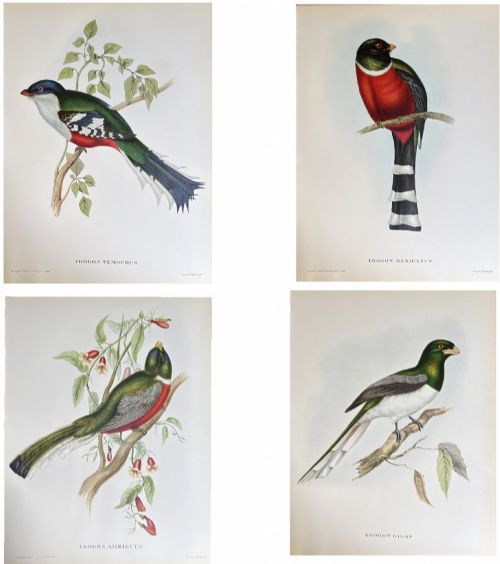
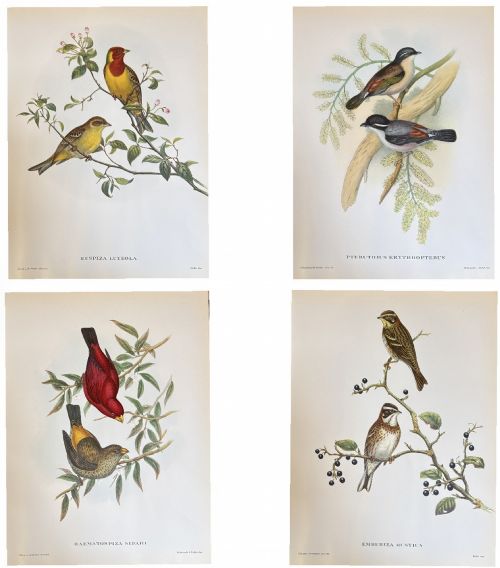
When you search for an ornithological engravings set, you encounter curated groups of bird prints spanning the eighteenth and nineteenth centuries. These collections primarily originate from British natural history sources, featuring specific artists and naturalists.
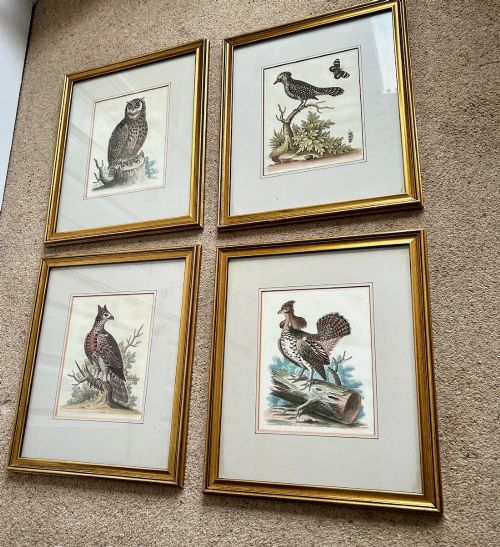
The most common groupings on this page include sets of four or more framed prints and unframed sheets. Subjects range from tropical birds and water fowl to British ducks.
Periods represented stretch from the Georgian era through the Victorian period, with notable mid-twentieth-century print iterations also appearing. Each grouping reflects the prevailing scientific and aesthetic interests of its time.
Materials and production methods
The works rely upon traditional printmaking techniques executed on paper substrates using ink and copper plates. Many examples incorporate hand colouring, applying watercolour over the printed lines to render accurate plumage.
Framed sets frequently utilise wood frames, occasionally enhanced with gilt or gold leaf. Glazing with glass protects the paper and pigment from environmental damage.
Ornithological Engravings Set Retail Price Guide 2026
Typical asking prices for ornithological engravings set among the pieces listed under this phrase on Sellingantiques today, from the lower quarter to the upper quarter. They describe what is for sale here now, not the wider market.
The documented periods span the 18th century, Georgian era, 1800, 1840, 1860, the 19th century, and 1950.
Assessing quality and execution
Quality rests upon the crispness of the original impression and the precision of the hand colouring. Early plates pulled from copper engravings show finer detail than later reproductions.
The condition of the paper surface and the vibrancy of the watercolour pigments determine the overall desirability of the set. Complete uniform sets by named naturalists command greater attention than mixed groupings.
George Edwards·William Swainson·Edward Lear·Eleazor Albin·Buffon
The Ornithological Engravings Set Glossary
- Engraving
- A printmaking process where an artist cuts an image into a metal plate with a burin. The resulting lines hold the ink for transfer onto paper under pressure.
- Hand colouring
- The application of watercolour or tint by hand to a monochrome print. This technique was standard for natural history plates before colour lithography.
- Copper plate
- A flat sheet of copper used in intaglio printing. It allows for extremely fine, sharp lines essential for scientific illustration.
- Watercolour
- A paint medium consisting of water-soluble pigments used to tint bird engravings. It provides translucent layers that mimic natural feathers.
Ornithological Engravings Set: Frequently Asked Questions
How should I hang these prints?
Keep ornithological engravings away from direct sunlight to protect the paper and watercolour pigments from fading.
Hang them at eye level in rooms with stable humidity to prevent warping of the paper and wooden frames.
Are these prints original antiques?
The listings comprise period engravings and prints dating from the eighteenth century through the nineteenth century.
Examine the paper texture, ink impression, and colouring technique to confirm the age of each individual plate.
What framing styles suit them?
Traditional wood or gilt frames complement the historic nature of these scientific illustrations.
Simple mounts allow the detailed bird subjects and hand-coloured work to remain the primary focus on the wall.
How do I identify different artists?
Look for signature engraving styles, printed captions, and stylistic rendering of plumage associated with specific naturalists.
Many eighteenth and nineteenth-century plates include the illustrator's name inscribed directly beneath the image area.