

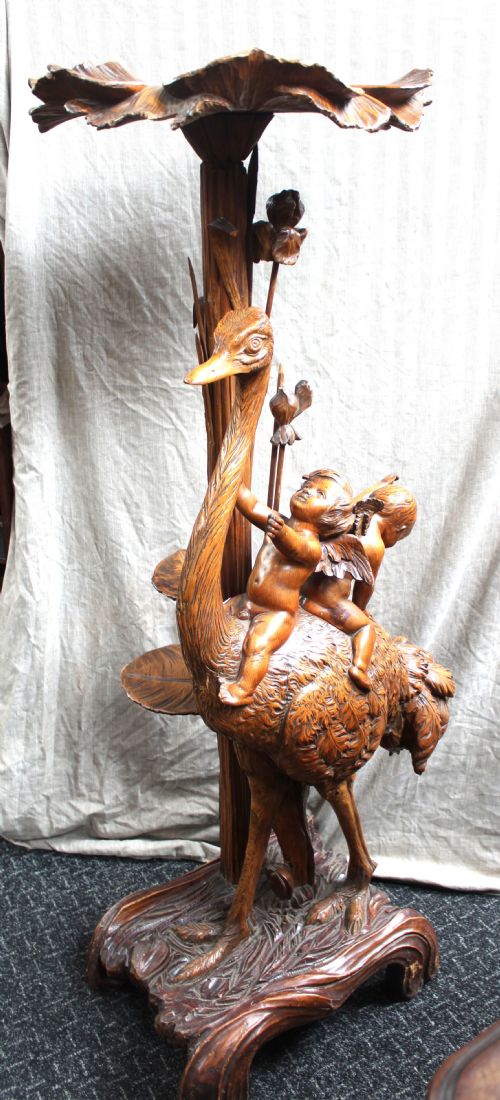


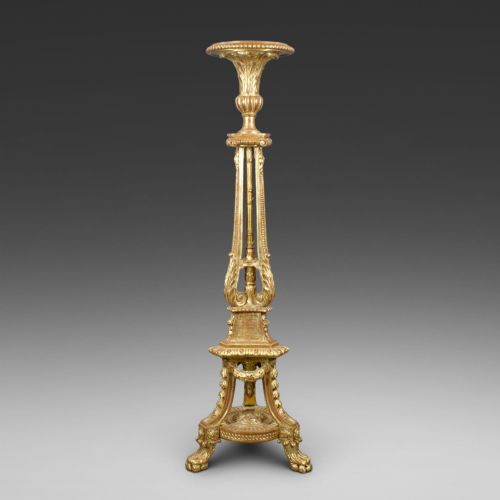


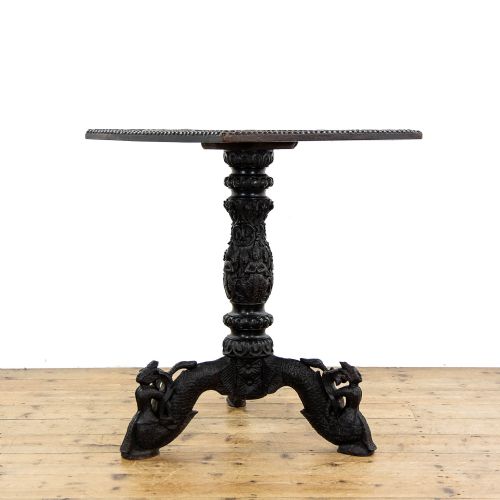


Ornate Wooden Pedestal
An ornate wooden pedestal brings architectural presence to a room, offering a sculptural platform for display.
Ornate Wooden Pedestal
An ornate wooden pedestal provides a solid foundation for displaying plants, clocks, or decorative objects within a room. When searching for an ornate wooden pedestal, buyers encounter various forms including stands, torcheres, plant stands, and occasional tables spanning the nineteenth and early twentieth centuries.
The selection includes regional interpretations such as Anglo-Indian, North Indian, and Venetian pieces alongside European revival styles. These items function primarily to elevate objects of interest, utilising carved details and varied woods to draw the eye upwards.
How they were made
Maker's workshops utilised traditional timber framing and heavy carving techniques across hardwoods, teak, padauk, and walnut. Giltwood and gesso surfaces frequently appear alongside polished or polychrome finishes to create decorative contrast.
Joinery and turning formed the structural core of these stands and torcheres, supporting intricate surface decoration such as relief carving and applied mouldings.
Ornate Wooden Pedestal Retail Price Guide 2026
Typical asking prices for ornate wooden pedestal among the pieces listed under this phrase on Sellingantiques today, from the lower quarter to the upper quarter. They describe what is for sale here now, not the wider market.
Listings feature teak, walnut, satinwood, and giltwood across styles from Anglo-Indian to French Louis XV.
What varies in quality
Depth and crispness of the carving distinguish finer examples from simpler production, particularly where foliage or figures are rendered in high relief. The choice of timber, from dense padauk to figured walnut and satinwood, also sets individual pieces apart.
Coherence of the chosen historical style, whether Italian Renaissance Revival, French Louis XV, or Anglo-Indian, dictates the success of the overall design and execution.
The Ornate Wooden Pedestal Glossary
- Torchere
- A tall ornamental stand designed to hold a light source or decorative object. These slender pieces often feature tripod bases and elaborate carving.
- Giltwood
- Timber that has been coated with gold leaf or a gold-coloured finish. This technique highlights carved details and adds reflective warmth.
- Padauk
- A heavy tropical hardwood known for its rich colour and durability. It provides a stable base for intricate carving.
- Gesso
- A plaster-like mixture applied to wood surfaces as a base for gilding or painting. It allows for sharp, moulded detail work.
- Blackamoor
- A decorative sculptural form depicting figures from exoticised viewpoints, common in Venetian furniture of the period. These figures often support trays or tabletops.
Ornate Wooden Pedestal: Frequently Asked Questions
Where should I place a torchere?
A torchere suits corners, empty wall spaces, or flanking larger pieces of furniture where height adds balance to a room.
Ensure the base has stable footing, especially if placing heavier decorative items or plants on top.
How do I care for giltwood?
Dust giltwood surfaces gently with a soft, dry brush to avoid disturbing the delicate gold leaf application.
Keep these pieces away from direct sunlight and moisture to preserve the underlying gesso and wood.
What is Anglo-Indian furniture?
Anglo-Indian furniture combines traditional British furniture forms with intricate indigenous carving techniques from the Indian subcontinent. Artisans utilised dense local timbers such as padauk and teak.
These pieces often display dense floral motifs and architectural elements distinct from European designs.
How do I identify revival styles?
Revival styles borrow decorative vocabulary from earlier periods, such as the French Louis XV or Italian Renaissance eras. Look for characteristic motifs like scrolling acanthus leaves, cabriole legs, and symmetrical cartouches.
Nineteenth-century makers frequently reinterpreted these historical designs using contemporary workshop methods.