



Ornate Wooden Jewellery Box
These ornate wooden jewellery box examples are tactile receptacles crafted to house precious trinkets, combining period charm with functional storage.

Ornate Wooden Jewellery Box
An ornate wooden jewellery box serves as a secure tabletop repository for keepsakes, rings, and small valuables. When exploring an ornate wooden jewellery box, buyers encounter various forms including caskets, cabinets, and workboxes spanning several centuries.
The pieces originating from this selection stretch across the 18th century, Victorian era, and into the early 20th century. Forms range from Scottish Gothic Revival sewing cases and Dutch Colonial hardwood caskets to Qajar Iranian carved wooden caskets.
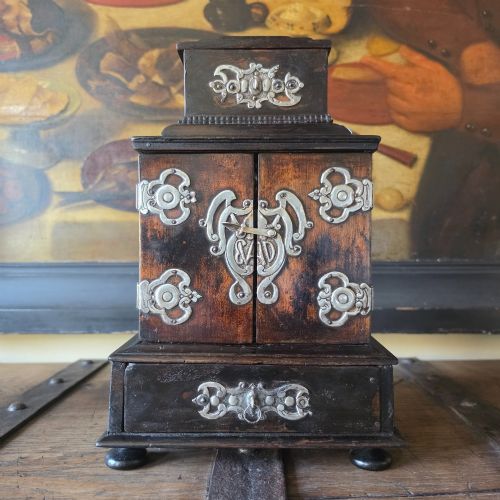
Regional styles dictate much of what appears on the market, notably Anglo-Indian sandalwood pieces and Burmese carved rectangular boxes. Walnut and burr walnut dominate the European examples, often accompanied by dedicated tabletop cabinets.
Materials and construction
Construction relies heavily on dense timbers such as walnut, burr walnut, oak, sandalwood, rosewood, and general hardwood. These woods provide both structural integrity and a rich ground for intricate surface carving or veneer work.
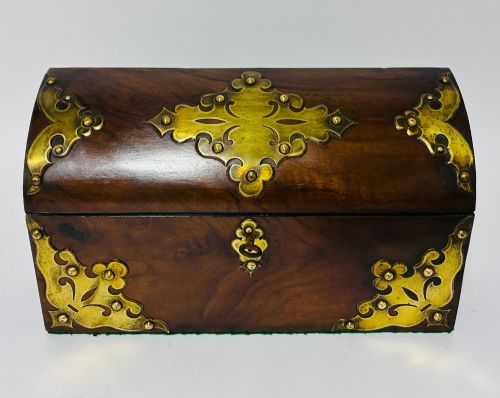
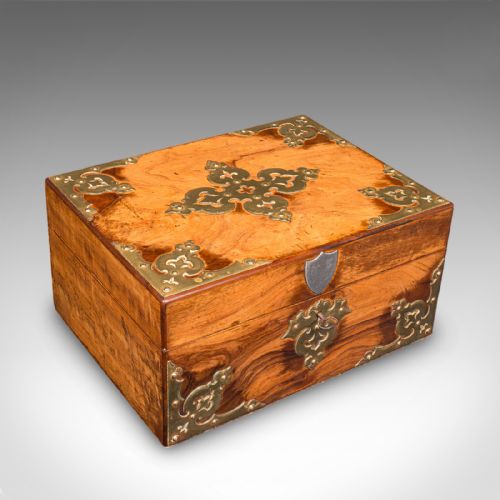
Metal mounts in brass and silvered metal frequently reinforce corners, hinges, and key escutcheons on Victorian and 18th-century pieces. Marquetry inlay techniques further enhance the exterior aesthetic of rosewood and walnut surfaces.
Ornate Wooden Jewellery Box Retail Price Guide 2026
Typical asking prices for ornate wooden jewellery box among the pieces listed under this phrase on Sellingantiques today, from the lower quarter to the upper quarter. They describe what is for sale here now, not the wider market.
Geographic origins range from Scottish workshops and Dutch colonies to Qajar Iran and Burma.
Assessing quality in wooden boxes
Quality reveals itself in the depth and crispness of the hand-carving, especially on Burmese, Qajar, and Indian sandalwood pieces. Superior examples maintain sharp relief details and structural alignment across the lid and body.
The integration of secondary materials like brass mounts and marquetry inlay distinguishes finer cabinets from plain utility boxes. Better pieces also showcase choice timber selections, such as figured burr walnut or select rosewood veneers.
The Ornate Wooden Jewellery Box Glossary
- Burr walnut
- A figured wood veneer derived from the burl growths of walnut trees. It displays swirling, organic grain patterns prized for decorative box lids.
- Marquetry
- The art of applying small pieces of veneer to a structure to form decorative patterns. Rosewood boxes frequently utilise this technique for geometric or floral designs.
- Escutcheon
- A flat plate surrounding a keyhole, usually fashioned from brass. It protects the surrounding wood from wear caused by the key.
- Workbox
- A container specifically designed for sewing implements, threads, and small crafting tools. Victorian examples often feature fitted internal compartments.
- Casket
- A decorative box or chest intended for holding valuables. These often feature hinged lids and secure locking mechanisms.
Ornate Wooden Jewellery Box: Frequently Asked Questions
What were antique wooden jewellery boxes used for?
These boxes stored precious rings, necklaces, and personal trinkets on dressing tables or desks. They kept valuable items organised and protected from dust and damage.
Many also functioned as portable repositories, featuring secure locks and internal velvet or silk-lined compartments tailored for specific accessories.
How do I date a wooden jewellery box?
Dating relies on identifying timber choices, construction methods, and stylistic cues such as Gothic Revival or Dutch Colonial motifs. Eighteenth-century pieces typically show simpler, robust carcase construction.
Later Victorian iterations often incorporate elaborate brass mounts, burr walnut veneers, or specific regional carving styles like Anglo-Indian sandalwood.
How do I care for antique wooden boxes?
Keep wooden boxes away from direct sunlight and dramatic humidity changes to prevent timber warping or veneer cracking. Gentle dusting with a dry, soft cloth preserves the polished surface.
Avoid modern liquid polishes that can build up residue in carved recesses or damage delicate marquetry inlay over time.