

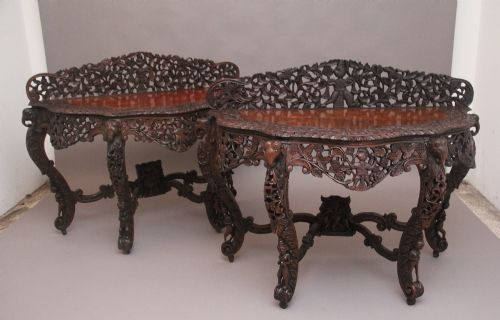
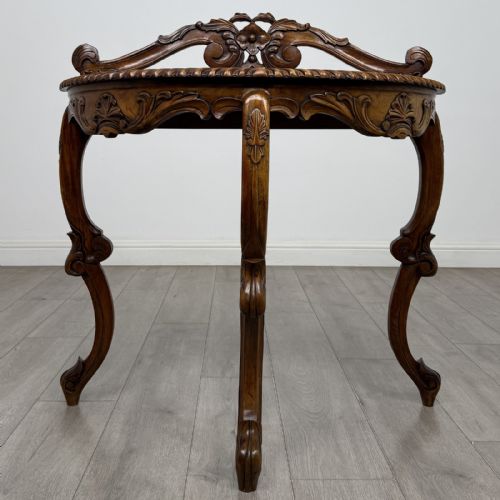
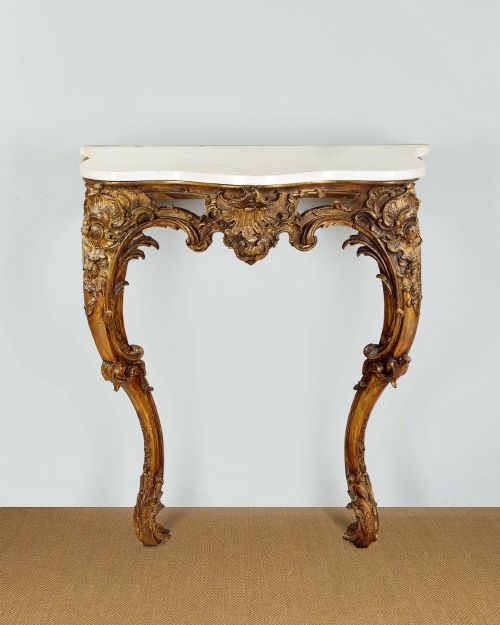
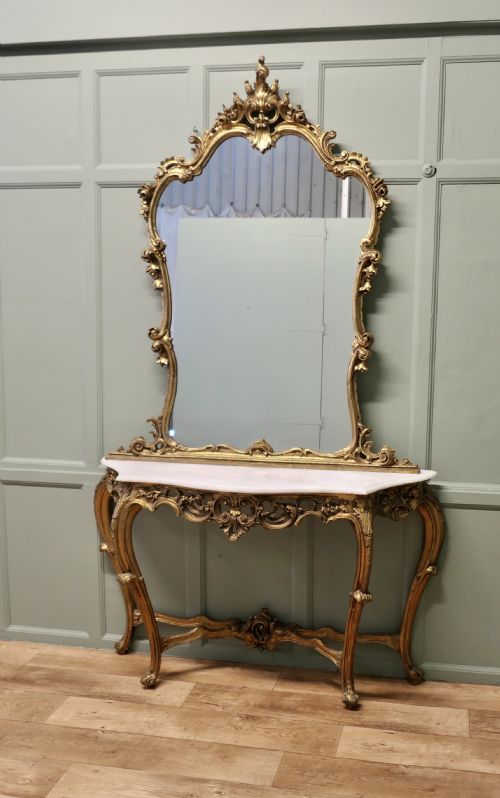
Ornate Wall Console
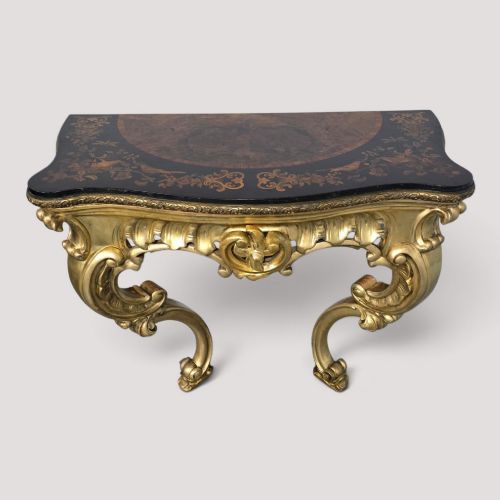
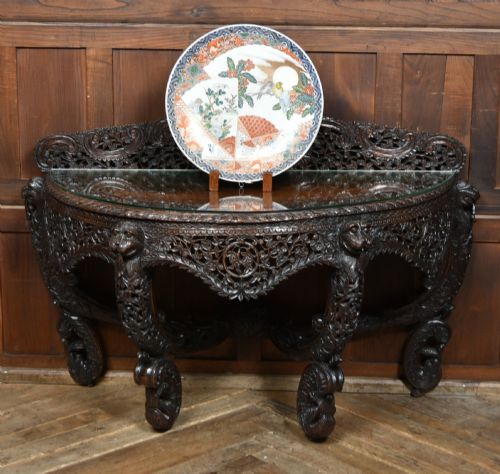
An ornate wall console brings architectural presence to a room, offering a carved surface for display that anchors an interior.
Ornate Wall Console
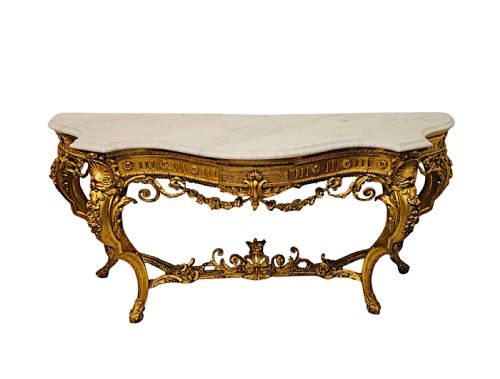
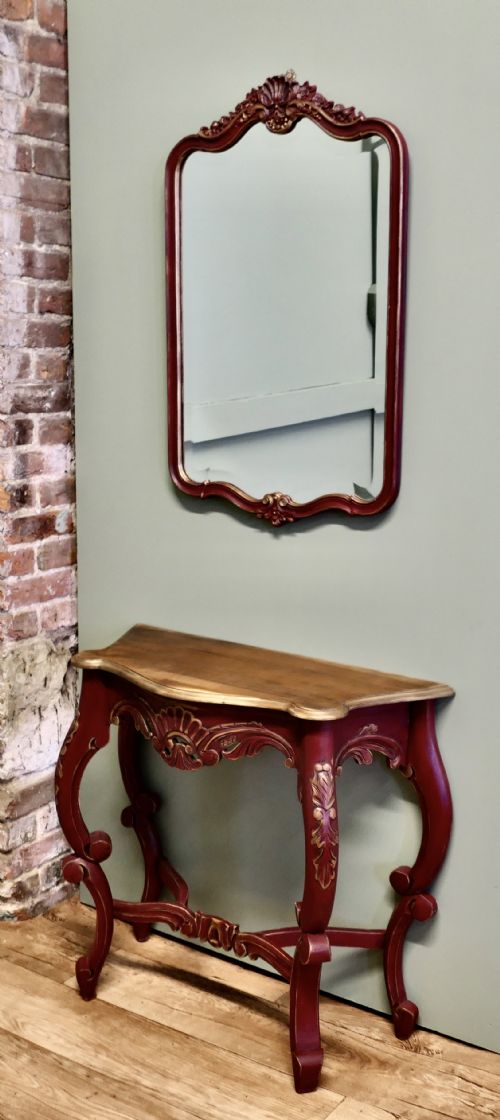
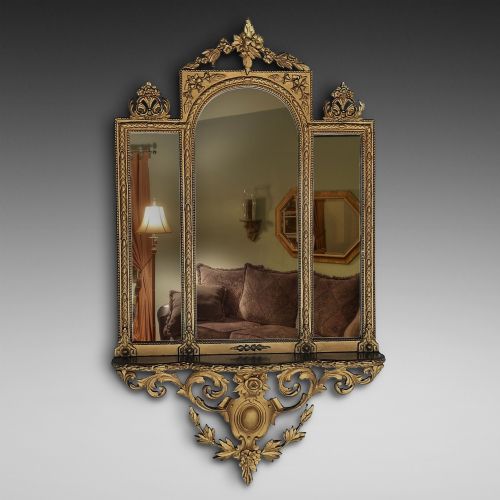
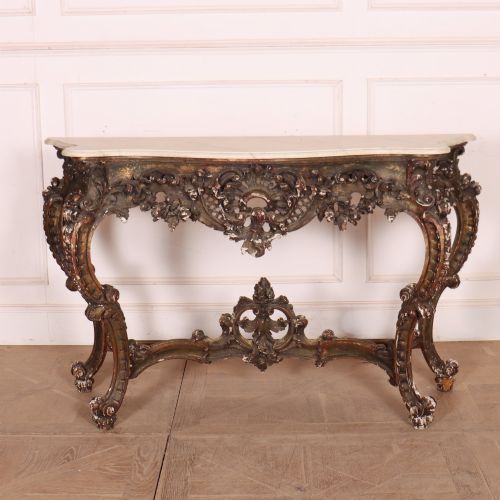
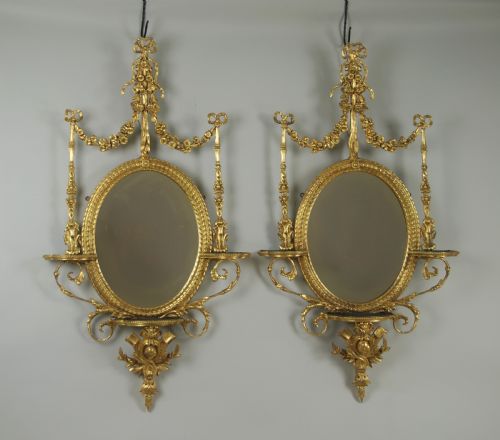
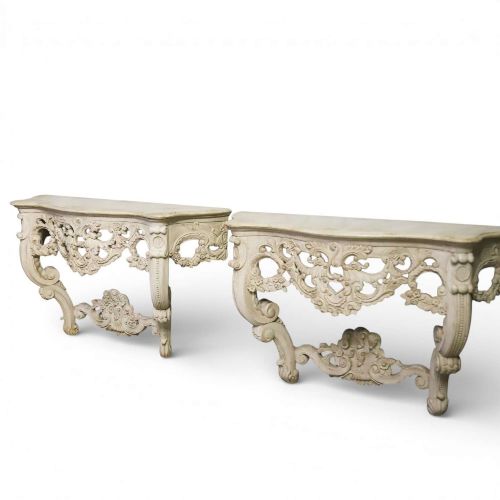
An ornate wall console sits flush against a partition, frequently paired with a matching mirror to balance proportion and reflect light. These pieces span console tables, wall brackets, and display shelves designed for formal reception rooms and hallways.
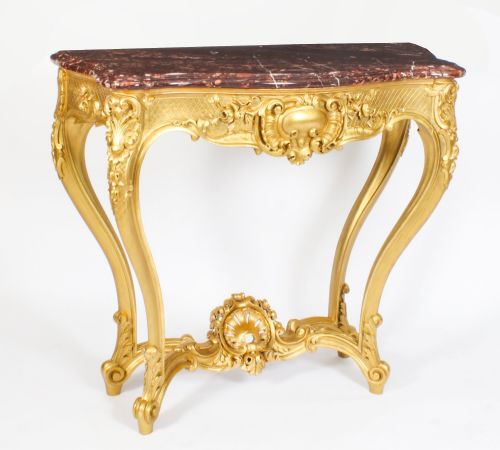
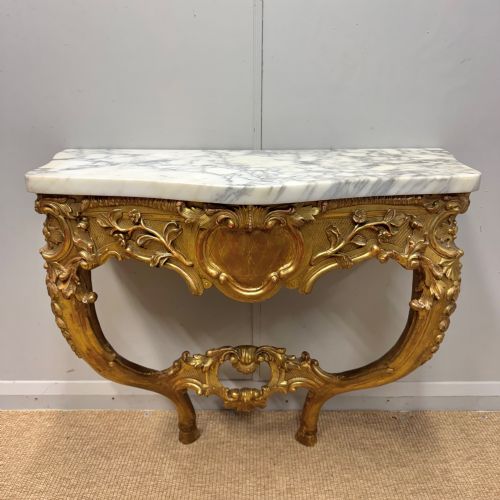
The prevalent examples on this page are French and Italian creations from the eighteenth and nineteenth centuries, often interpreting Rococo and revival styles. Makers utilise serpentine fronts, scrolling supports, and heavy surface ornamentation to create substantial decorative impact.
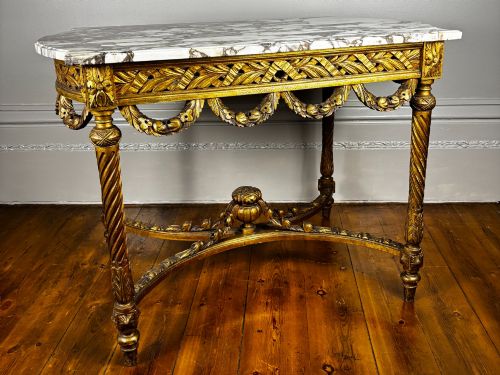
The category extends from singular wall brackets to large side tables featuring Carrara marble tops and elaborate giltwood frames. Their primary function historically was the display of decorative objects beneath a pier glass rather than standalone use.
Materials and construction
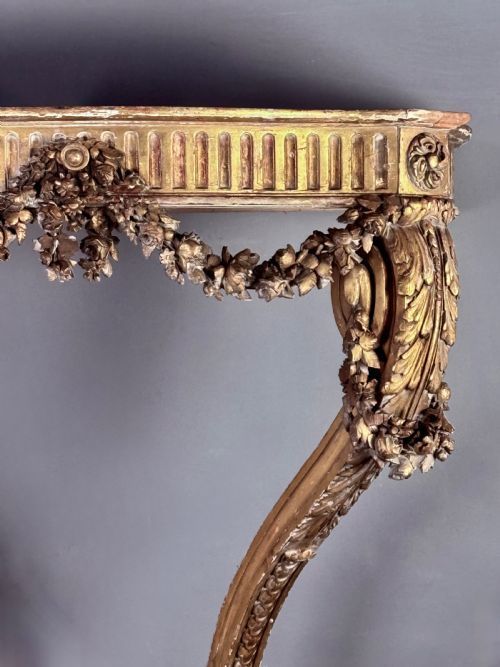
Carved wood forms the structural core of these items, with giltwood, walnut, and gesso providing the base for subsequent surface decoration. Artisans shape timber into intricate scrolling foliage, putto figures, and baroque motifs before applying gold leaf or paint finishes.
Marble tops, particularly white Carrara varieties, provide heavy, cool contrasts to the warmth of gilded wood frames. Glass and mirror glass complete many sets, integrated into pier glasses and wall brackets to augment the reflective quality of the gilt.
Ornate Wall Console Retail Price Guide 2026
Typical asking prices for ornate wall console among the pieces listed under this phrase on Sellingantiques today, from the lower quarter to the upper quarter. They describe what is for sale here now, not the wider market.
Several eighteenth-century carvers delighted in hiding tiny, watchful putto faces amid dense cascades of gilded foliage.
Distinguishing quality
The depth and clarity of the hand-carving determine the distinction between ordinary production and superior craftsmanship. Crisp undercut foliage and expressive figural details reveal an artisan's confidence compared to softer, moulded gesso over simpler timber.
The application of gold leaf and the integrity of the underlying gesso layer dictate the longevity and richness of the surface. Original gilding shows subtle tonal variation and wear that machine-applied metallic paints fail to replicate.
Felix Alfred Ternisien
The Ornate Wall Console Glossary
- Giltwood
- Timber coated with a thin layer of gold leaf over a prepared gesso ground. This finish provides the characteristic bright reflection seen on period console tables.
- Gesso
- A plaster mixture applied to wood surfaces to create a smooth ground for gilding or painting. It allows carvers to achieve sharp relief details.
- Pier glass
- A tall mirror designed to hang on the wall space between windows, often placed directly above an ornate wall console.
- Corbel
- A structural bracket projecting from a wall to support a weight, frequently carved with scrollwork and utilised in wall shelf designs.
- Serpentine front
- A furniture edge that curves outward in the centre and inward at the sides, adding dynamic movement to console tables.
Ornate Wall Console: Frequently Asked Questions
How do I secure an ornate wall console?
These pieces require sturdy wall fixings because many incorporate heavy marble tops that shift the centre of gravity forward.
Screwing directly into masonry or locating wooden studs ensures the bracket or table supports the downward weight safely.
Were these tables designed to stand alone?
Most historical consoles rely on wall attachment for stability, lacking the rear legs needed for independent balance.
They function as architectural furniture that anchors to the plaster while resting weight on front legs or floor brackets.
How should I clean gilded surfaces?
Dusting with a soft, dry brush preserves delicate gold leaf without disturbing the underlying gesso.
Moisture and commercial cleaners strip historical finishes, so conservation requires minimal intervention and gentle handling.
What rooms suit a wall console and mirror set?
Hallways, drawing rooms, and dining spaces benefit from the vertical extension that matching mirrors provide.
Placing them opposite a light source maximises illumination and creates an illusion of greater spatial depth.