





Ornate Table Candelabra
These ornate table candelabra bring 19th-century metalwork and marble to a dining surface or mantelpiece.
Ornate Table Candelabra
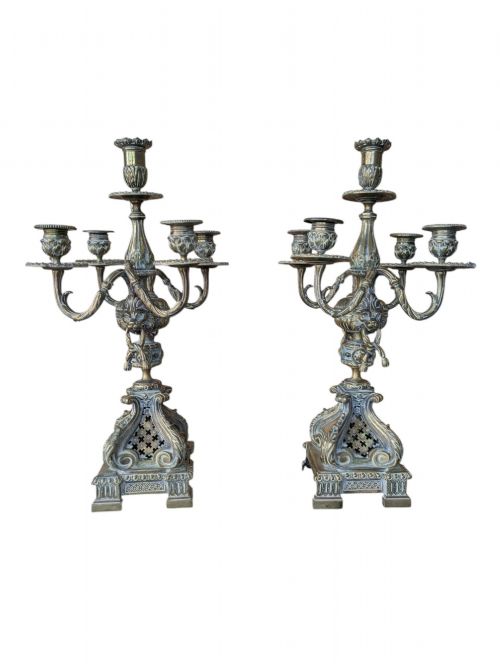
When you search for ornate table candelabra, you encounter multi-branch candle holders designed for dining tables, sideboards and mantelpieces. These decorative objects date predominantly from the 19th century and often appear as symmetrical pairs.
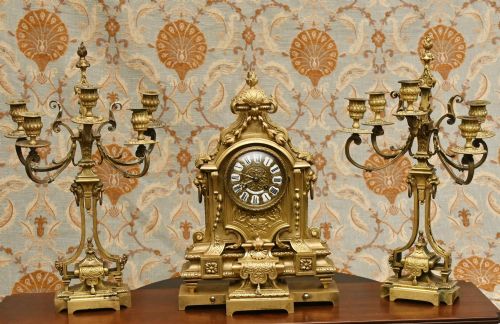
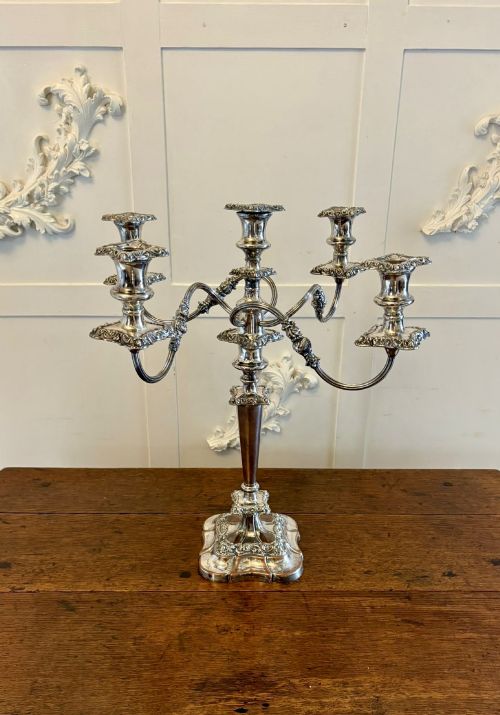
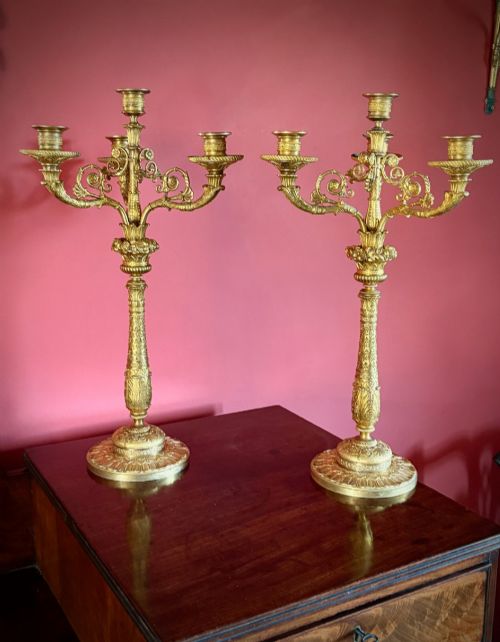
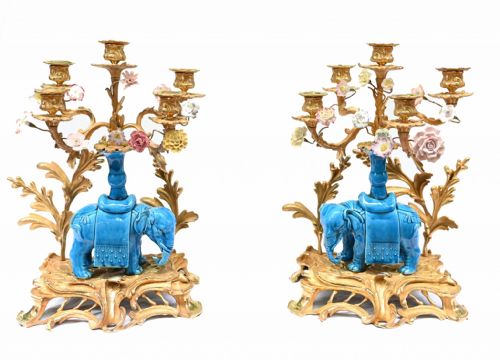
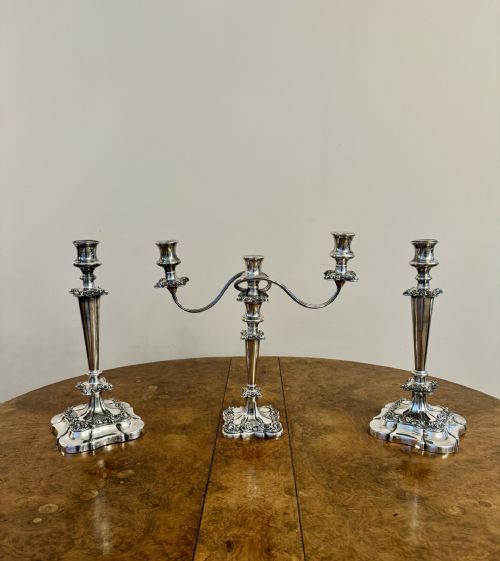
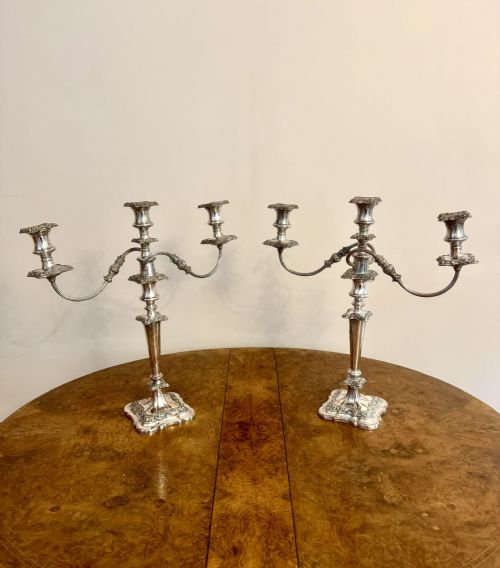
The versions most frequently met on this page include Victorian silver plated pieces and French ormolu or gilt bronze examples. Many incorporate branches for multiple candles alongside central columns, occasionally forming part of larger clock garniture sets.
Makers and origins span English Victorian workshops and continental European foundries, particularly French producers working in Rococo Revival, Louis XVI and Empire styles. Their primary role was to illuminate formal rooms while displaying sculptural metalwork.
How they were made
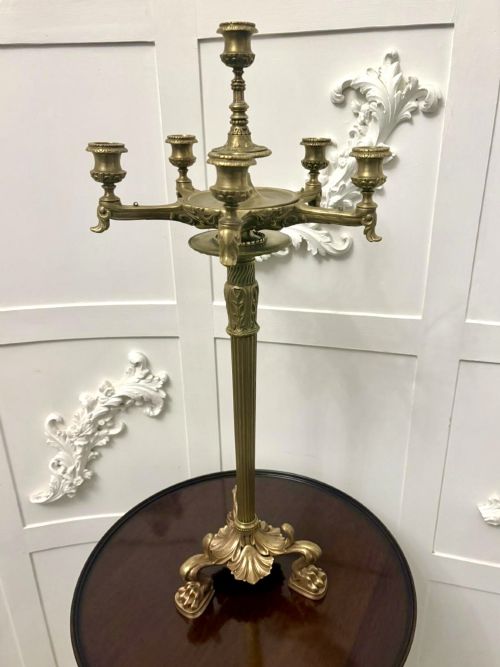
Foundries utilised casting and chasing techniques to shape metals such as brass, bronze and ormolu into complex scrolling arms and floral motifs. Ormolu pieces received a finely applied layer of gold leaf over bronze, creating a durable golden surface.
Silver plated candelabra employed Sheffield plate or electroplating methods to bond a thin layer of silver over base metals like copper or brass. Stonework components integrated into these stands typically feature turned and polished marble.
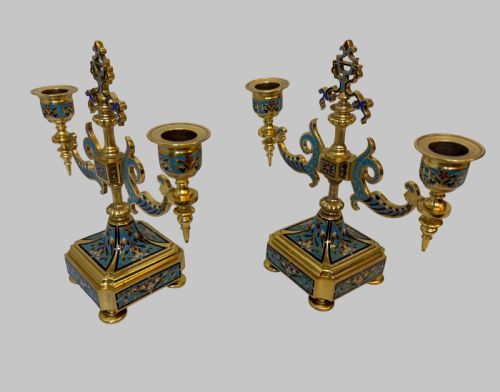
Decorative elements frequently include applied enamel, champlevé work or crystal drops suspended from bobeches. Individual branches and sconces were often made detachable to facilitate cleaning and conversion.
Ornate Table Candelabra Retail Price Guide 2026
Typical asking prices for ornate table candelabra among the pieces listed under this phrase on Sellingantiques today, from the lower quarter to the upper quarter. They describe what is for sale here now, not the wider market.
The documented periods span the Regency era through the Victorian epoch and into the early 20th century, including 1850, 1880 and 1930.
What varies in quality
The refinement of the chasing and the crispness of the casting distinguish finer candelabra from standard production items. Superior examples retain sharp detail in acanthus leaves, figural mounts and surface ornamentation without softening from excessive wear or re-polishing.
The weight and gauge of the metal components indicate construction standards, with heavier castings providing greater stability for multiple branching arms. The quality of the gilding or silver plating determines how well the finish ages across high-relief surfaces.
Completeness and originality dictate the standing of a pair, particularly when sconces, drip pans and central garniture components remain matching. Pieces that retain their original mercury gilding or unaltered structural fittings hold higher regard among collectors.
Smith & Sissons & Co·Auguste Cain·Elkington·Blagden Hodgson & Co
The Ornate Table Candelabra Glossary
- Candelabra
- A branched candlestick designed to hold multiple candles simultaneously. They often feature a central shaft dividing into three, four or more arms.
- Ormolu
- Finely ground high-carat gold applied to a bronze base using a mercury amalgamation technique. This historic process yields a rich, warm golden lustre.
- Garniture
- A set of matching decorative objects, typically comprising a clock flanked by matching candelabra or vases for a mantelpiece.
- Sconce
- The detachable metal cup or nozzle fitted at the top of a candle arm to catch dripping wax. They are frequently removable for cleaning.
- Champlevé
- An enamelwork technique where troughs are dug into a metal surface and filled with vitreous paste before firing. It appears on coloured decorative mounts.
- Bobeche
- A collar or disc fitted beneath the candle nozzle to collect wax run-off. They protect the ornamented arms below from dripping wax.
Ornate Table Candelabra: Frequently Asked Questions
What is a clock garniture set?
A clock garniture set consists of a central mantel clock accompanied by two matching side pieces, such as candelabra or decorative urns. These matched suites were designed to create a unified display across a fireplace mantel or large sideboard.
In period interiors, the pieces shared identical materials like marble and ormolu, tying together the decorative scheme of a formal reception room.
Were these candelabra ever electrified?
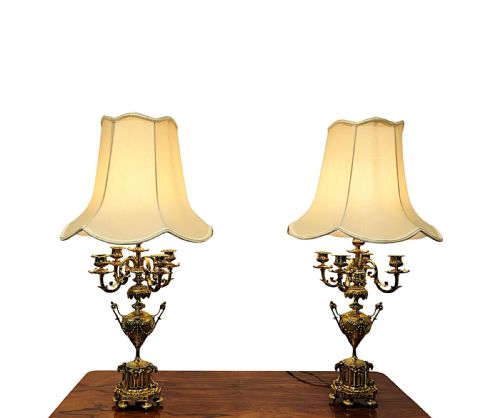
Many surviving 19th-century candelabra have been converted to table lamps to accommodate modern lighting needs while retaining their antique bases. These conversions often route wiring through the central column to preserve the exterior appearance of the metalwork.
Buyers can find both unconverted candle-bearing examples and wired table lamp adaptations across current listings.
How do I care for silver plated candelabra?
Silver plated pieces require gentle cleaning with specialised silver cloth to avoid wearing through the thin plated layer to the base metal beneath. Regular dusting helps prevent tarnish accumulation in the recessed crevices of ornate cast details.
Avoiding harsh chemical dips preserves the integrity of the antique plating and any secondary patination developed over the decades.
How do I distinguish Louis XVI style from Rococo?
Louis XVI style pieces display straight lines, symmetry, classical architectural motifs and restrained geometric proportions. In contrast, Rococo Revival works feature asymmetrical scrolls, C-curves, naturalistic foliage and dynamic, flowing movement.
Examining the structural outlines and decorative motifs helps identify which 19th-century revival movement influenced the maker.