


Ornate Silver Box
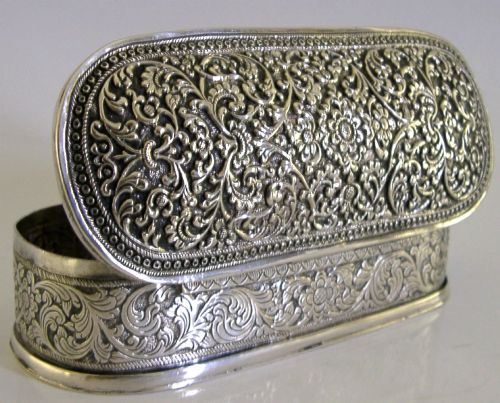
An ornate silver box brings heavy Victorian Rococo Revival or French Renaissance style to a dressing table.
Ornate Silver Box
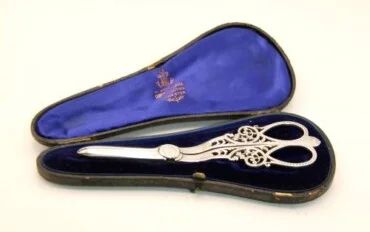
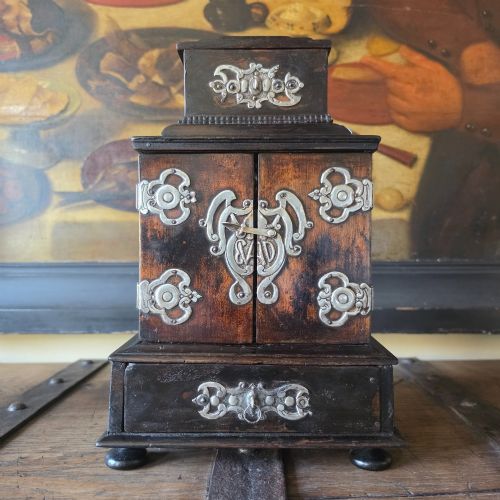
When you search for an ornate silver box, you encounter a range of caskets, trinket boxes, and jewellery holders spanning the seventeenth century through the Edwardian period. The most common examples meeting this description are Victorian and Edwardian pieces, often styled with revival motifs.
These items were manufactured to house jewellery, pills, snuff, or letters on grand household surfaces. They appear in solid sterling silver, silver plate, and silvered metal, occasionally lined with velvet.
Continental European workshops also contributed heavily to this category, producing French Renaissance revival caskets and German Baroque strongboxes. The variety covers everything from small trinket containers to substantial table boxes.
How they were made
Makers utilised solid sterling silver, electroplated nickel silver, and silvered base metals, often combining cast mounts with repoussé work. Gilding and enamel appliques appear on revival pieces alongside inset cameos.
Interiors frequently received silk or velvet linings to protect delicate contents such as jewellery and snuff. Structural frames utilised brass and walnut in certain cabinets and strongboxes before being clad or plated.
Casting and electro-forming techniques allowed workshops to achieve high relief decoration, seen on acanthus thumbpieces, scrolling foliage, and figural feet.
Listings feature items spanning from the seventeenth century to the Edwardian era, incorporating materials like solid silver, silver plate, brass, and velvet.
What varies in quality
The distinction between ordinary and exceptional pieces lies in the crispness of the hand-chased relief and the weight of the metal. Superior items feature deep, clear hallmarks and intricate casting that retains sharp detail.
Makers such as Robert & Belk, Walker and Hall, and AB Paris applied careful hand-finishing to their silver plating and gilt surfaces. Lesser examples rely on thin plating over base metals that wears away with handling.
Robert and Belk·Walker and Hall·AB Paris
The Ornate Silver Box Glossary
- Repoussé
- A metalworking technique where the artisan hammers the design from the reverse side to form raised relief on the front. This method creates the three-dimensional scrolling patterns seen on many Victorian trinket boxes.
- Electroplate
- A process of depositing a thin layer of silver onto a base metal using electrical current. This technique became widespread during the nineteenth century to produce accessible decorative wares.
- Hallmark
- An official stamp indicating the metal purity, place of assay, and date of manufacture. British sterling pieces typically feature a lion passant and town marks.
- Rococo Revival
- A nineteenth-century design style drawing on asymmetrical C-scrolls, floral motifs, and shell work. It dominates the ornamentation of Victorian silver caskets.
- Acanthus
- A classical leaf ornament carved or cast in relief. It frequently decorates the thumbpieces and feet of nineteenth-century boxes.
Ornate Silver Box: Frequently Asked Questions
How do I date a silver box?
Examine the hallmarks stamped on the metal, which reveal the assay office and the year of manufacture. Stylistic clues such as Victorian Rococo Revival scrolls or Edwardian restraint also help narrow down the period.
Compare the construction methods and interior linings against known examples from the seventeenth century to the early twentieth century. Maker marks provide the final definitive guide to age.
Were these boxes used for jewellery?
Many were specifically built as jewellery caskets or velvet-lined ring boxes for dressing tables. Others served as trinket holders, pill boxes, or desktop containers for letters and wax.
Smaller examples held snuff or breath mints for polite society during the Georgian and Victorian eras. Their primary function depended entirely on their scale and internal compartment layout.
What is the difference between solid silver and silver plate?
Solid silver items consist entirely of precious metal, usually sterling standard, stamped with official assay marks. Silver plated items use a base metal core, such as nickel silver or brass, coated with a layer of pure silver.
Plated pieces offered households the appearance of luxury at a lower cost during the nineteenth century. Makers often used electroplating to achieve heavy, ornate relief work without prohibitive material costs.