




Ornate Ormolu Desk
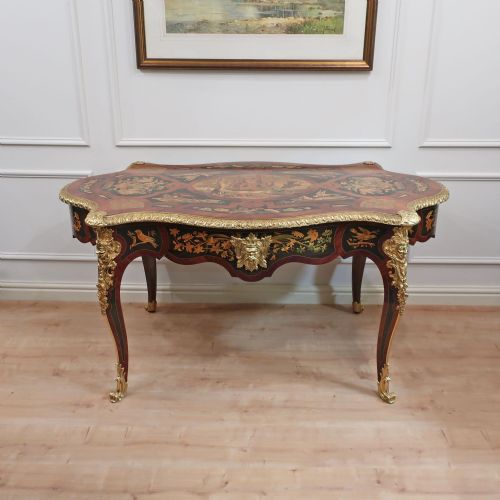
An ornate ormolu desk brings French Rococo revival glamour and gilt bronze splendour to a study.
Ornate Ormolu Desk
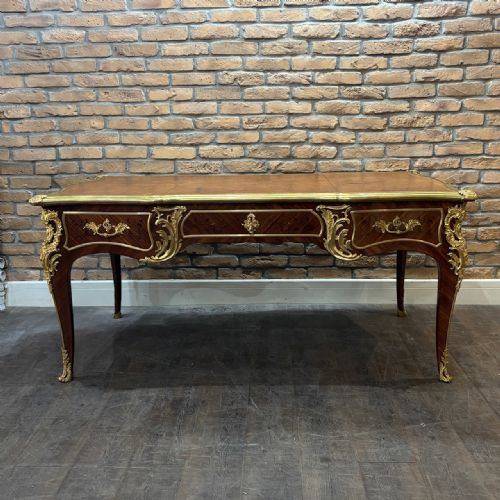
When searching for an ornate ormolu desk, a buyer encounters writing tables, centre tables and bureau plat examples dating from the nineteenth century. These pieces originate predominantly from French workshops operating in the Louis XV and Louis XVI styles during the Victorian era and the decades surrounding eighteen-eighty.
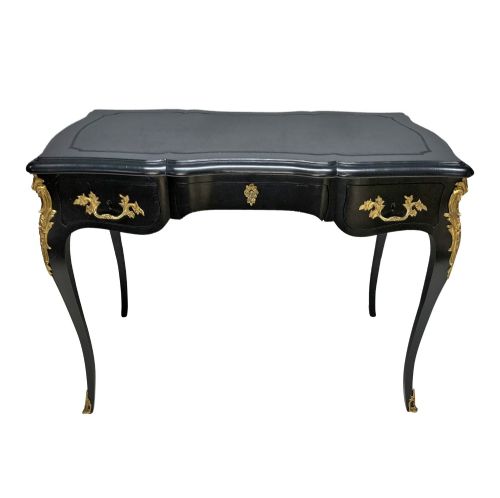
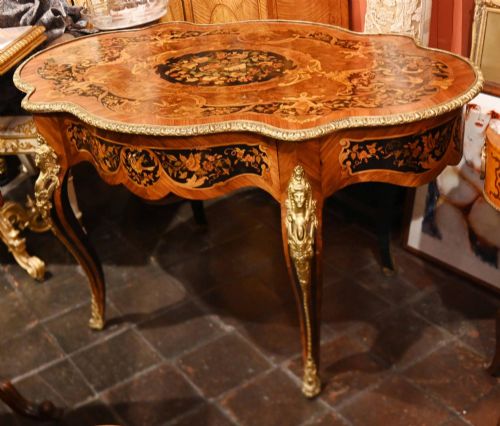
The selection on this page includes writing tables finished in black lacquer or marquetry inlay alongside rosewood and walnut secretaire furniture. Such tables combine functional writing surfaces with decorative mounts in gilt bronze and ormolu.
Makers working within these continental traditions produced desks that reflect the grandeur of French chateau interiors through serpentine outlines and elaborate cast metal mounts.
Materials and Technique
The construction of these pieces relies on timber carcasses shaped into serpentine or bureau plat forms, overlaid with marquetry or parquetry veneers in woods such as rosewood, walnut and kingwood. Cabinetmakers utilised precise sawing methods to create intricate floral and geometric inlays across the writing surfaces and drawers.
Gilt bronze and ormolu components were cast, chased and fire-gilded to produce the ornate mounts that frame the legs, aprons and corners of each desk. Artisans combined these metallic elements with inset leather writing panels and porcelain plaques to complete the decorative scheme.
Ornate Ormolu Desk Retail Price Guide 2026
Typical asking prices for ornate ormolu desk among the pieces listed under this phrase on Sellingantiques today, from the lower quarter to the upper quarter. They describe what is for sale here now, not the wider market.
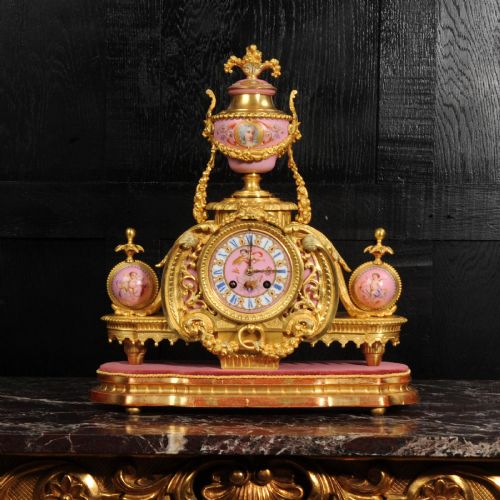
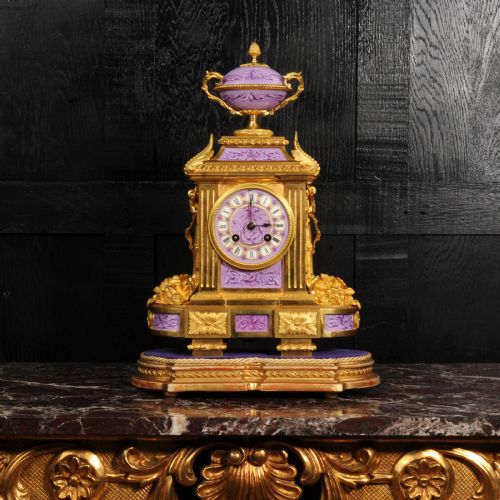
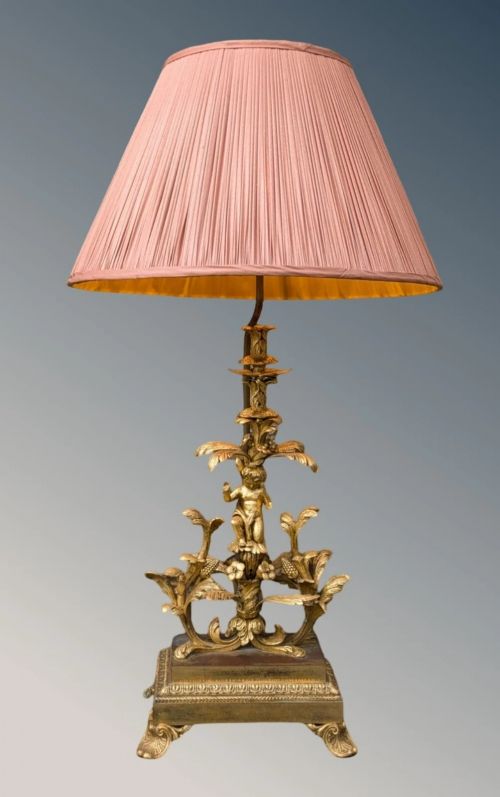
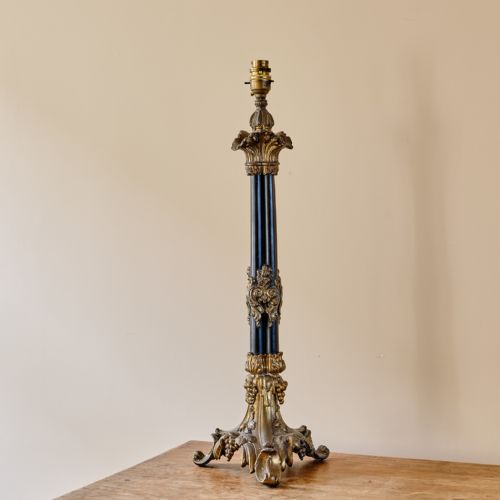
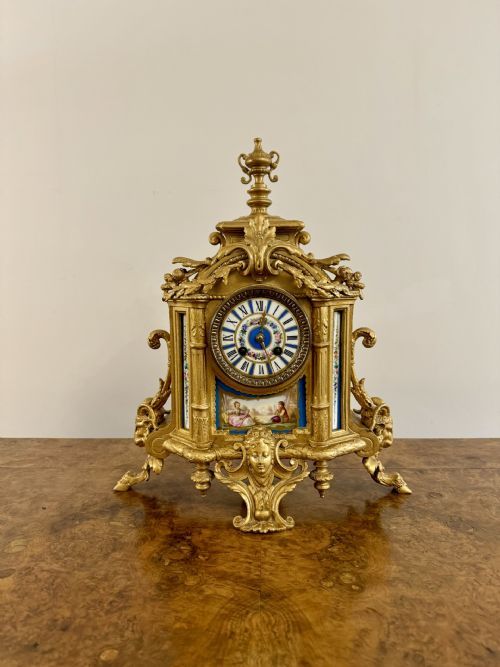
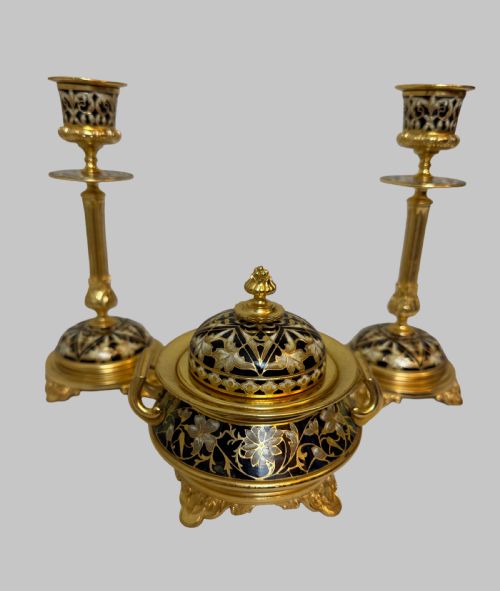
Listings feature nineteenth-century French desks alongside mantel clocks, table lamps and champlevé inkwells in Rococo and Louis styles.
Standards of Execution
Quality in these desks is determined by the crispness of the bronze chasing and the depth of the fire-gilding on the ormolu mounts. Finer examples display sharp relief work where every acanthus leaf and scroll shows distinct hand-finishing rather than soft, mass-produced casting lines.
The standard of the cabinetwork itself separates superior tables from simpler ones, seen in the tightness of the marquetry joints and the selection of figured timber veneers. Well-executed pieces maintain structural symmetry and integrate the metal mounts flush with the wooden surfaces.
Achille Brocot·Samuel Marti·John Barwise·Henri Jacot·Moser
The Ornate Ormolu Desk Glossary
- Ormolu
- A method of applying finely ground gold-mercury amalgam to a bronze object, followed by firing to leave a rich golden coating. This technique creates the durable metallic lustre seen on nineteenth-century French mounts.
- Marquetry
- The art of applying decorative pieces of veneer to a structural structure to form pictorial or geometric designs. Cabinetmakers used various tinted woods to achieve contrasting tones across desk tops.
- Bureau plat
- A freestanding writing table fitted with drawers across the frieze, designed to be viewed from all sides in the centre of a room. These tables feature prominent ormolu mounts and leather-lined writing surfaces.
- Champlevé
- An enamelling technique where troughs or cells are hollowed out in the metal surface and filled with vitreous enamel paste before firing. This method appears on decorative clock sets and inkwells associated with the period.
Ornate Ormolu Desk: Frequently Asked Questions
What is an ormolu desk?
An ormolu desk is a nineteenth-century writing table decorated with cast bronze mounts finished in a gold-mercury amalgam. These pieces draw on French Rococo and Louis XV revival styles.
They serve as functional writing surfaces while functioning as decorative centrepieces in period interiors through their gilt metal ornamentation and marquetry veneers.
How do I style a bureau plat?
A bureau plat is traditionally placed in the middle of a room rather than against a wall because the back is finished with the same care as the front. Pairing it with a matching armchair allows the piece to function as an active workspace.
Keep surface accessories minimal to let the gilt bronze mounts and timber veneers remain the visual focus of the room.
How do I date a nineteenth-century desk?
Dating relies on examining the construction methods of the wooden carcass, the style of the cast bronze mounts, and the nature of any veneers. Pieces associated with the Louis XV revival often date from the middle to late decades of the nineteenth century.
Comparing the casting quality of the ormolu with dated clock movements and signed pieces from the same era helps narrow the period of manufacture.
What woods were used for these tables?
Cabinetmakers utilised exotic and domestic hardwoods including rosewood, walnut, kingwood and mahogany for the main structure and decorative veneers. These timbers provided stable bases for intricate marquetry patterns.
Black lacquer and contrasting fruitwood inlays were also employed to achieve specific aesthetic effects favoured by nineteenth-century French designers.