




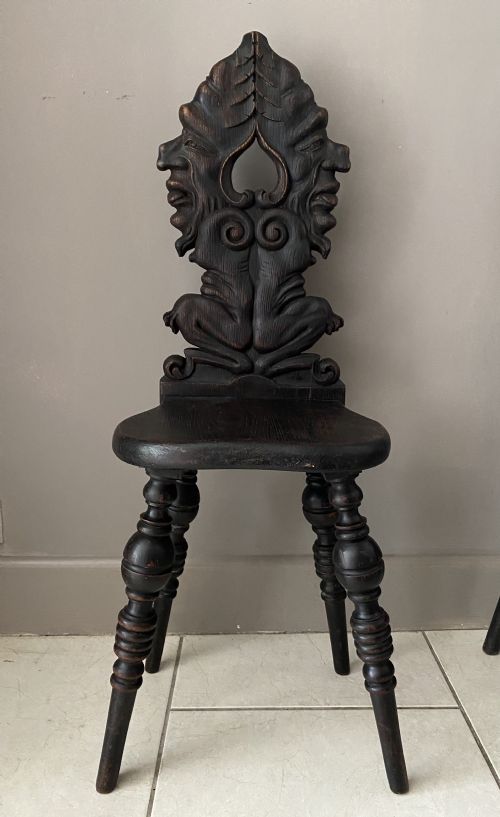
Ornate Oak Hall Chair
An ornate oak hall chair brings heavy Victorian presence to a hallway, offering high-backed timber seating built for formal reception spaces.
Ornate Oak Hall Chair
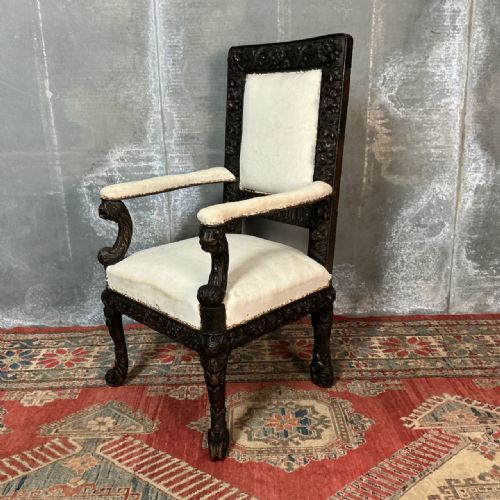
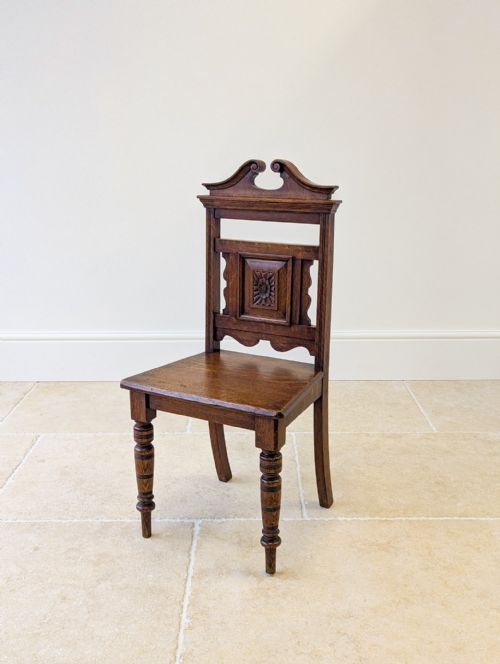
An ornate oak hall chair is a substantial timber seat designed for nineteenth-century reception rooms and entrance halls, built to project status and permanence. These pieces typically present rigid high backs, solid wooden seats and minimal upholstery, engineered for brief sitting rather than lounging.
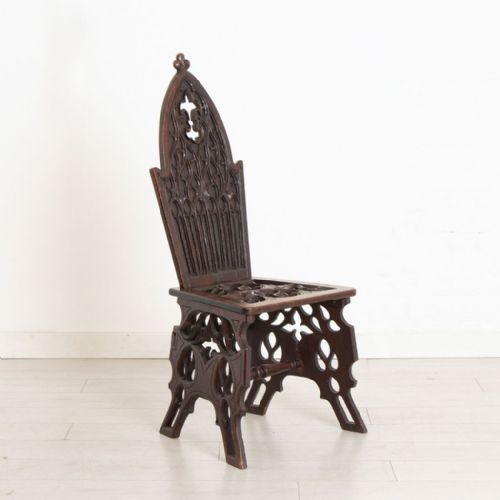
The versions most commonly met on this page date to the nineteenth century, spanning Victorian production as well as Continental revivals. Makers of the period drew heavily on historical idioms, resulting in forms that reference Renaissance, Gothic and Carolean styles.
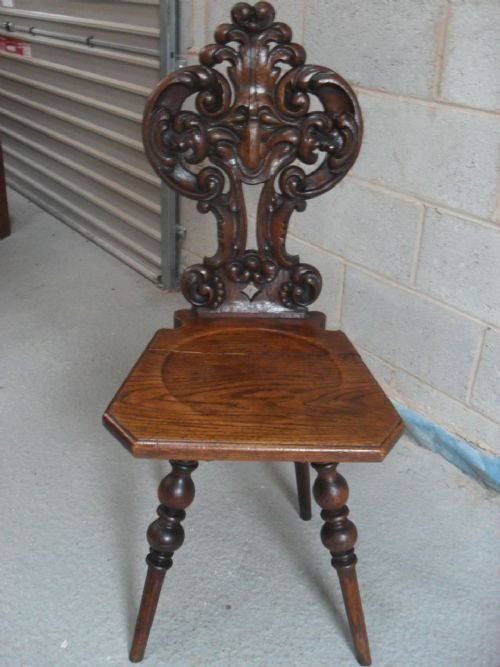
Formations range from standard side chairs and throne-like armchairs to regional oddities such as Black Forest manner pieces and Italian sgabello chairs. Despite stylistic variety, oak remains the primary structural constant across these hall forms.
How they were made
Construction relies upon dense timber, predominantly oak shaped through deep hand carving, pierced fretwork and heavy panel assembly. Carvers worked directly into the solid wood to produce intricate motifs, high-relief crests and sculptural figures without relying on applied veneers.
Secondary materials appear selectively to soften the rigid timber forms, utilising velvet, leather, textile and hessian for pads or panels. Brass fittings and fastening pins sometimes secure these elements, while occasional pieces feature bleached finishes or darker historic patination.
Ornate Oak Hall Chair Retail Price Guide 2026
Typical asking prices for ornate oak hall chair among the pieces listed under this phrase on Sellingantiques today, from the lower quarter to the upper quarter. They describe what is for sale here now, not the wider market.
Materials paired with oak across the current selection include leather, velvet, brass and hessian, alongside bleached wood finishes.
What varies in quality
Quality separates ordinary production from superior work through the depth and crispness of the carved ornamentation on the backrest. Carvings executed with sharp undercut detailing and balanced proportions command greater presence than shallow, mechanical tooling.
The integrity of the timber joints and the weight of the structural oak determine long-term durability. Heavier frames with tight joinery maintain their structural rigidity over generations of use in busy entranceways.
The Ornate Oak Hall Chair Glossary
- Hall chair
- A rigid wooden seat intended for an entrance hall rather than a domestic parlour. These pieces prioritize upright posture and decorative presence.
- Black Forest manner
- A decorative carving style originating in central Europe. Pieces in this mode incorporate naturalistic woodland motifs and animal figures.
- Sgabello
- A Renaissance chair type with a narrow wooden seat and solid carved trestle supports. It functions primarily as a decorative piece of hallway furniture.
- Fretback
- A chair back featuring pierced or openwork panels. This technique lightens the visual mass of heavy oak construction.
Ornate Oak Hall Chair: Frequently Asked Questions
Where did people put hall chairs?
These chairs stood primarily in entrance halls, corridors and grand stairwells of nineteenth-century homes. Guests encountered them immediately upon entering the house.
Because they were meant for waiting rather than long sitting, they sat against walls to display their carved backs.
Are these chairs comfortable for daily use?
Nineteenth-century hall seating prioritised architectural presence and posture over physical comfort. Most examples feature rigid wooden seats and straight high backs.
They work best as occasional accent pieces or decorative anchor points rather than lounge seating.
How do I identify a Victorian oak chair?
Victorian oak hall seating typically displays heavy nineteenth-century revival motifs such as Gothic tracery or Renaissance scrolls. The timber shows the dense grain and deep colour typical of the era's workshop production.
Construction methods combine hand-carved elements with sturdy pegged joints characteristic of the period.
What is the difference between a side chair and a hall chair?
Hall chairs specifically functioned as formal entrance furniture and usually lack soft upholstery. Side chairs generally served other rooms in the house and often featured padded seats.
Both share an armless form, but hall chairs lean heavily into decorative woodcarving.