




Ornate Metal Centrepiece
An ornate metal centrepiece commands the middle of a dining table, built from cast bronze, brass or silver plate to anchor a room.
Ornate Metal Centrepiece
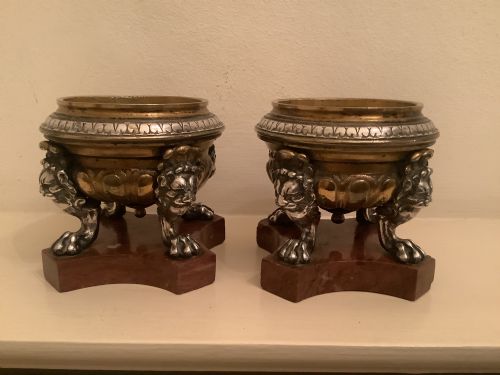
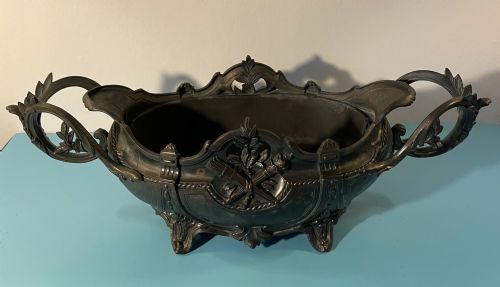
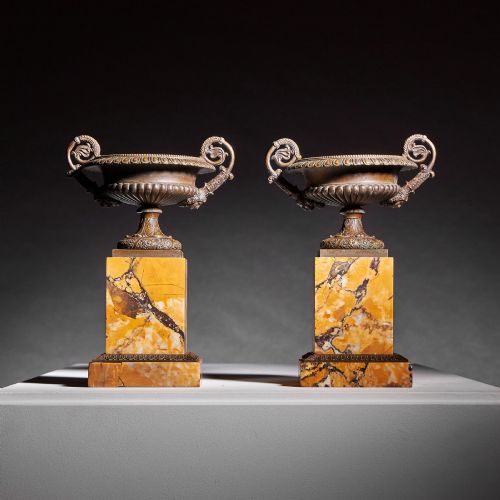
An ornate metal centrepiece spans diverse forms from the nineteenth century, including tazzas, jardinieres, cache-pots, trophy vases and grand bowl mounts. These pieces emerge chiefly from French and English workshops in periods ranging from Regency and Victorian to Napoleon III and Art Nouveau.
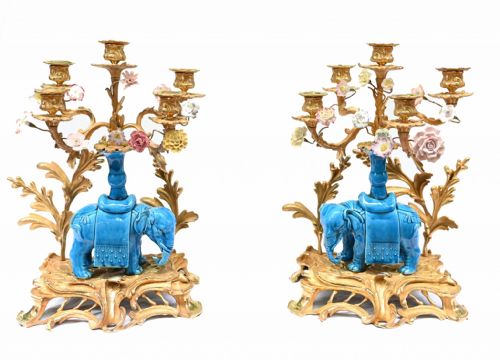
Buyers encounter matching pairs of tazzas and candelabra alongside single monumental presentation pieces designed for display on large dining tables or sideboards. Many items incorporate classical motifs, figural handles, animal masks or organic botanical lines drawn from revival styles.
Materials and construction
Foundry workers cast these objects in bronze, brass, spelter or silver plate, frequently employing gilt bronze or ormolu to achieve a bright, reflective surface finish. Metal components combine with contrasting materials such as white marble plinths, carved crystal bowls and inset Limoges enamel plaques.
Casting methods allow for intricate openwork mounts, lion mask handles and raised relief decoration that define the architectural profile of each vessel. Champlevé enamelling and applied silvering add colour and texture to the primary metal structures.
Ornate Metal Centrepiece Retail Price Guide 2026
Typical asking prices for ornate metal centrepiece among the pieces listed under this phrase on Sellingantiques today, from the lower quarter to the upper quarter. They describe what is for sale here now, not the wider market.
Listings feature items dated across the nineteenth century, spanning Regency, Victorian, Napoleon III and Art Nouveau styles.
Assessing quality
Finely cast examples display crisp detail in chased surface work, particularly around foliate scrolls, figural mounts and cast handles where lesser pieces appear soft. The thickness and weight of the metal chassis, alongside the integration of secondary materials like marble and crystal, indicate the ambition of the original maker.
Pieces bearing signatures or attributions to known makers such as Henry Dasson or Lerolle Frères demonstrate superior design and execution. The precision of the assembly and the depth of the original gilding distinguish high-status production from standard decorativeware.
Lerolle Frères·Blagden Hodgson And Co·Henry Dasson
The Ornate Metal Centrepiece Glossary
- Tazza
- A shallow ornamental cup or bowl raised on a stem and foot, frequently utilised as a table centrepiece for fruit or flowers.
- Jardiniere
- An ornamental pot or stand designed to hold living plants or floral arrangements, often fitted with side handles.
- Ormolu
- Gilt bronze produced by applying a mixture of gold and mercury to a bronze base, common in French decorative arts.
- Champlevé
- An enamelling technique where troughs are carved into a metal surface and filled with vitreous paste before firing.
- Spelter
- A zinc alloy utilised as a less expensive alternative to bronze for sculptural castings and decorative hardware.
Ornate Metal Centrepiece: Frequently Asked Questions
What is an ornate metal centrepiece used for?
These vessels serve as decorative table focal points, originally intended to hold fruit, flowers or grand display arrangements during formal dining.
Today, they function as standalone sculptural objects on sideboards, mantelpieces or large dining tables.
How do I identify a French nineteenth-century piece?
Look for characteristic materials such as gilt bronze, ormolu and champlevé enamel applied to classical tazza or urn forms.
Stylistic markers include French Empire, Rococo Revival and Napoleon III design vocabularies.
Are these centrepieces heavy?
Many examples possess substantial weight due to solid bronze casting, marble bases and thick metal mounts.
Certain large decorative plates and vases scale upwards in mass, reflecting robust nineteenth-century manufacturing standards.
How should I clean a gilt bronze surface?
Dust gently with a soft, dry brush to preserve delicate ormolu surfaces and applied silvering without abrasive contact.
Avoid chemical polishes that strip historical patination and remove gold leaf layers.