





Ornate Metal Bowl
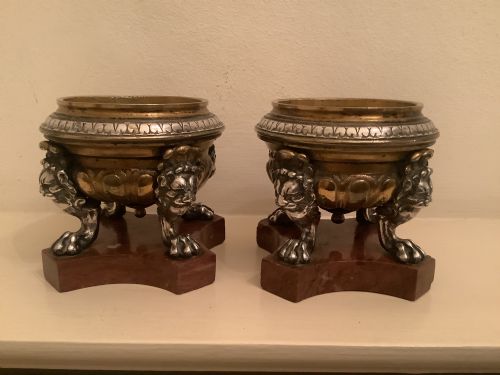
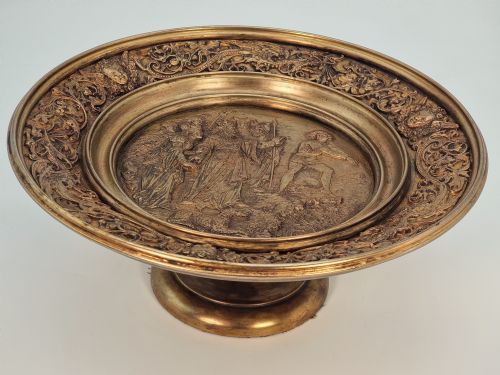
An ornate metal bowl brings heavy cast brass, polished bronze, and gleaming silver plate straight to the centre of the room.
Ornate Metal Bowl
An ornate metal bowl takes many forms across the nineteenth century, appearing most often as a jardinieres, planter, tazza, or decorative centrepiece. These vessels serve primarily to hold plants, fruit, or simply to display intricate metalwork on a table or sideboard.
The versions most commonly met on this page span the nineteenth century, taking shape through French Empire, Napoleon III, Gothic Revival, Art Nouveau, and Aesthetic Movement styles. Makers fashioned them from brass, bronze, cast iron, and silver plate, frequently incorporating marble bases or enamel panels.
Origins vary widely, encompassing French workshops, Italian foundries, Anglo-Indian traditions, and Gothic workshops. Buyers encounter everything from small mortar and pestle sets to large ceremonial bowls flanked by animal mask handles.
How they were made
Foundries shaped these vessels using casting and repoussé techniques, hammering or pouring metal into complex decorative forms. Artisans then applied gilt, silver plating, or enamel work to enrich the surface texture.
Makers integrated contrasting materials such as marble for weight and support, alongside cloisonné and champlevé enamel for vibrant colour. Cast iron and heavy bronze provided the structural framework for large jardinieres and tazzas.
Ornate Metal Bowl Retail Price Guide 2026
Typical asking prices for ornate metal bowl among the pieces listed under this phrase on Sellingantiques today, from the lower quarter to the upper quarter. They describe what is for sale here now, not the wider market.
What varies in quality
The depth and crispness of the chased or repoussé detail separate ordinary vessels from exceptional ones. Finer examples display sharp definition in animal masks, figures, and foliage without losing detail through worn plating.
The weight of the metal and the quality of secondary materials, such as genuine marble bases or finely fired Limoges enamel plaques, dictate the overall standing of the piece. Superior construction ensures the bowl sits firmly and handles remain securely fastened.
The Ornate Metal Bowl Glossary
- Tazza
- A shallow bowl or cup mounted on a stem and foot, frequently utilised as a centrepiece or decorative serving vessel. These pieces often feature elaborate cast ornament around the rim.
- Jardiniere
- An ornamental pot or stand designed to hold flowers or plants indoors. Nineteenth-century examples often incorporate brass handles or enamel decoration.
- Repoussé
- A metalworking technique where the artisan hammers the metal from the reverse side to form a raised design in relief. This method creates tactile surface patterns on brass and copper planters.
- Champlevé
- An enamelling process where troughs are sunken into the metal surface and filled with vitreous enamel before firing. The technique produces rich coloured patterns bounded by thin metal lines.
- Ormolu
- Gilded bronze applied to decorative objects and furniture, particularly popular in French nineteenth-century design. The finish provides a bright golden lustre across sculptural mounts.
Ornate Metal Bowl: Frequently Asked Questions
How do I clean a brass or bronze bowl?
Dust the metal gently with a soft dry cloth to remove everyday particles. Avoid harsh chemical polishes that can strip away historic patination or damage delicate silver plating.
For stubborn residue inside a planter, use a damp cloth and dry the surface immediately afterwards. Preserving the natural aged finish maintains the character of the piece.
Can I use a jardiniere for live plants?
Many nineteenth-century jardinieres and planters were built to hold plants, though moisture can damage interior metal surfaces over time. Using a plastic liner inside the vessel protects the historic base from standing water and soil.
Check whether the bowl has drainage holes before watering plants directly inside it. Most decorative table pieces function best with potted plants placed safely inside.
How do I tell an Art Nouveau bowl from a Gothic Revival one?
Art Nouveau vessels feature flowing, organic lines inspired by natural forms, plant stems, and asymmetric curves. These pieces often lack rigid symmetry and embrace softer, undulating contours.
In contrast, Gothic Revival metalwork draws on medieval architecture, displaying pointed arches, heavy tracery, and formal motifs like lions' masks. The structure remains robust, symmetrical, and deeply rooted in historical architectural traditions.
What is the difference between a tazza and a centrepiece bowl?
A tazza stands upon a distinct pedestal foot or stem, elevating the shallow bowl above the surface of the table. They were traditionally used to display fruit or sweetmeats.
A centrepiece bowl rests directly on a base or low feet, often possessing a wider, heavier body designed to anchor the middle of a dining table. Both serve purely decorative functions in modern interiors.