

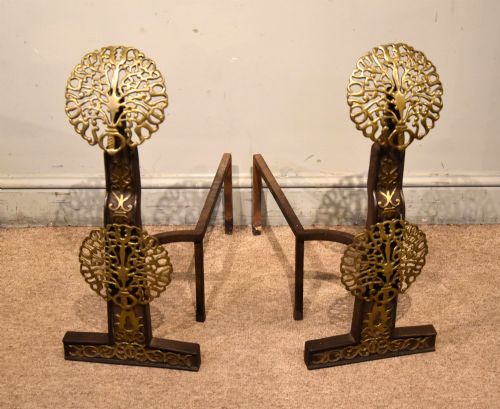
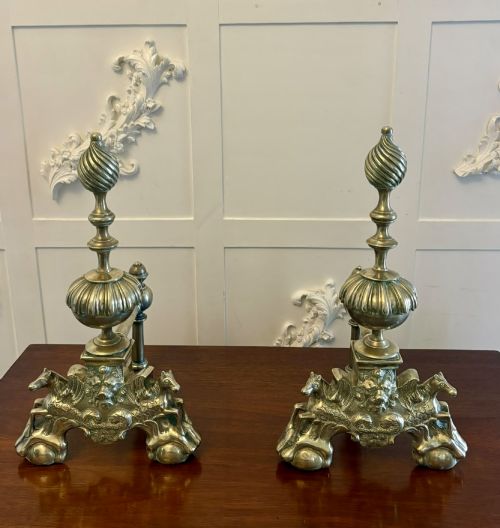
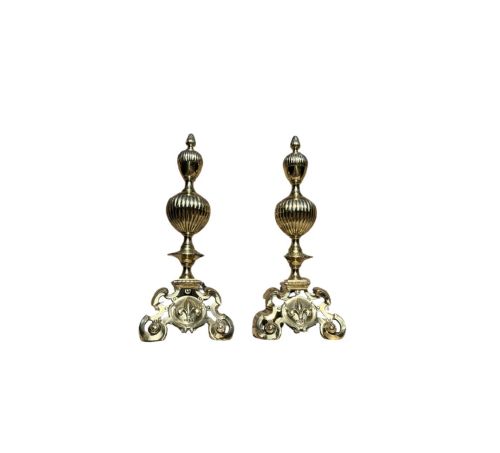
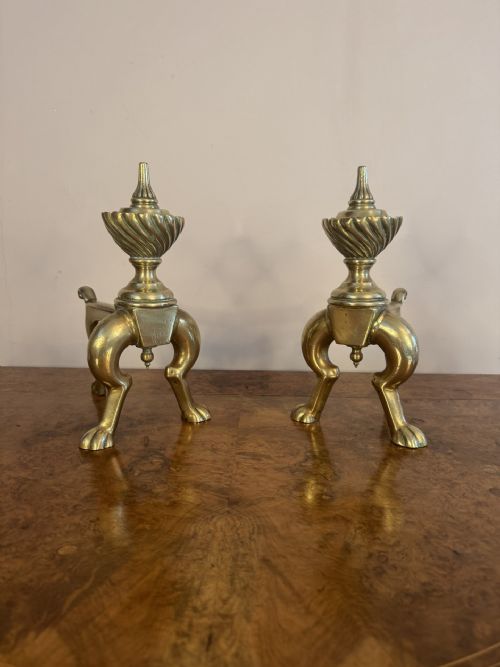
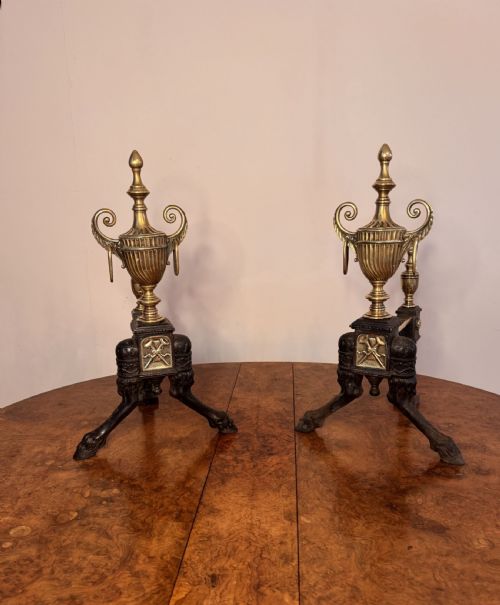
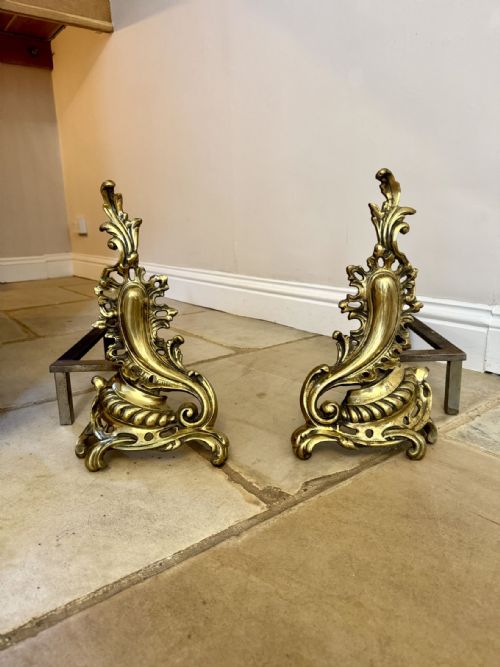
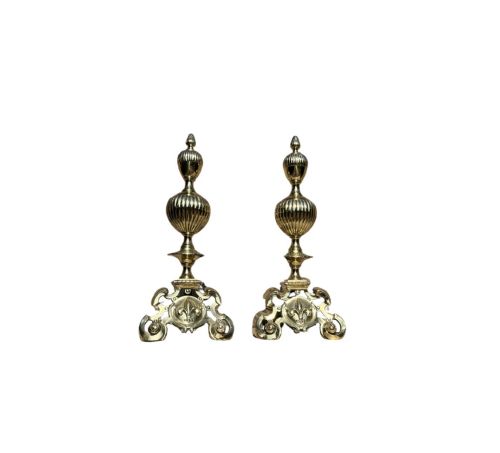
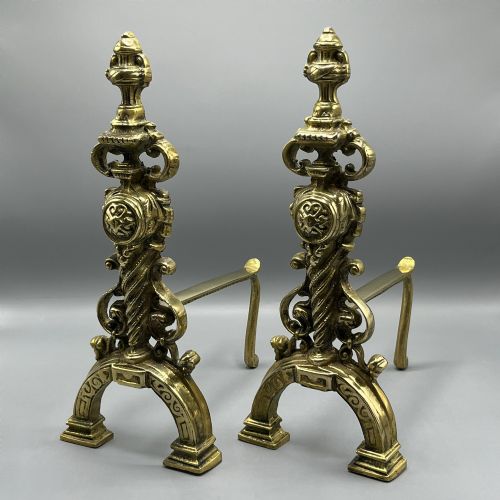
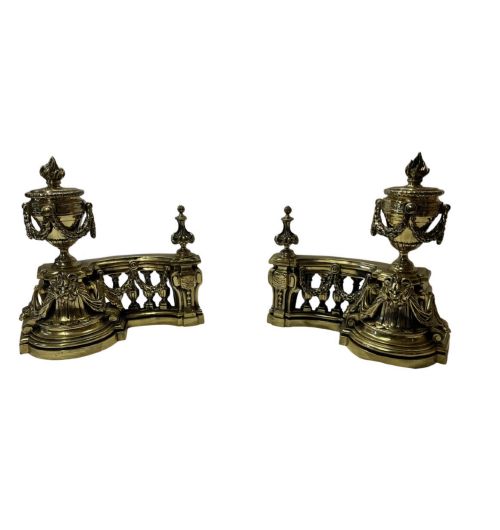

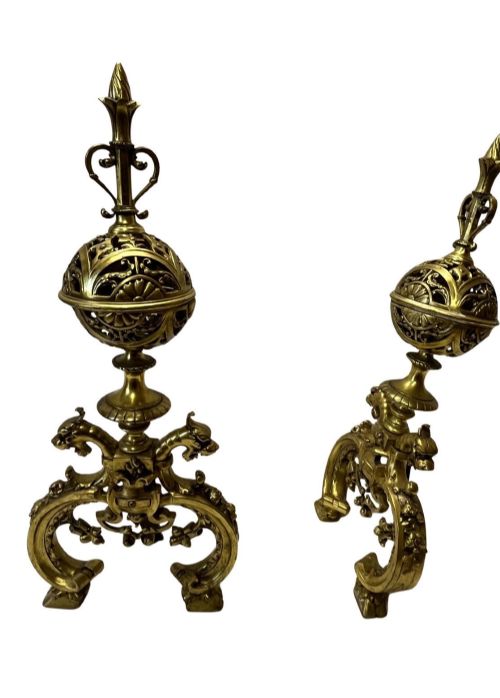


Ornate Hearth Andirons
These ornate hearth andirons anchor a fireplace with weight and polished metal, turning a dark opening into the focal point of a room.
Ornate Hearth Andirons
Ornate hearth andirons stand inside the fireplace to support logs above the hearth floor, allowing air to circulate beneath the fire. Buyers searching for ornate hearth andirons seek heavy metal supports designed to hold wood while presenting a decorative face to the room.
The versions most common here are nineteenth century pairs fashioned in brass, cast iron, and bronze. These pieces range from substantial Victorian designs to French Rococo and Baroque revival styles.
How they were made
Foundries utilised casting and forging techniques to shape iron, solid brass, and bronze into structural fire dogs. Molten metal poured into moulds created the heavy frames and detailed surface ornament.
Gilding and ormolu finishes were applied to bronze and brass to catch the flicker of the hearth flame. Wrought iron provided the sturdy internal bars and billets required to withstand intense heat.
Ornate Hearth Andirons Retail Price Guide 2026
Typical asking prices for ornate hearth andirons among the pieces listed under this phrase on Sellingantiques today, from the lower quarter to the upper quarter. They describe what is for sale here now, not the wider market.
The listings span the nineteenth century, including Victorian, Rococo Revival, and Baroque styles fashioned in iron, brass, and bronze.
What varies in quality
Quality rests in the crispness of the casting and the weight of the metal used in the construction. Pieces with deeply chased detail and substantial bronze or solid brass show a higher standard of manufacture than lighter, flatter castings.
Proportion and stability separate standard utility fire dogs from monumental or finely sculpted pairs. The balance between decorative front standards and sturdy log bars determines both presence and utility.
The Ornate Hearth Andirons Glossary
- Andirons
- Iron or brass supports used in pairs to raise firewood off the hearth floor. They often feature decorative vertical fronts.
- Chenets
- The French term for andirons, frequently applied to decorative hearth supports styled in the Rococo or Baroque manner. These pieces emphasise sculptural metalwork over simple utility.
- Ormolu
- Finely ground high-carat gold applied to a bronze base using a mercury amalgamation technique, or later electroplating. It gives a bright golden finish to French revival pieces.
- Billet bar
- The horizontal iron bar extending backward from the front standard to support the burning logs. It bears the direct weight and heat of the fire.
Ornate Hearth Andirons: Frequently Asked Questions
How do I use andirons?
Place the pair inside the hearth with the vertical decorative standards facing out into the room. The horizontal bars extend backward to hold the logs off the brick floor.
This elevation allows oxygen to circulate underneath the wood for a better burn while protecting the back wall of the fireplace from direct heat.
Can I burn wood on brass andirons?
Solid brass and bronze andirons hold up well to moderate hearth fires, though prolonged extreme heat can alter the metal finish over decades. Many historical pairs feature iron log bars attached to brass fronts to handle the primary weight and heat.
Check the construction of the rear bar before lighting large fires to ensure the metal is thick enough for regular use.
How do I clean old brass fire dogs?
Remove soot and surface dust with a soft brush and warm soapy water, drying the metal thoroughly afterward. Avoid harsh chemical polishes that strip away the aged patina built up over generations.
Gentle application of neutral wax can protect polished brass surfaces from further tarnishing without erasing historical character.
What is the difference between andirons and fire dogs?
The terms describe the same objects, with fire dog being the older English term and andiron developing from medieval terminology. Both refer to metal supports used in pairs to hold firewood in an open hearth.
Regional preferences and maker catalogues dictated which term appeared on the original inventory or listing.