


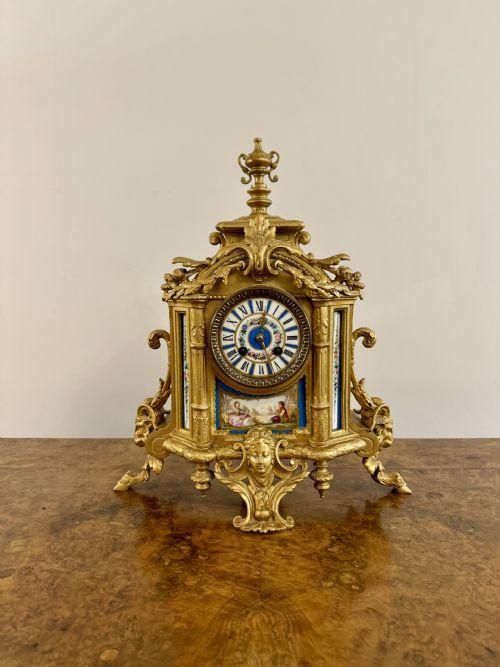


Ornate Gold Table Clock
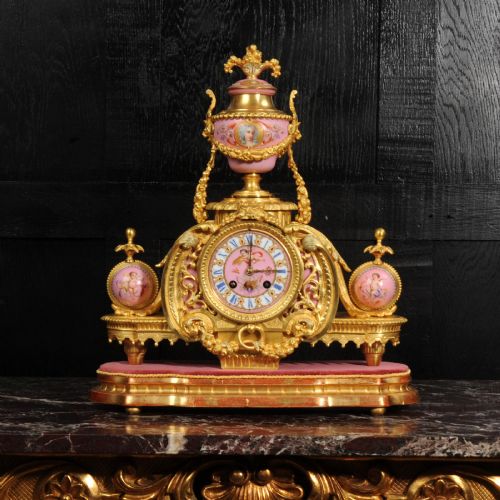
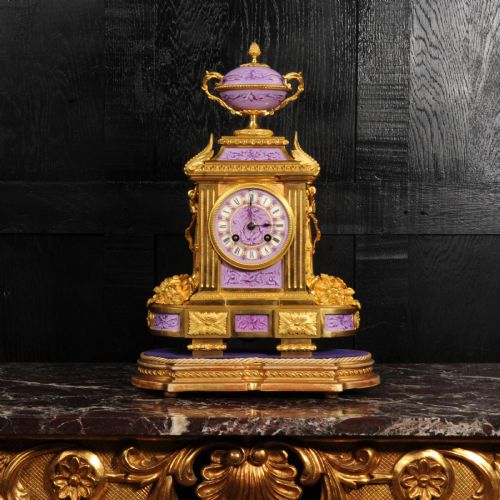
An ornate gold table clock brings nineteenth-century French and Victorian grandeur to a room, combining heavy gilt metalwork with intricate porcelain dials.
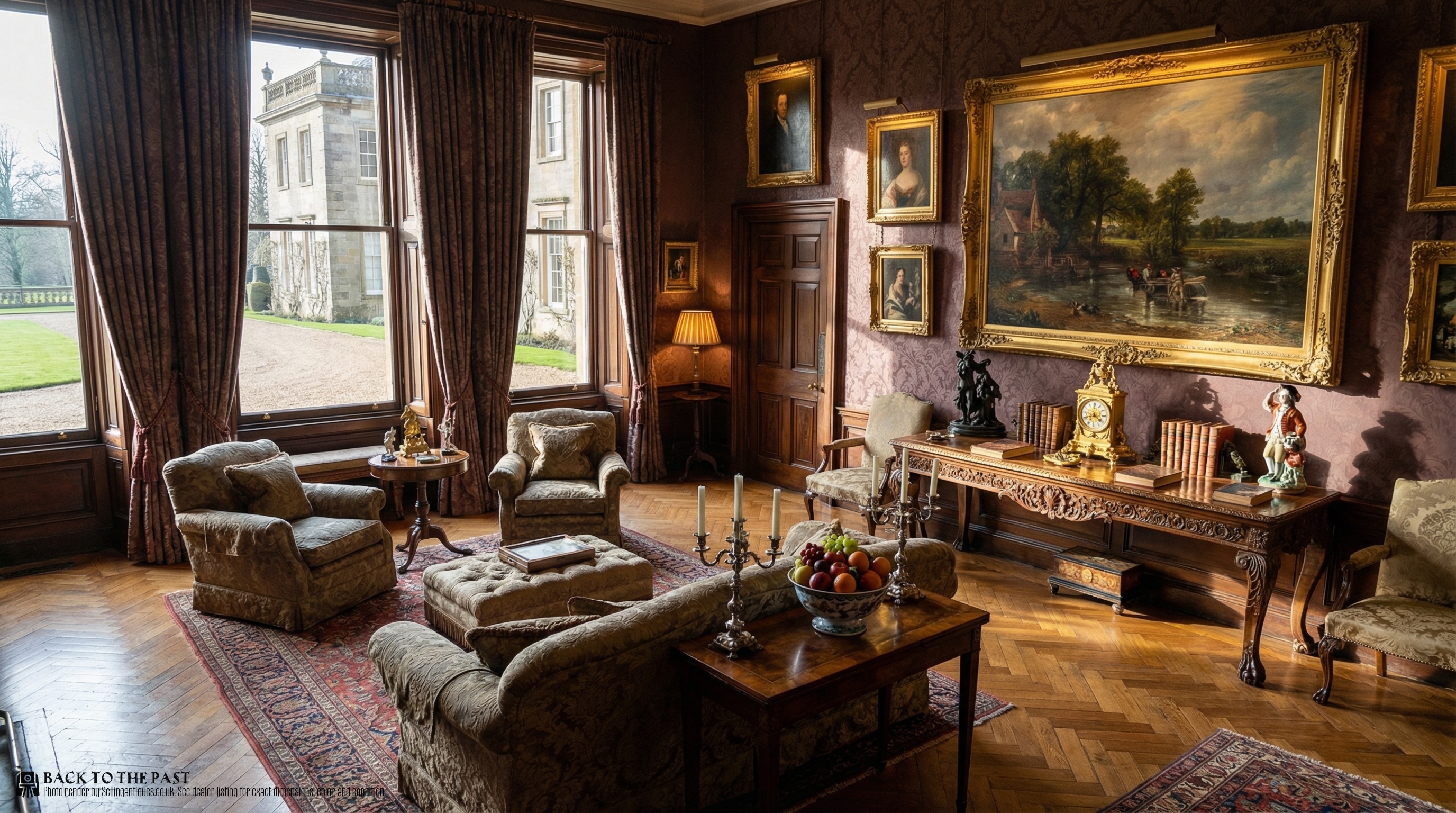
Ornate Gold Table Clock
An ornate gold table clock represents the elaborate decorative tastes of the nineteenth century, spanning Victorian Britain and continental France. These pieces take the form of mantel clocks, carriage clocks, and glass-sided table designs meant to command attention in a principal room.
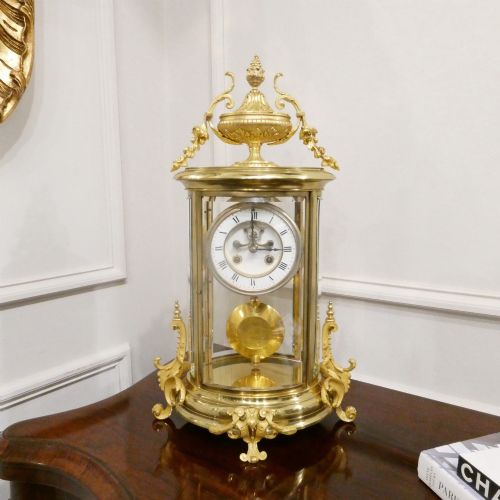
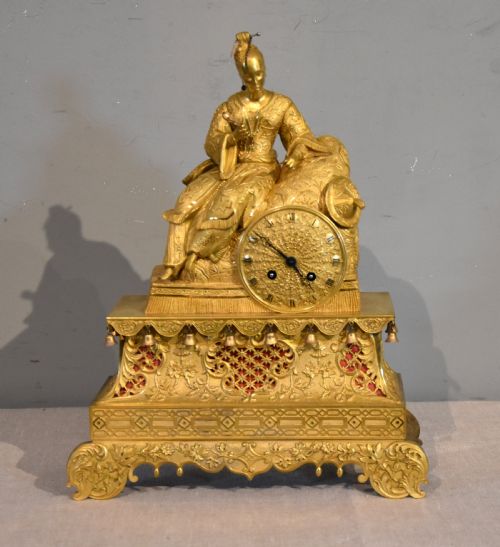
Buyers searching for an ornate gold table clock encounter mostly French works from the eighteen-fifties through the eighteen-nineties, often styled in Rococo Revival, Louis XVI, or Louis XV revivals. The selection includes architectural four-glass cases, figural mantel ornaments, and smaller portable carriage timepieces.
The typical piece relies on architectural presence and elaborate surface ornamentation rather than simple utility. They function as sculptural objects that anchor a mantelpiece, bracket shelf, or library desk.

How they were made
Makers constructed these clocks using heavy brass, bronze, and ormolu frames cast with deep scrollwork, floral motifs, and classical flourishes. Guilds and factories applied fire gilding or electroplating to achieve the rich golden finish characteristic of the period.
Many examples incorporate Sèvres-style porcelain panels and hand-painted enamel dials, which were fired separately before being mounted into the metal housing. Specialised horologists then fitted eight-day striking movements or fusee mechanisms behind bevelled glass panes.
Several heavy gilt clocks are described by dealers as having 'lots going on,' perfectly capturing Victorian enthusiasm for visual abundance.
What varies in quality
The distinction between ordinary and exceptional pieces lies in the crispness of the bronze or brass casting and the depth of the chasing. Finer works display hand-tooled details in the metalwork rather than soft, mass-produced surface textures.
Quality also depends on the integration of materials, such as undamaged enamel dials and porcelain panels featuring finely hand-painted scenes. Original matching movements signed by notable makers elevate an example far above standard decorative pieces.
Achille Brocot·Samuel Marti·Japy Freres·John Barwise
The Ornate Gold Table Clock Glossary
- Ormolu
- Gilded bronze produced through a mercury amalgamation process or subsequent electroplating. This technique imparts a durable, warm golden sheen to nineteenth-century metal mounts.
- Four glass clock
- A mantel clock featuring bevelled glass panels on all four sides to expose the mechanical movement. These designs allow light to pass through the centre of the case.
- Carriage clock
- A small, portable spring-driven timepiece fitted with a carrying handle and often housed in a brass or gilt metal travel case. They originated for military and travelling officers.
- Fusee
- A conical pulley connected to the mainspring by a chain or cord to maintain steady tension as the spring unwinds. This mechanism improves timekeeping accuracy across the power reserve.
- Champlevé
- An enamel technique where troughs are dug into the metal surface and filled with coloured vitreous paste before firing. The resulting patterns frame the dial and case borders.
Ornate Gold Table Clock: Frequently Asked Questions
How do I wind a mechanical table clock?
Most of these pieces utilise an eight-day movement requiring a key inserted into specific dial holes once a week. Turn the key gently until you feel resistance, taking care not to over-wind the mainspring.
Allow the pendulum to settle into an even beat after winding, adjusting the regulating slow-fast lever if the timekeeping drifts over twenty-four hours.
Where should I place a heavy gilt mantel clock?
Position the piece on a stable, level surface such as a wooden mantelpiece or heavy sideboard where vibrations are minimal. Uneven floors or shaky shelves can cause the pendulum to stop swinging.
Keep the clock away from direct sunlight and damp walls to protect the delicate enamel dials and gilt metal surfaces from tarnishing or fading.
How do I identify a French Rococo clock?
Look for asymmetrical scrollwork, C-scrolls, acanthus leaves, and naturalistic floral motifs cast into the gilt bronze or ormolu case. These designs reject straight lines in favour of flowing, organic curves.
The clock faces often feature painted enamel cartouches for each numeral, set within heavily ornamented bezels that match the cascading ornamentation of the base.
What maintenance do antique clock movements need?
A vintage mechanism benefits from professional servicing every few years to clean old oils and remove dust from the gear train. Running a dry movement causes friction that wears down the brass pivots.
Avoid using household cleaning solvents on the exterior gilt surfaces, as abrasive liquids can strip the original ormolu finish and damage painted porcelain panels.