



Ornate Gold Console
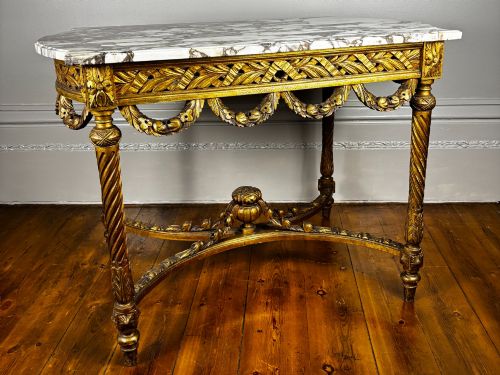
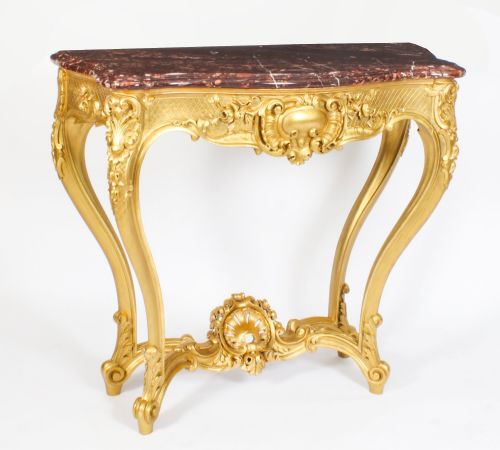
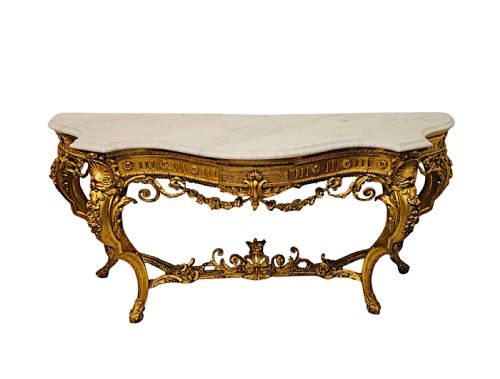
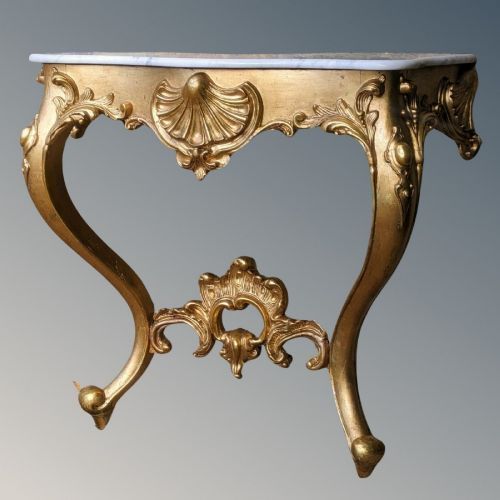
An ornate gold console brings a dramatic presence to a room, combining heavy carved wood and marble with historical French and Italian styles.
Ornate Gold Console
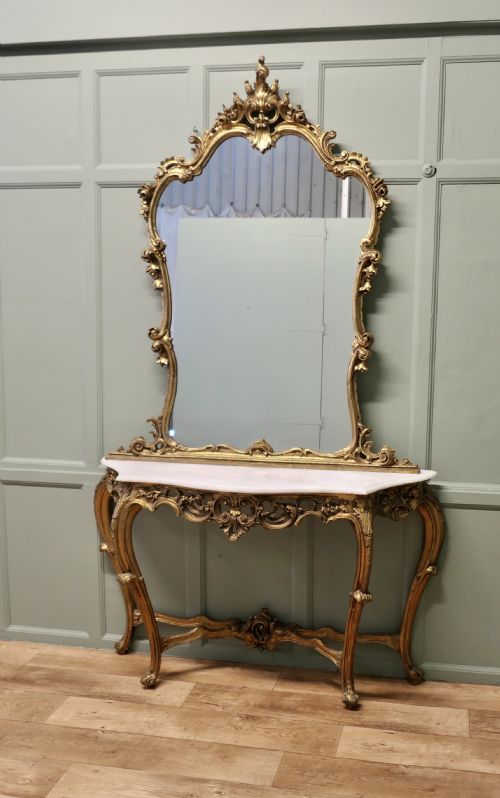
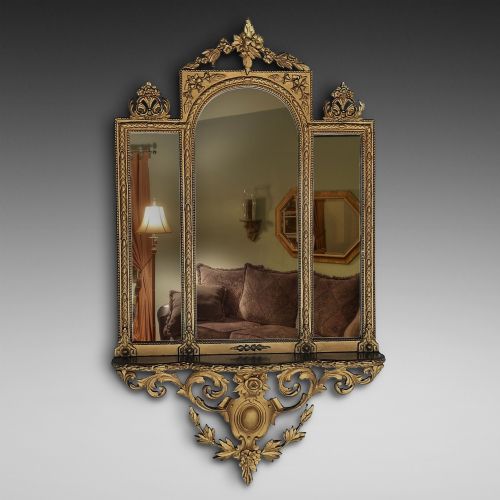
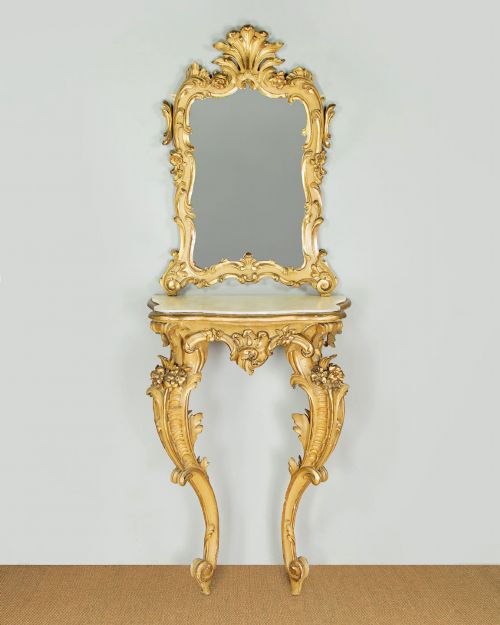
An ornate gold console typically appears as a console table, often paired with a wall mirror, originating from periods spanning the eighteenth century through to the early twentieth century.
The selections on this page lean heavily towards French and Italian tastes, encompassing Rococo Revival, Louis styles, and Victorian interpretations executed in carved giltwood.
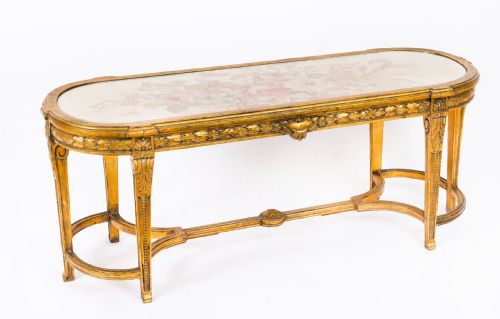
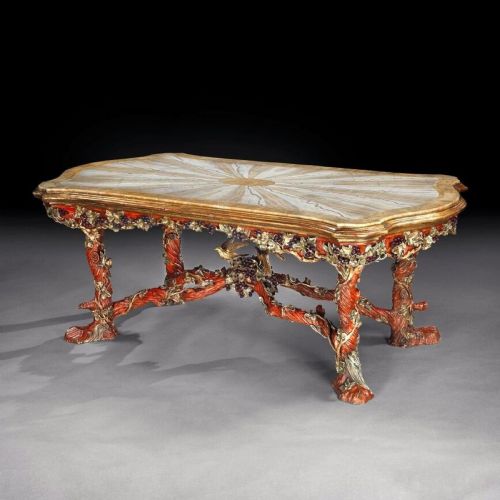
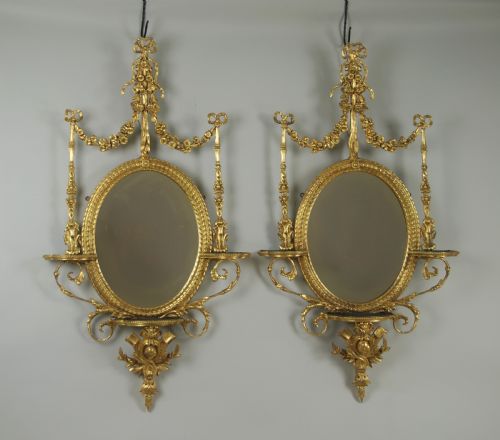
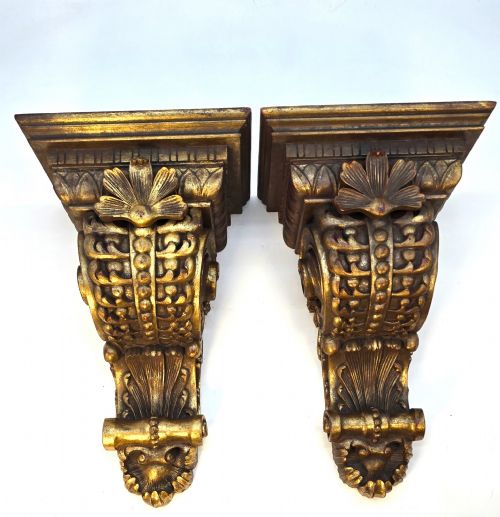
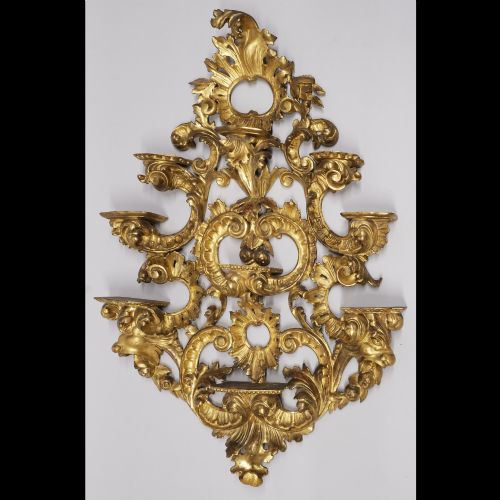
Alongside standard console tables, the forms extend to centre tables, wall brackets, display shelves, and occasional side or coffee tables sharing the same gilded finish.
Materials and construction
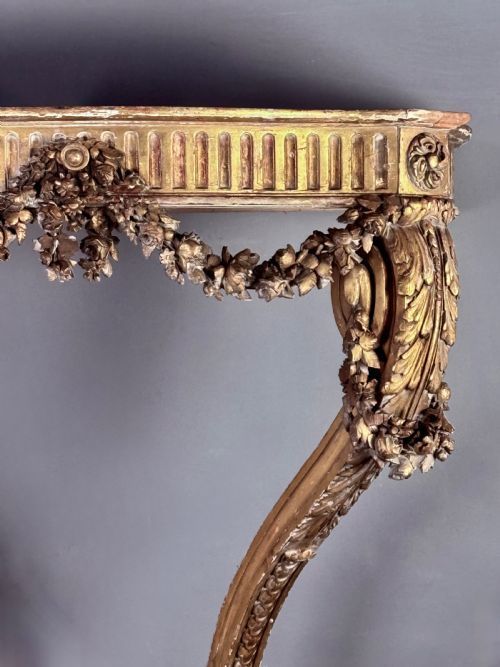
Makers shaped solid wood, gesso, and carved wood to form intricate scrollwork and figures, applying gold leaf or parcel-gilt finishes over the wooden foundation.
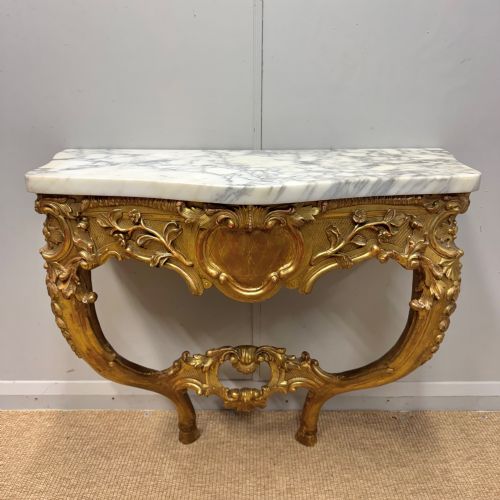
Heavy marble tops, including white Carrara and onyx slabs, sit atop these carved wooden bases to provide a contrasting, cool surface.
Glass and mirror glass feature prominently in the associated wall mirrors, pier glasses, and console sets that accompany the tables.
Ornate Gold Console Retail Price Guide 2026
Typical asking prices for ornate gold console among the pieces listed under this phrase on Sellingantiques today, from the lower quarter to the upper quarter. They describe what is for sale here now, not the wider market.
Listings feature marble tops in white Carrara and onyx, paired with giltwood bases from the eighteenth to the twentieth centuries.
Judging execution
Depth and precision in the hand-carved wooden elements distinguish standard production from superior examples, where undercut foliage and crisp scrolling show skilled hands.
The application of gold leaf and the preservation of the underlying gesso reveal the original standard of finish and subsequent care.
The selection of the marble top, its thickness, veining, and how neatly it fits the contour of the wooden base contribute to the overall execution.
Felix-Alfred Ternisien·Amleto Bertoni
The Ornate Gold Console Glossary
- Giltwood
- Wood coated with gold leaf or powder over a prepared gesso ground. This material provides the brilliant reflective surface characteristic of these tables and mirrors.
- Console table
- A table designed to stand against a wall, frequently secured to it with brackets. These pieces often feature heavily ornamented front legs.
- Gesso
- A plaster-like mixture applied to wood to create a smooth surface for gilding. It holds sharp, moulded details before the gold leaf is laid down.
- Rococo Revival
- A nineteenth-century design movement imitating the asymmetric curves, C-scrolls, and naturalistic motifs of the eighteenth-century French style.
- Pier glass
- A tall mirror designed specifically to hang on the narrow wall space between windows. It frequently matches an underlying console table.
Ornate Gold Console: Frequently Asked Questions
How do I style an ornate gold console in a modern room?
Place the table against a plain, neutral wall to let the carved details and gold leaf stand out without visual competition.
Keep objects placed on the marble top minimal to preserve the architectural lines of the base.
Were these tables meant to stand without wall support?
Many console tables rely partly on the wall for stability, especially those featuring only two front legs.
Heavier examples with four legs stand independently as centre or side tables.
How do I tell an eighteenth-century piece from a nineteenth-century revival?
Examine the tool marks on the reverse of the carved wood and the composition of the gesso beneath the gilding.
Revival pieces from the Victorian era often use machine-sawn timber elements combined with hand-finished carving.
What is the difference between a console table and a centre table?
Console tables feature a flat back designed to sit flush against a vertical wall surface.
Centre tables are finished on all four sides so they can occupy the middle of a room.