



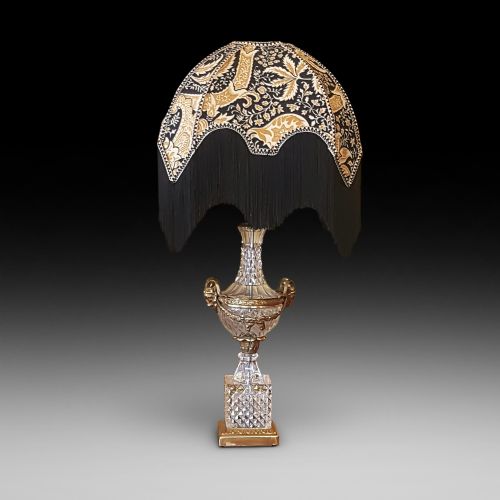

Ornate Glass Table Light
An ornate glass table light brings weight and gathered colour to a room, catching daylight before the burners or bulbs are ever lit.
Ornate Glass Table Light
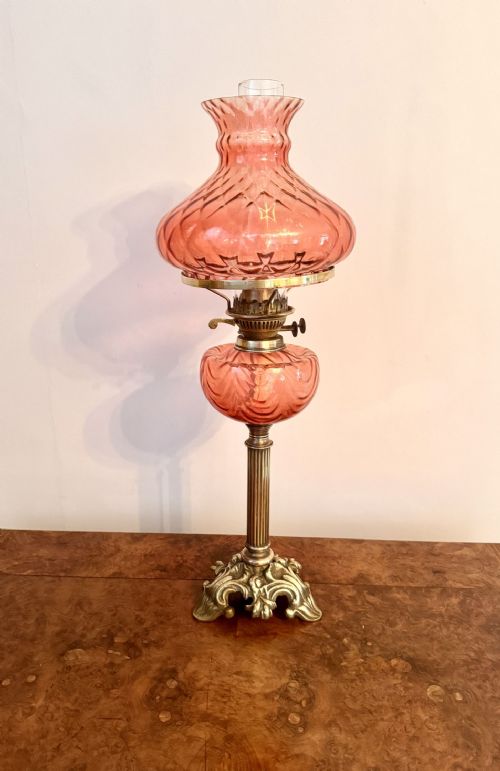
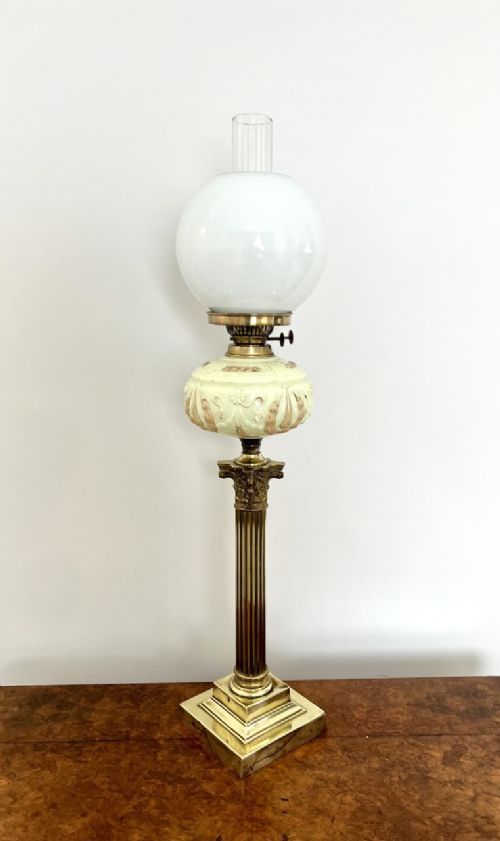
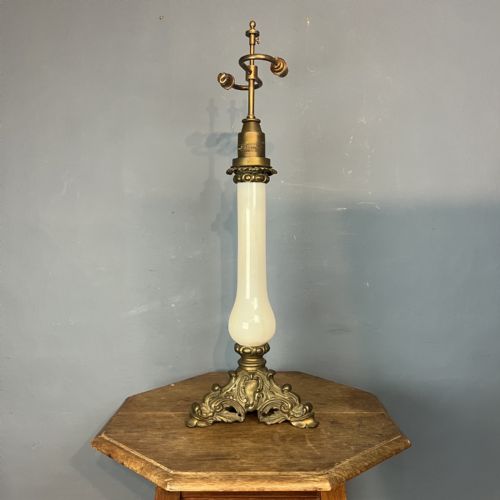
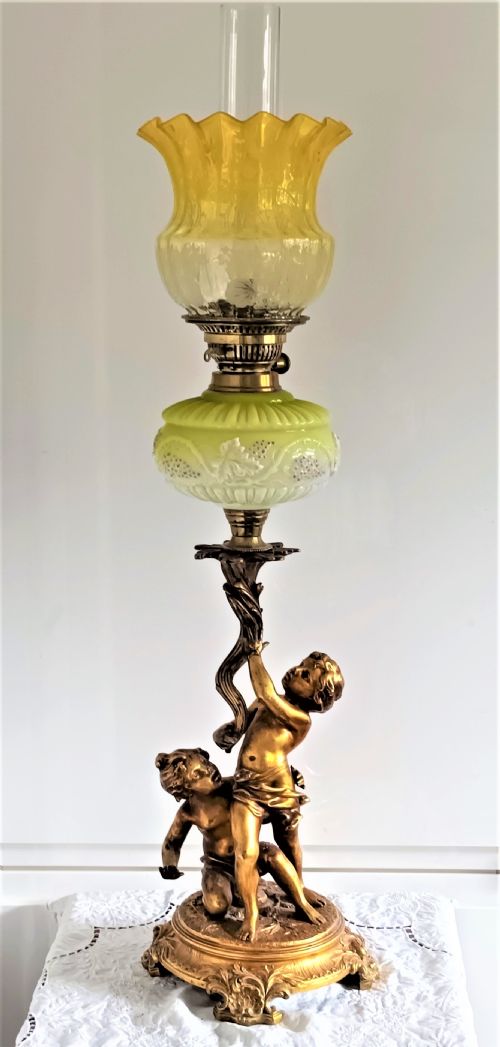
When you search for an ornate glass table light, you are looking at brass, bronze, and gilt metal foundations paired with blown or moulded glass reservoirs and shades. These pieces trace their origins through Victorian, Edwardian, and Arts and Crafts periods, shifting from functional oil illumination to decorative electric fittings.
You are most likely to meet Victorian examples featuring opaline glass and heavy brass castings on this page. They survive in various forms, from converted oil lamps to multi-armed candelabras and dedicated reading lamps.
The styles span French Neoclassical, Louis XVI, and Classical Revival aesthetics, showing that makers prioritised decorative presence alongside utility. Each piece reflects the domestic lighting habits of the nineteenth and early twentieth centuries.
How they were made
Makers combined cast brass, ormolu, and silver plating with hand-blown opaline and cut glass elements. Metal components were shaped through foundry casting and chasing before being gilt or polished to a high finish.
Glass reservoirs and shades required skilled blowing and moulding, often integrating contrasting colours or acid-etched patterns. These glass bodies were then mounted securely into metal collars using threaded fittings or weighted bases.
Ornate Glass Table Light Retail Price Guide 2026
Typical asking prices for ornate glass table light among the pieces listed under this phrase on Sellingantiques today, from the lower quarter to the upper quarter. They describe what is for sale here now, not the wider market.
The listings span from 1850 through the Edwardian era, incorporating materials such as bronze, ceramic, and fabric alongside brass and glass.
What varies in quality
The distinction between ordinary and exceptional work lies in the crispness of the metal chasing and the weight of the glass. Finer pieces display sharply defined ornamentation on the brass or bronze mounts and perfectly balanced proportions.
Maker signatures and patent stamps elevate a piece, showing accountability in the workshop. The thickness of the glass and the quality of the gilding further separate standard production items from ambitious studio creations.
Mc Garys Patent·Wild and Wessel
The Ornate Glass Table Light Glossary
- Opaline glass
- An opaque or semi-translucent glass, often white or pastel tinted, popular in nineteenth-century lighting for its soft diffusion of light.
- Ormolu
- Gilded bronze, where a finely ground gold-mercury amalgam is applied to a bronze base and heated to leave a rich, golden surface.
- Candelabra
- A branched candlestick or lamp designed to hold multiple lights simultaneously across symmetrical arms.
- Brass
- A copper and zinc alloy valued for its malleability and warm golden tone, frequently used as the primary structural metal for nineteenth-century lamps.
Ornate Glass Table Light: Frequently Asked Questions
How do I wire an antique glass lamp?
Most antique lamps require rewiring to meet modern safety standards, which involves threading modern cable through the original internal channels.
It is best to consult a professional restorer who can preserve original brass fittings and switches without damaging the vintage metalwork.
Are these lamps converted from oil?
Many nineteenth-century examples on this page started as oil lamps before being converted to electricity during the twentieth century.
These conversions often retain their original burners and glass reservoirs, serving as functional table lighting today.
How do I clean opaline glass?
Opaline glass should be washed gently in warm soapy water using a soft cloth, avoiding harsh abrasives that might scratch the surface.
Metal mounts require separate care to prevent polish from staining adjacent glass sections.
What is the difference between Victorian and Edwardian lamps?
Victorian lighting tends to feature heavier cast brass, richer gilding, and opaque opaline glass with ornate decorative motifs.
Edwardian pieces often display lighter mounts and simpler cut glass designs, reflecting a shift toward domestic restraint.