




Ornate Gilt Mounted Desk
An ornate gilt mounted desk brings undeniable presence to a room, combining rich timber surfaces with bright metallic mounts.
Ornate Gilt Mounted Desk
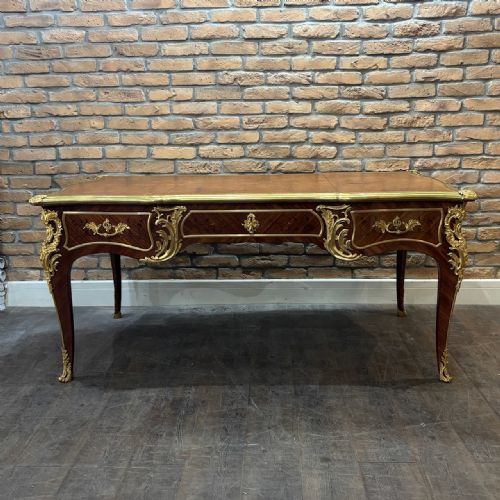
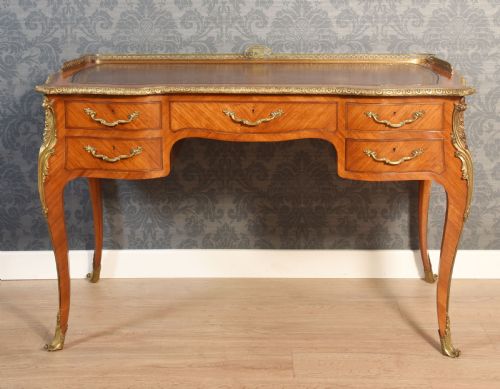
When you search for an ornate gilt mounted desk, you are looking at writing furniture rooted in nineteenth-century revivals, drawing heavily on French court aesthetics. These pieces typically manifest as writing tables, bureaus, and bureau plats.
The most common versions met on this page belong to the Victorian era and the later nineteenth century, frequently echoing Louis XV and Louis XIV styles. They serve as functional workspaces that double as decorative centrepieces.
How they were made
Cabinetmakers constructed these writing surfaces using foundational timbers such as kingwood, walnut, and ebonised wood, often enhanced by marquetry and parquetry inlay. Surfaces were frequently fitted with inset leather panels for writing.
The characteristic mounts consist of ormolu, gilt bronze, and brass, cast and chased to accent the structural lines. Enamel, porcelain, and fabric details occasionally complete the enrichment of the frame.
Some nineteenth-century makers used tortoiseshell alongside gilt mounts, proving that desk designers loved a bit of flash long before modern offices existed.
What varies in quality
The standard of the metalwork largely dictates the distinction across these pieces, separating sharp, deeply chased ormolu from simpler brass casting. Crisp definition in the scrollwork and mounts shows superior workshop execution.
Selection of timber veneers and the precision of the marquetry inlay further separate standard production from finer examples. The integration of mounts to the wooden carcase reveals the level of care taken by the maker.
The Ornate Gilt Mounted Desk Glossary
- Ormolu
- Gilded bronze applied to furniture and decorative objects. This technique creates a rich gold-coloured finish that resists tarnishing over time.
- Bureau Plat
- A freestanding writing table fitted with drawers, originating in France. It lacks the superstructure of a traditional slant-front bureau.
- Parquetry
- Geometric wood inlay forming patterns such as cubes or chequers across a tabletop. Craftsmen select contrasting timbers to highlight the design.
Ornate Gilt Mounted Desk: Frequently Asked Questions
Where should I place my desk?
These desks suit placement in the centre of a room rather than pushed flat against a wall. Their finished backs and elaborate mounts allow them to be viewed from all angles.
Ensure the surface receives adequate ambient light without direct sunlight fading the wood and leather.
How do I clean the gilt mounts?
Dust the mounts gently with a soft, dry brush to prevent dirt accumulation in the recessed chasings. Avoid harsh metal polishes that strip the gilding from the bronze or brass beneath.
Professional care is recommended if the metal requires deeper cleaning or restoration.
Are these desks suitable for daily writing?
Most surviving examples function well as writing surfaces, particularly those fitted with original leather inserts. Modern users often place a blotter on the leather to protect the historical hide from ink or scratches.
Drawer mechanisms operate on traditional wood runners and benefit from occasional waxing.
How do I identify a revival style?
Nineteenth-century revival pieces combine earlier French decorative motifs with Victorian manufacturing methods. Look for machine-sawn timber elements alongside hand-chased gilt mounts.
Stylistic cues draw directly from Louis court furniture of the seventeenth and eighteenth centuries.