




Ornate Gilt Console
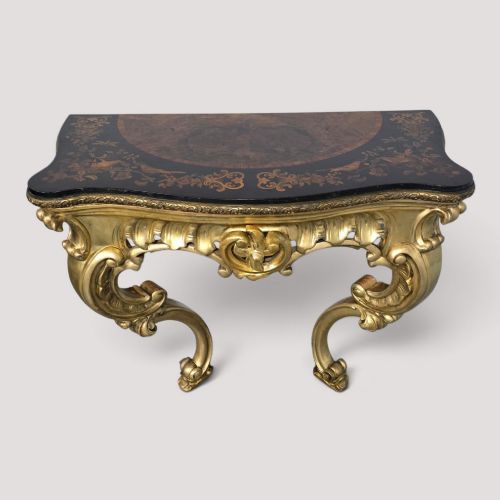
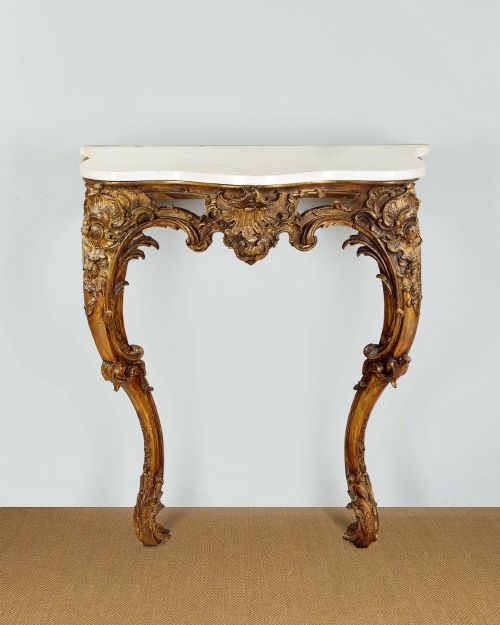
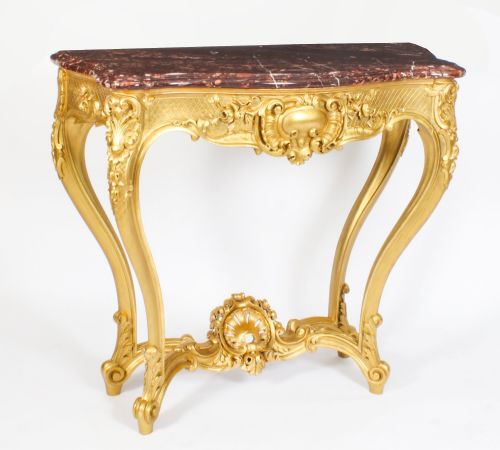
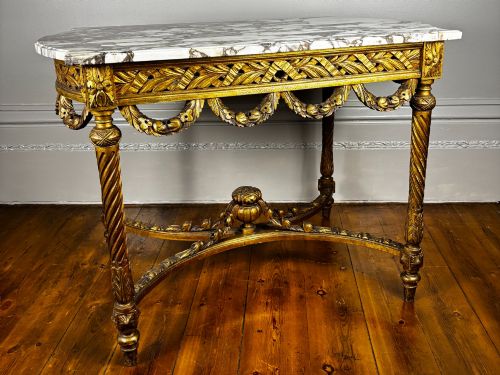
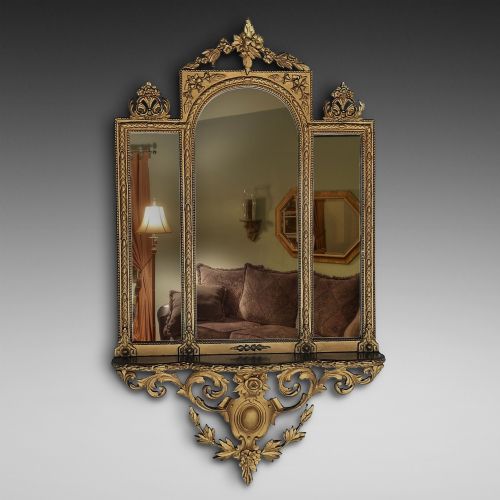
An ornate gilt console brings architectural theatre to a room, offering heavy marble tops and lavishly carved wooden frames that command attention.
Ornate Gilt Console
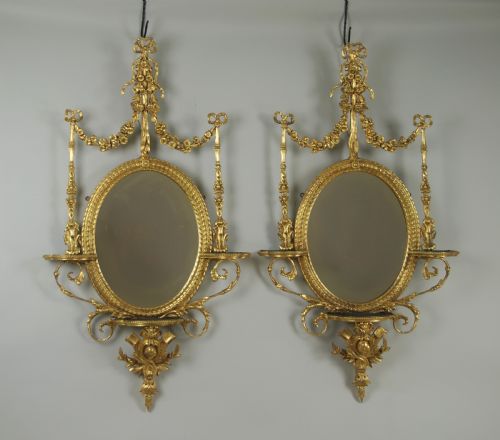
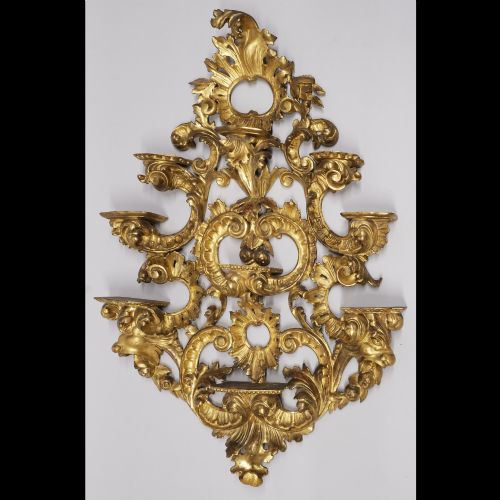
An ornate gilt console encompasses console tables, centre tables, wall mirrors, wall brackets, side tables, and display shelves designed for formal interiors. Pieces stem predominantly from the eighteenth and nineteenth centuries, spanning Victorian production and various revival movements.
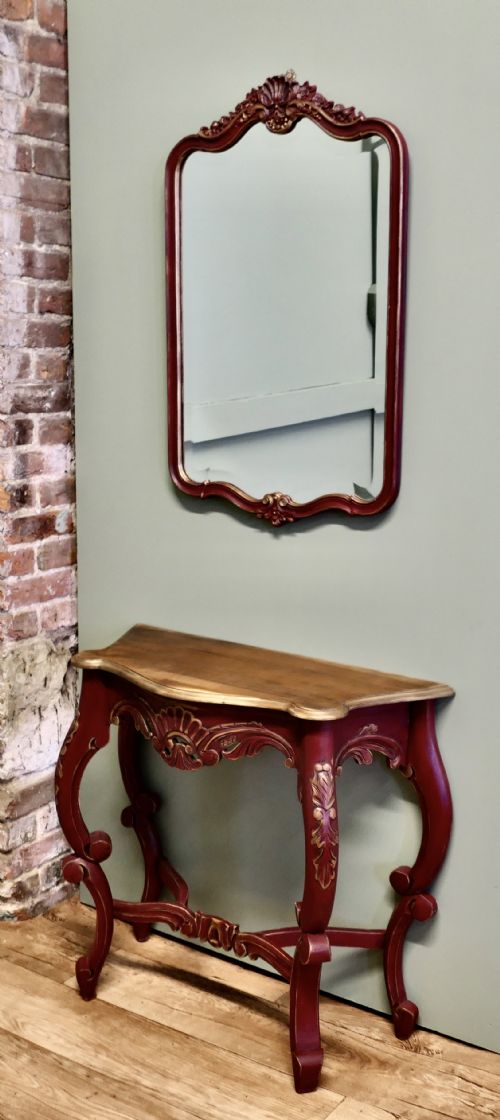
French and Italian influences dominate the selection, heavily favouring Rococo, Louis XV, and Baroque styles. Buyers frequently encounter marble-topped tables paired with matching wall mirrors, alongside carved wooden wall brackets and low coffee tables.
Materials and construction
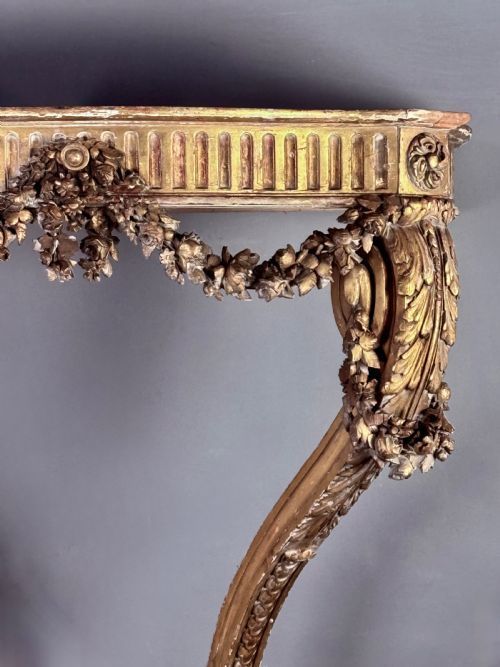
Carved giltwood and gesso form the primary structural and decorative framework for these pieces, finished with layers of gold leaf or parcel gilt. Artisans shaped intricate floral, scroll, and figural motifs by hand into timber before applying the metallic surface.
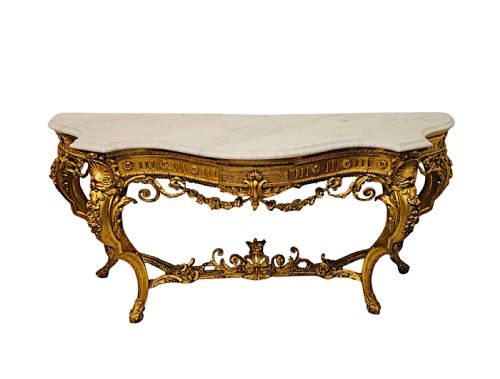
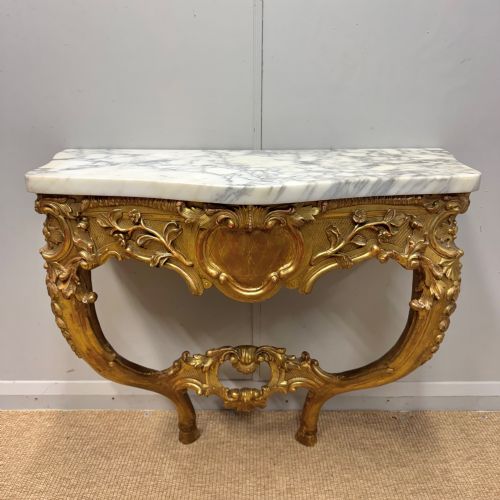
Heavy marble slabs, including white Carrara and Sienna varieties, provide durable tops for the console and side tables. Integrated glass, mirror glass, and walnut woodwork appear across the tables, mirrors, and display shelves.
Ornate Gilt Console Retail Price Guide 2026
Typical asking prices for ornate gilt console among the pieces listed under this phrase on Sellingantiques today, from the lower quarter to the upper quarter. They describe what is for sale here now, not the wider market.
Listings feature eighteenth and nineteenth-century pieces alongside revival works, utilising materials such as giltwood, marble, gesso, walnut, and mirror glass.
Craftsmanship and distinction
Depth and precision of the wood carving dictate the distinction between standard production and masterwork pieces. Crisp undercut foliage and sharply defined sculptural elements demonstrate superior hand-carving skill compared to softer, moulded gesso decoration.
The choice and thickness of the marble top, along with the preservation of the original gold leaf and giltwood surface, define the higher tier of these items. Integrated matching mirror sets and documented maker attribution further elevate the standing of a console.
Felix Alfred Ternisien
The Ornate Gilt Console Glossary
- Giltwood
- Timber that has been coated with a thin layer of gold leaf. This surface treatment gives furniture and mirrors their bright, metallic sheen.
- Gesso
- A plaster-like material applied to wood to create a smooth surface for gilding. Artisans mould or carve intricate details directly into this layer.
- Console Table
- A table designed to stand flat against a wall, frequently secured with wall brackets. These tables often feature elaborate front legs and heavy stone tops.
- Rococo Revival
- A nineteenth-century design movement mimicking the asymmetrical curves, scrolls, and natural motifs of the eighteenth-century French style. This aesthetic defines many ornate tables and mirrors.
- Pier Glass
- A tall wall mirror designed to hang in the space between two windows, often placed directly above a matching console table.
Ornate Gilt Console: Frequently Asked Questions
Where should I place a console table?
These tables suit entrance halls, reception rooms, and dining spaces where wall space allows for a statement piece. Positioning them beneath a matching mirror creates a cohesive focal point in a room.
Because many tables feature shallow depths and require wall fastening for stability, they fit well in narrow corridors or against feature walls without obstructing walkways.
Are marble tops original to the tables?
Many eighteenth and nineteenth-century tables retain their heavy stone surfaces, such as white Carrara or Sienna marble. Inspecting the underside reveals how the slab rests upon the wooden framework.
Replacement marble tops appear on some pieces due to centuries of domestic use. Examining the edge profile and fit helps determine if the stone matches the age of the base.
How do I identify a revival style piece?
Revival pieces incorporate eighteenth-century motifs like C-scrolls, acanthus leaves, and asymmetrical cartouches into nineteenth-century furniture construction. Examining the joinery, backboards, and fastener types helps clarify the actual period of manufacture.
Maker signatures, hardware styles, and the composition of the gesso layer provide further clues to distinguish original eighteenth-century work from later Victorian interpretations.