



Ornate Gilt Chairs
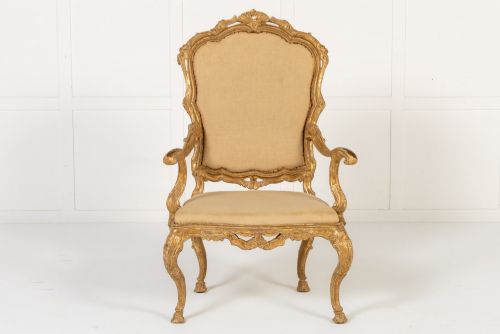
Ornate gilt chairs bring dramatic presence to a room, combining carved timber frames with rich gold leaf surfaces.
Ornate Gilt Chairs
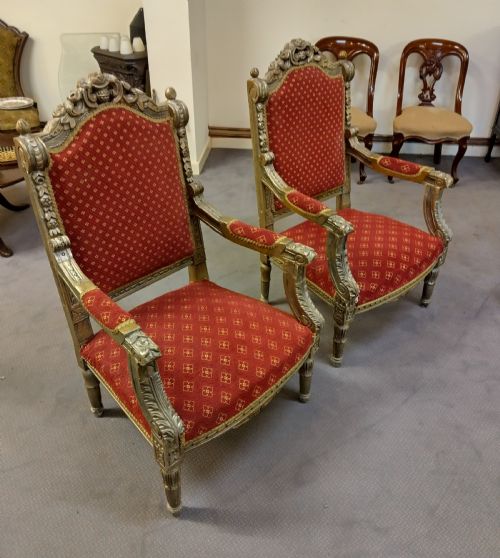
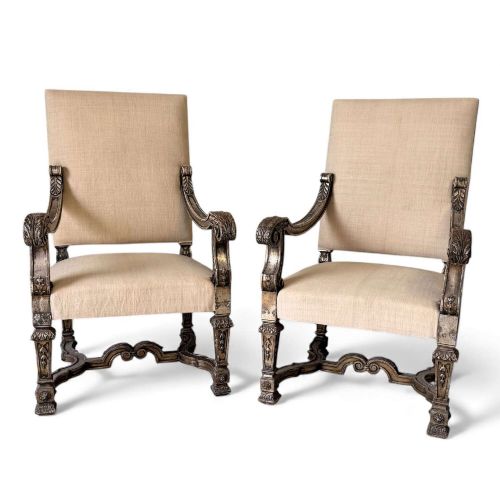
Ornate gilt chairs encompass seating pieces defined by gilded surfaces and decorative carving, spanning the eighteenth and nineteenth centuries. Examples range from imposing throne armchairs to delicate salon chairs, boudoir chairs, and side chairs.
Forms include armchairs, side chairs, hall chairs, and wingback armchairs. These seats served formal reception rooms, bedrooms, and grand halls, remaining statement furnishings for period interiors.
How they were made
Frames are constructed from timber, including solid walnut and giltwood, shaped through detailed hand carving. Artisans applied gold leaf or gilt finishes over the wood to create a luminous, reflective surface.
Upholstery materials recorded in the pieces include velvet, linen, damask fabric, and leather. These textiles complement the carved and gilded wooden structures of the armchairs and salon seats.
Ornate Gilt Chairs Retail Price Guide 2026
Typical asking prices for ornate gilt chairs among the pieces listed under this phrase on Sellingantiques today, from the lower quarter to the upper quarter. They describe what is for sale here now, not the wider market.
The design styles represented include French Chateau, Italian Rococo, Louis XVI, Napoleon III, and Anglo-Indian traditions.
What varies in quality
Quality rests upon the crispness and depth of the carved details on the wooden frame. Deep, purposeful carving in giltwood distinguishes superior seating from simpler decorated timber versions.
The application of the gold leaf and the integrity of the underlying timber structure determine the visual weight of the piece. Period upholstery choices, such as traditional damask or velvet, further influence the overall character.
The Ornate Gilt Chairs Glossary
- Giltwood
- Timber that has been coated with gold leaf or a gilt finish. This material defines the bright, reflective surfaces characteristic of these ornate seats.
- Damask fabric
- A reversible figured textile often used for upholstery. It provides a patterned surface that complements carved wooden frames.
- Napoleon III
- A nineteenth-century French design period known for eclectic revivals and opulent decoration. Pieces from this era often feature rich gilding and plush upholstery.
- Wingback armchair
- An upholstered seat with high sides designed to shield the occupant from drafts. Eighteenth and nineteenth-century examples combine this comfort with giltwood frames.
Ornate Gilt Chairs: Frequently Asked Questions
Where should I place an ornate gilt chair?
These chairs function well as statement pieces in living rooms, bedrooms, or grand hallways. Their gilded surfaces and carved frames draw the eye and anchor a seating arrangement.
Pair them with complementary antique furnishings to create a cohesive period aesthetic in formal spaces.
How do I care for giltwood frames?
Dust the carved wooden surfaces gently with a soft, dry cloth to prevent the accumulation of dirt. Avoid moisture and chemical polishes that can damage the delicate gold leaf.
Keep the seating away from direct sunlight and heat sources to protect both the timber frame and the traditional upholstery.
What is the difference between an armchair and a side chair?
Armchairs feature structural supports for the arms, offering a more substantial silhouette designed for lounging or formal sitting. They often serve as primary focal points in a room.
Side chairs lack arms and possess a lighter frame, traditionally positioned against walls or used around tables when extra seating was required.
How do I identify nineteenth-century styles?
Nineteenth-century seating often draws inspiration from earlier Baroque, Rococo, and Louis XVI aesthetics. Look at the specific curve of the legs, the style of the carving, and the proportions of the frame.
Napoleon III pieces display characteristic nineteenth-century opulence, while revival styles replicate eighteenth-century grandeur with contemporary manufacturing techniques of the era.