

Ornate Gilded Sconces
These ornate gilded sconces bring candlelit warmth and reflective depth to a room through centuries of French and Italian design.
Ornate Gilded Sconces
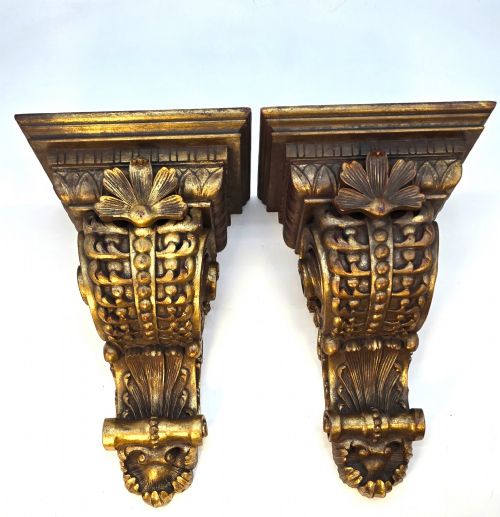
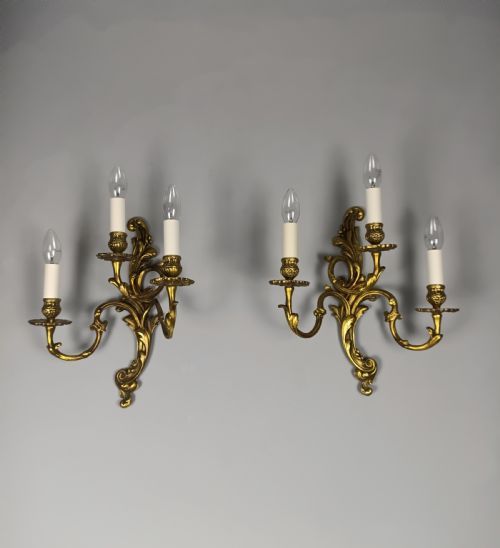
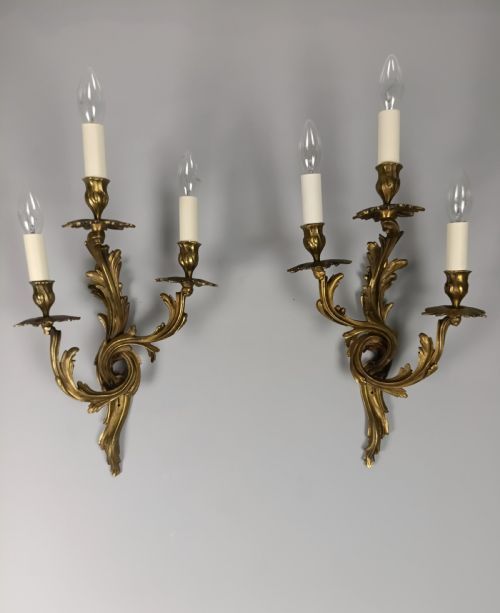
When searching for ornate gilded sconces, buyers encounter wall-mounted lighting fixtures and brackets designed to catch and amplify light in domestic interiors. The pieces appearing here span from the eighteenth century through the Victorian era and into the early twentieth century, showing sustained popularity for decorative wall illumination.
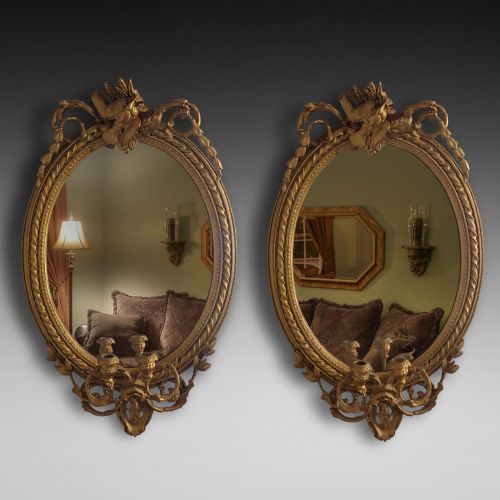
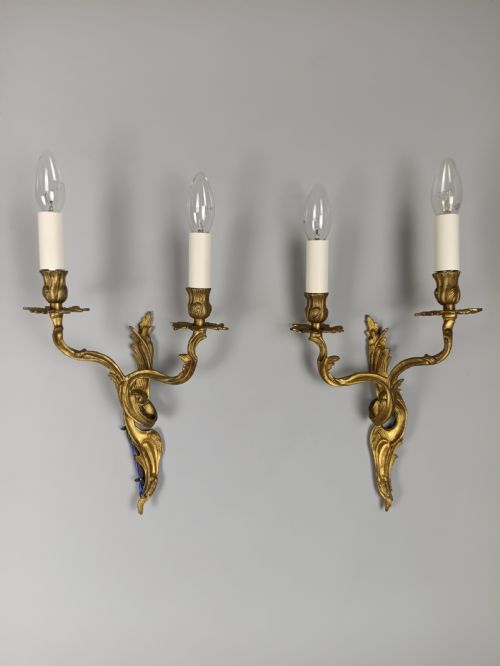
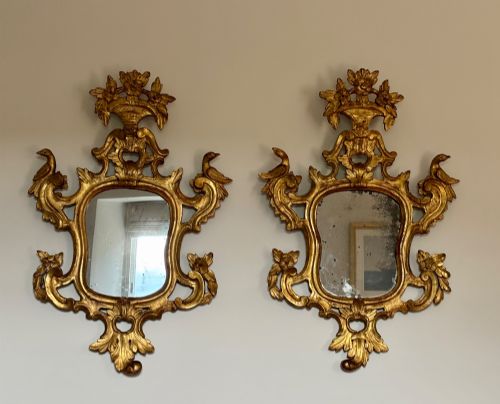
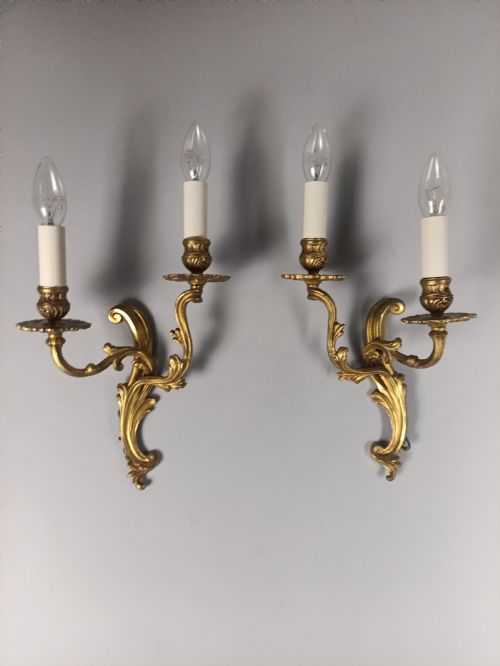
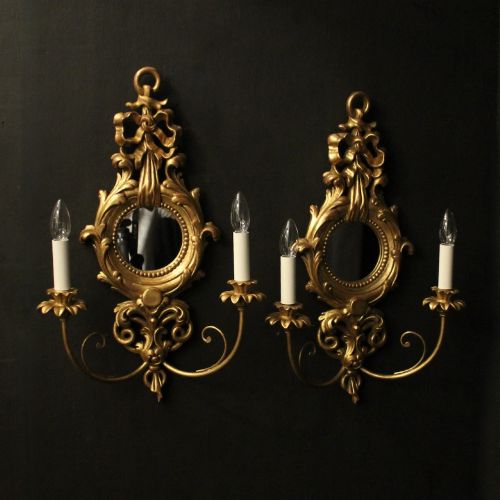
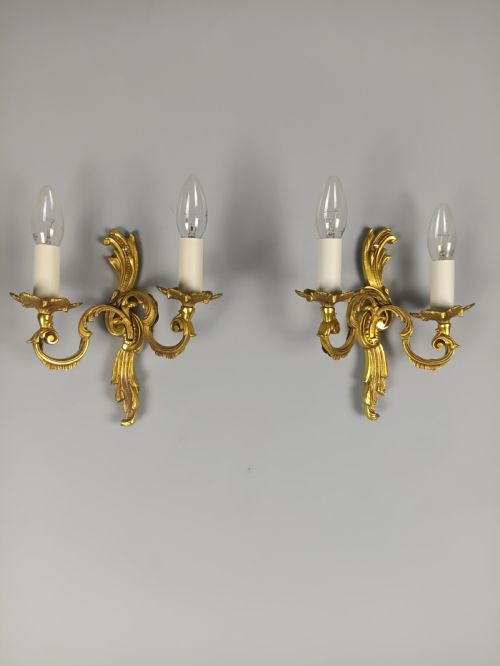
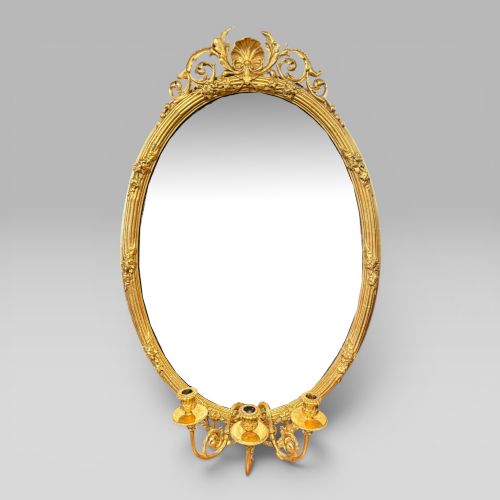
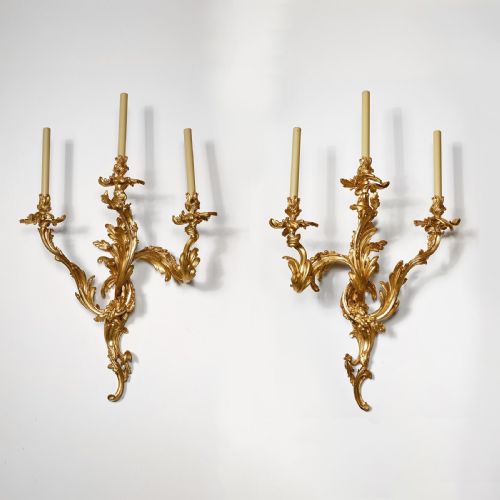
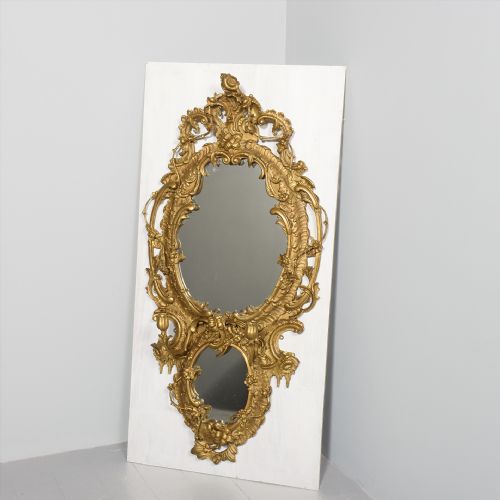
French origins dominate the selection, frequently taking the form of twin-arm or triple-arm wall lights executed in the Rococo style. Alongside these lighting fixtures, the inventory includes wall brackets, girandoles, and mirrors that share the characteristic gilded surface treatment.
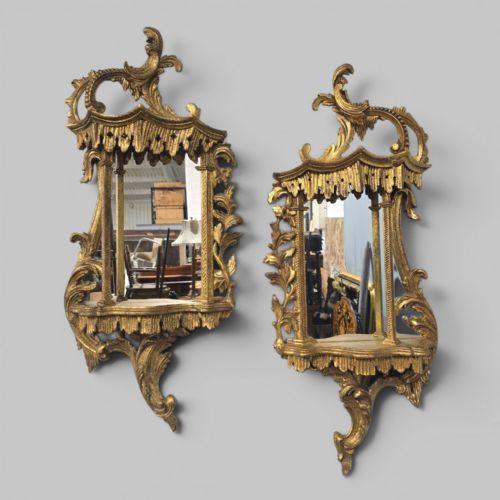
The objects serve both a practical illumination purpose and a decorative function, often sold in matched pairs or larger sets. Their forms draw heavily on historical vocabularies, notably French Rococo, Neoclassical, and Chinese Chippendale influences.
How they were made
Artisans relied primarily on bronze, brass, and carved wood as structural bases for these fixtures. These metal and wooden forms received applications of gold leaf, gilt paint, or gesso to create the luminous surface that defines the category.
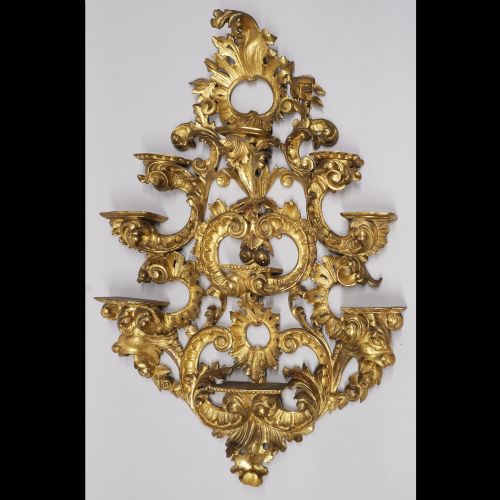
Carved giltwood examples demonstrate intricate hand-carved detail work, while cast metal pieces utilise bronze and brass shaped into elaborate scrolls, leaves, and asymmetrical Rococo motifs. Glass, crystal, and onyx elements occasionally integrate into the designs to hold candles or reflect illumination.
What varies in quality
The distinction between tiers rests upon the crispness of the casting or the depth of the wood carving. Pieces executed with sharp, well-defined foliage and scrolls command greater attention than softer, shallower castings.
The application of the gilding itself marks a division in standard. Hand-applied gold leaf yields a richer, warmer reflection compared to flat gilt paint or modern metallic finishes.
The Ornate Gilded Sconces Glossary
- Girandole
- A branched wall light, often incorporating a mirror to multiply the reflected candlelight. These pieces combine illumination with decorative optical effects.
- Giltwood
- Timber, commonly lime or pine, that has been coated with gold leaf over a preparation of gesso and size. This technique creates a durable, luminous surface.
- Ormolu
- Finely chased and gilded bronze, widely utilised in decorative hardware and lighting fixtures during the eighteenth and nineteenth centuries. The term derives from the French for ground gold.
- Appliqué
- A French term frequently applied to wall-mounted lighting fixtures or sconces. These fittings attach directly to wall surfaces.
- Champlevé
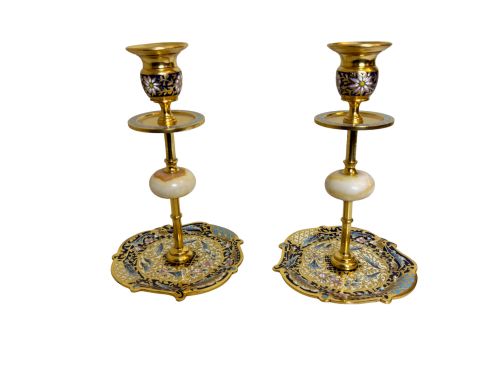
- An enamelling technique where troughs or cells are sunk into a metal surface and filled with vitreous enamel before firing. Pieces featuring this technique often incorporate onyx and gilt bronze.
Ornate Gilded Sconces: Frequently Asked Questions
How were ornate gilded sconces originally used?
These fixtures were positioned on walls to hold candles, serving to illuminate parlours, dining rooms, and hallways before the advent of electricity. Mirrors were frequently incorporated behind the candles to bounce additional light into dark corners.
Over time, many surviving examples have been professionally rewired to accommodate electric bulbs while retaining their historic appearance.
How do I install antique wall lights safely?
Many period sconces arrive rewired and ready for installation by a qualified electrician. It is essential to ensure the wall structure can support the weight of heavy bronze or carved wooden brackets.
Consulting a professional prevents damage to both the historic wiring and the delicate gilded surfaces during mounting.
How can I tell different periods apart?
Eighteenth-century examples often display authentic hand-carving and aged patination on giltwood surfaces. Nineteenth-century pieces frequently revive earlier styles like Rococo or Louis XIV, utilising heavier cast bronze and brass.
Twentieth-century reproductions or adaptations from the 1920s and 1930s often show standardised casting methods combined with older stylistic vocabularies.
How should I clean gilded surfaces?
Dusting gently with a soft, dry brush is the safest method for maintaining delicate gold leaf or gilt bronze. Moisture and harsh chemical cleaners can strip the thin metallic layers from the base material.
Professional conservation advice should be sought if deeper cleaning is required to remove accumulated grime.