

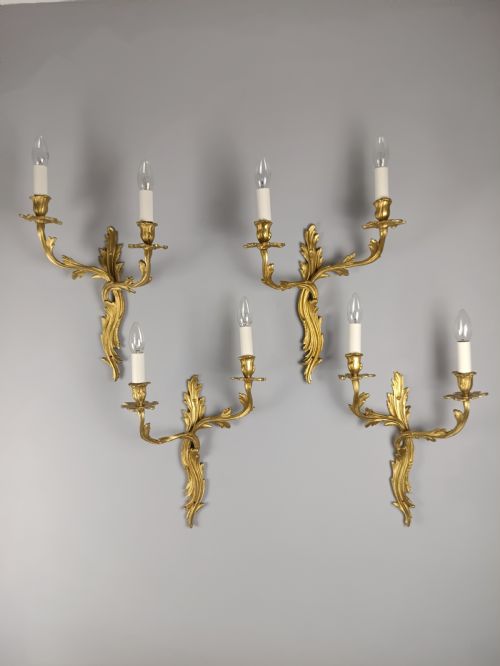
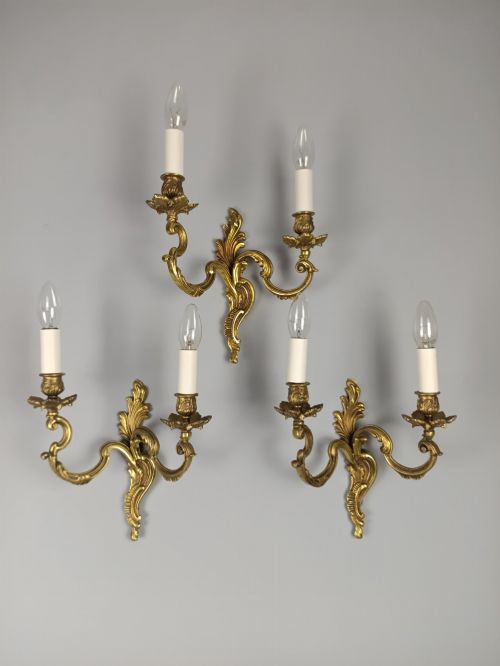
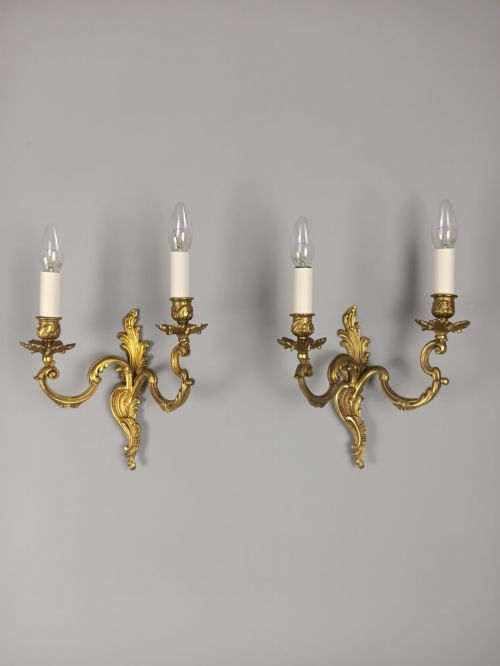
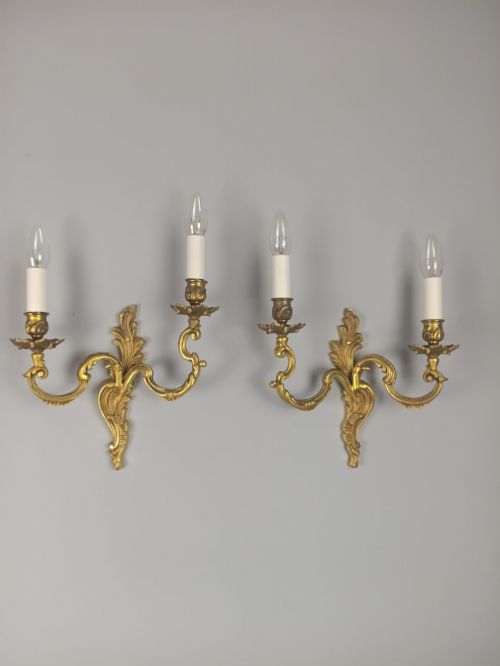
Rococo Twin Arm Sconces
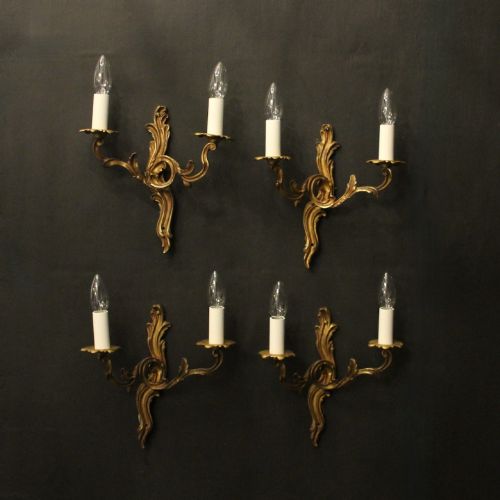
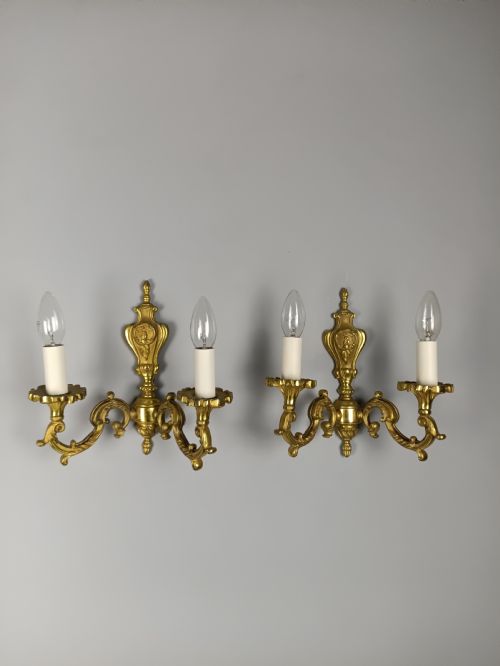
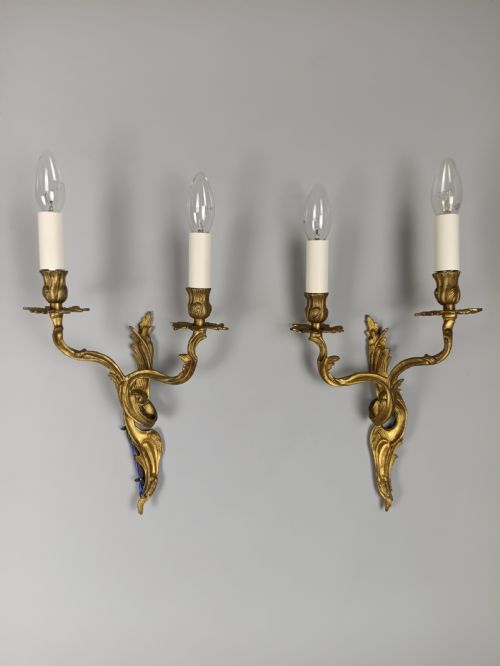
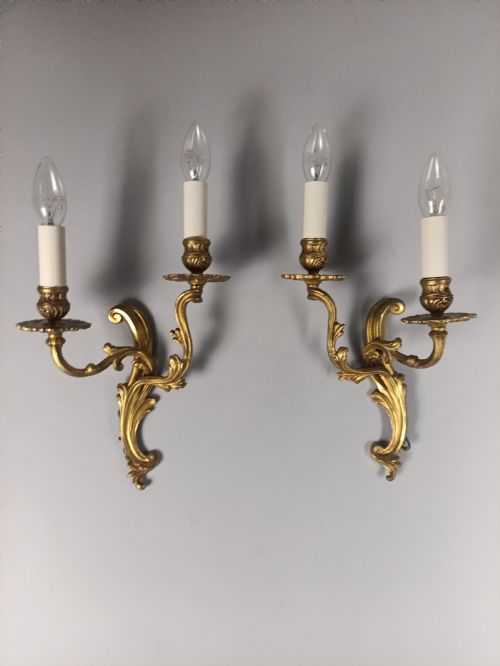
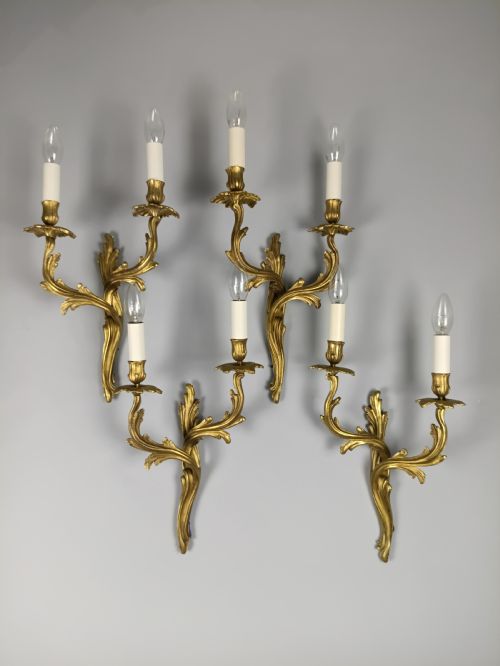
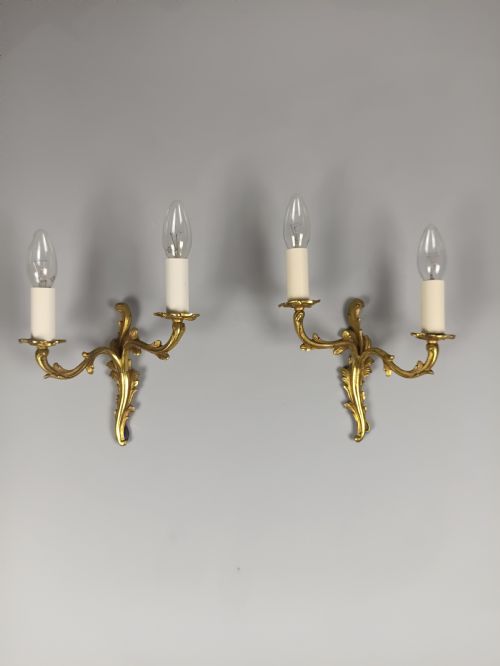
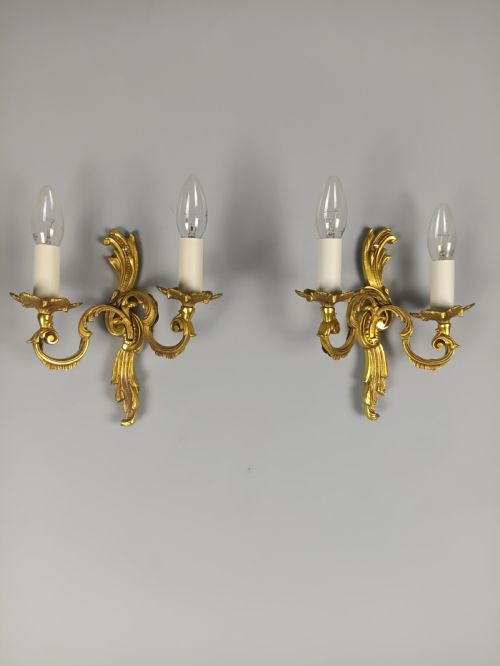
Rococo twin arm sconces bring flowing asymmetrical curves and warm metallic reflection to an interior wall.
Rococo Twin Arm Sconces
These lighting fixtures provide illumination through two branches extending from a central wall-mounted backplate. When searching for rococo twin arm sconces, buyers encounter decorative wall lights designed primarily in French and Italian styles.
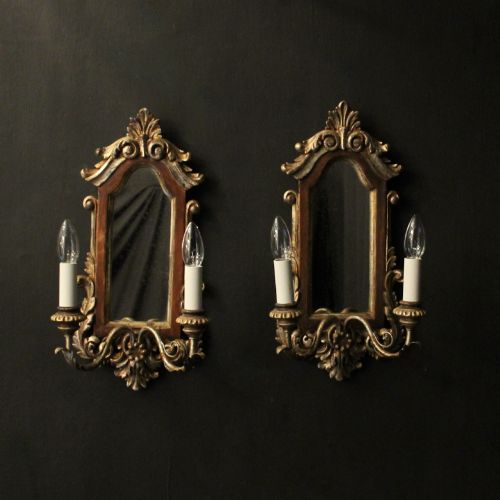
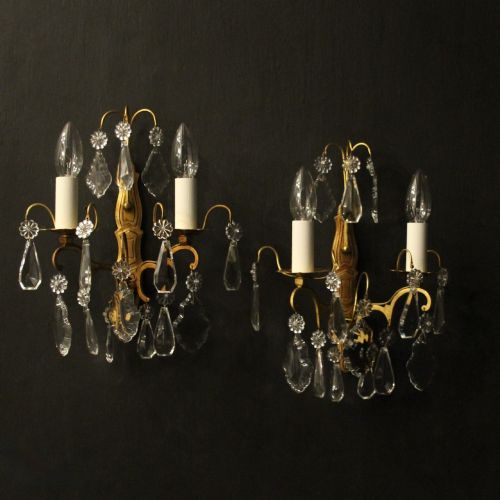
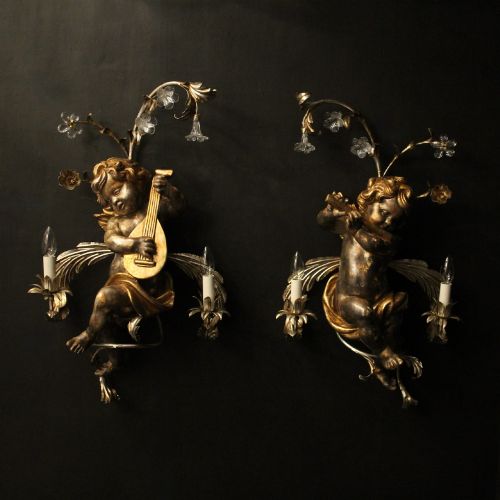
The pieces appearing on this page span the eighteenth century to the early twentieth century, with many examples originating from the nineteen-twenties and nineteen-thirties reflecting earlier revival aesthetics. Forms range from simple metal wall brackets to elaborate girandoles incorporating carved wood or glass elements.
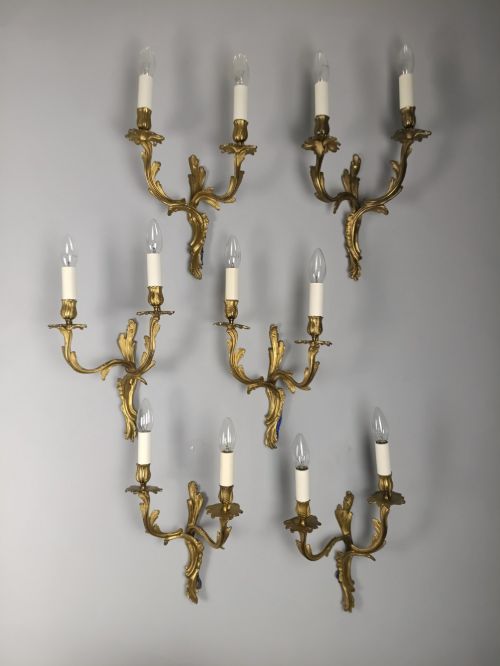
French and Italian workshops dominate the selection, often taking the form of matched pairs or larger sets suitable for formal rooms. The design vocabulary relies heavily on C-scrolls, floral motifs, and asymmetrical cartouches characteristic of the period.
How they were made
Makers utilised cast bronze, brass, and metal as the primary structural foundations for these fixtures, applying layers of surface gilding or ormolu to achieve a rich metallic finish. Some regional variants incorporate carved giltwood or polychrome decoration alongside the metal arms.
The casting process allowed artisans to render intricate scrollwork and organic foliage with high relief before finishing the surfaces by hand. Later twentieth-century examples from the period often combined traditional casting methods with updated electrical wiring for domestic use.
The listings show pieces spanning from the nineteenth century through to nineteen-thirty, dominated by French and Italian metalwork.
What varies in quality
The refinement of the casting and the depth of the hand-chasing determine the visual fidelity of the ornament on each backplate and arm. Superior examples exhibit crisp detail in the asymmetrical foliage and scrolls without soft edges or lost definition.
The condition and retention of the original gilt surface also separate standard items from finer examples, as rubbed or re-plated finishes alter the character of the metal. Furthermore, the weight of the bronze or brass and the structural integrity of the joints dictate the durability of the fixture.
The Rococo Twin Arm Sconces Glossary
- Ormolu
- A surface finish applied to bronze objects using a ground gold amalgam. This technique creates a rich golden appearance characteristic of French decorative arts.
- Girandole
- A branched wall light or sconce, often incorporating a mirror backplate to multiply the reflected candle or electric light.
- Cartouche
- An ornamental frame resembling a scroll or rolled-up piece of paper, frequently utilised as the central motif on a rococo backplate.
- C-scroll
- A foundational decorative curve shaped like the letter C. It forms the primary building block of asymmetrical rococo ornamentation.
- Giltwood
- Timber that has been coated with a thin layer of gold leaf. This material appears on Italian and continental carved wall lights.
Rococo Twin Arm Sconces: Frequently Asked Questions
How do I install antique wall sconces?
Many surviving examples have been modernised with updated electrical wiring to suit contemporary standards. Professional installation is recommended to secure the weight of the metal backplate safely to the wall.
Ensure that the junction box aligns correctly with the internal mounting bracket of the fixture. Consulting a qualified electrician guarantees proper connection and compliance with local building codes.
Can I mix pairs and sets in one room?
Placing matching pairs on opposite sides of a fireplace or architectural feature creates visual balance. Larger sets allow for uniform illumination across multiple walls within a larger interior space.
Matching the metal finish and the approximate period ensures stylistic harmony when combining different groupings. Consistency in the scale of the backplates matters more than having identical arm configurations.
What is the difference between brass and bronze?
Bronze is an alloy of copper and tin, while brass consists primarily of copper and zinc. Bronze generally allows for sharper cast details and greater weight in antique lighting fixtures.
Both metals received surface gilding or ormolu treatments to enhance their appearance. Determining the exact metal often requires examining the weight and the crispness of the chased surface.
How do I clean gilded metal wall lights?
Dusting the surface regularly with a soft, dry brush prevents the accumulation of grime within the intricate scrollwork. Avoid using abrasive commercial metal cleaners that can strip away thin historical gilding.
Professional conservation cleaning is advised if the surface exhibits heavy tarnishing or accumulated residue. Gentle handling protects the delicate chased details on the arms and backplates.