





Ornate French Mantle Clock
An ornate french mantle clock brings gilt bronze, porcelain and elaborate revival styling into a room with striking presence.
Ornate French Mantle Clock
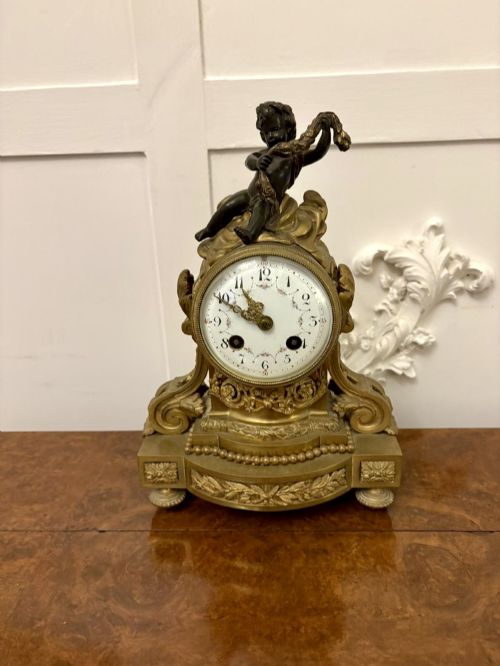
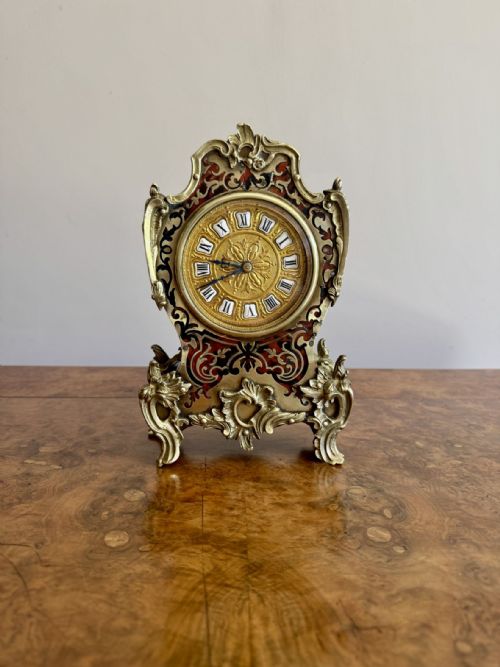
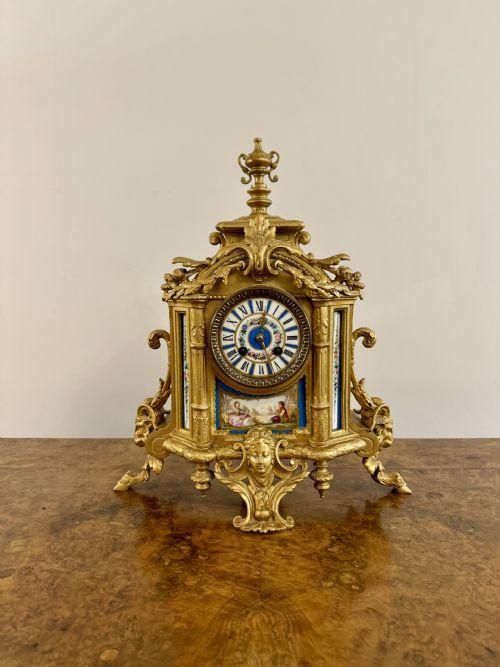
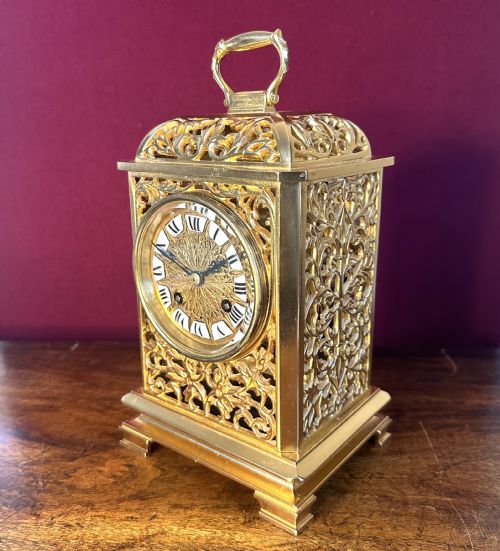
When searching for an ornate french mantle clock, buyers encounter elaborate timepieces originating primarily from the nineteenth century, spanning periods from eighteen fifty to nineteen hundred. These pieces encompass mantel clocks, carriage clocks, and clock garniture sets, often rendered in styles such as Rococo Revival, Louis XVI Revival, and French Second Empire.
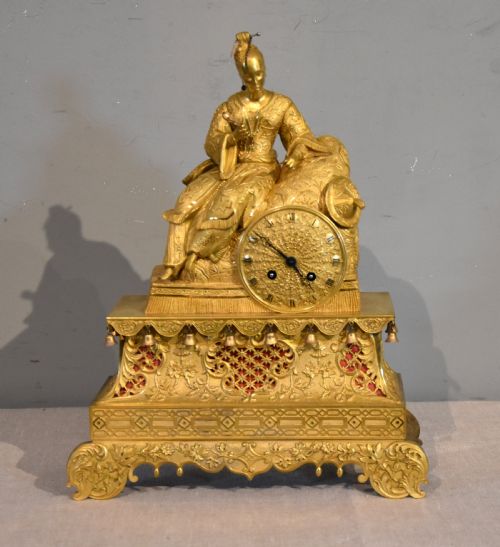
The version most commonly met on this page is a nineteenth century mantel clock constructed from materials like ormolu, brass, bronze, and marble. Many feature enamel dials and porcelain panels, reflecting the decorative tastes of the Victorian era and late nineteenth century French workshops.
How They Were Made
Maker workshops utilised cast metals such as ormolu, gilt bronze, and solid brass to form the intricate architectural and figural cases. These metallic structures were frequently combined with carved marble, alabaster, or glass panels to create substantial weight and visual depth.
Dials and decorative accents relied heavily on painted enamel and inset porcelain, often embellished with champleve enamel work or hand-painted details. Movements were housed within these robust casings, incorporating mechanisms for striking and repeating functions.
Listings feature periods spanning from eighteen fifty to nineteen ten, predominantly utilising brass, ormolu, marble, and porcelain across mantel and carriage clock formats.
What Varies in Quality
The upper tier of these timepieces is distinguished by the crispness of the bronze or ormolu casting and the depth of the gilding. Superior examples display finely painted porcelain panels and intact champleve enamel work executed with precision rather than mass-produced uniformity.
Overall cohesion of the garniture set or carriage clock case, alongside the integration of signed movements from recognised makers, separates standard decorative items from exceptional horological works.
Howell & James London·Brunelot·Japy Freres·Tiffany·Leroy & Fils·Dehné of Paris
The Ornate French Mantle Clock Glossary
- Ormolu
- A technique of applying finely ground high-carat gold to a bronze object. This mercury gilding gives the metal a warm, durable finish common on nineteenth century French clock cases.
- Champleve
- An enamelling technique where troughs are carved into the metal surface and filled with vitreous enamel powder before firing. It creates vibrant coloured patterns across brass and bronze clock surfaces.
- Garniture
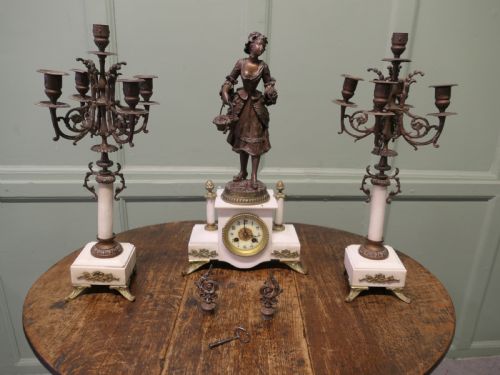
- A set consisting of a central clock flanked by matching decorative ornaments such as vases or candelabra. These matched sets were designed to sit together on a mantelpiece.
- Carriage clock
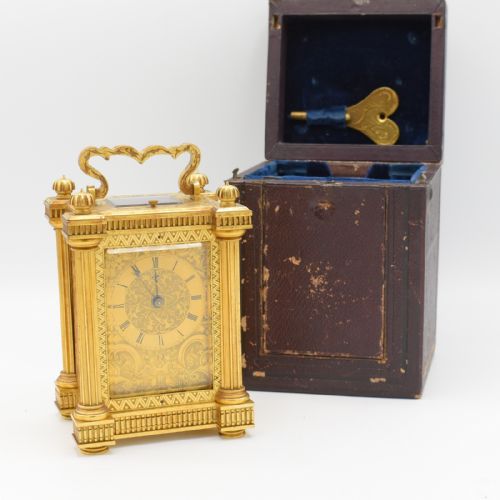
- A small, portable spring-driven timepiece equipped with a carrying handle and glass panels. They originated for travel but became popular decorative objects for the home.
- Crystal regulator
- A mantel clock featuring glass panels on four sides that reveal the internal movement and pendulum. The style gained popularity during the late nineteenth century.
Ornate French Mantle Clock: Frequently Asked Questions
What is a french clock garniture?
A clock garniture is a matched set comprising a central timepiece accompanied by two side ornaments, such as urns or candelabra, designed to create a symmetrical display on a mantelpiece.
These sets incorporate the same materials, such as porcelain, ormolu, or marble, ensuring a unified aesthetic across the entire arrangement.
How do carriage clocks work?
Carriage clocks operate using a spring-driven movement rather than a hanging pendulum, allowing them to remain accurate while portable. Many include a folding handle on top and glazed glass panels on the sides to view the internal mechanics.
Some examples feature additional complications like alarm mechanisms or repeaters that chime the time on demand.
What is ormolu?
Ormolu refers to gilded bronze, where a mixture of mercury and gold is applied to a cast brass or bronze base and heated until the mercury evaporates. This leaves a rich golden coating that resists tarnish.
It forms the decorative chassis for many nineteenth century French timepieces.
How do I date a french mantel clock?
Dating relies on examining the case style, materials, signature, and movement mechanics. Pieces from the eighteen fifties often reflect early revival aesthetics, while those from the eighteen nineties lean towards crystal regulators or detailed champleve enamel.
Inscribed signatures on the dial or movement backplate often point to specific makers active during those decades.