




Ornate Fireplace Chenets
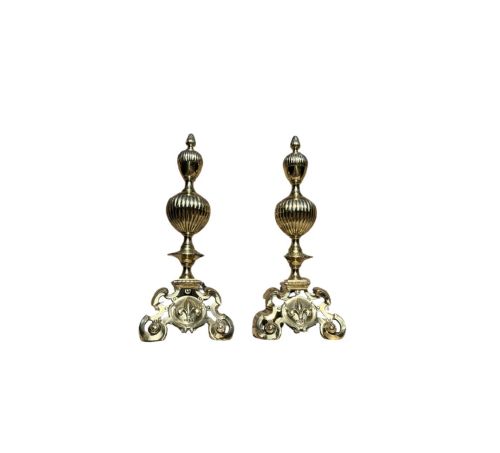
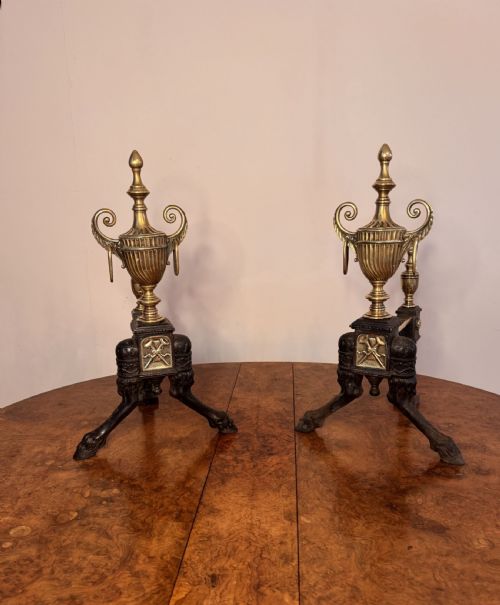
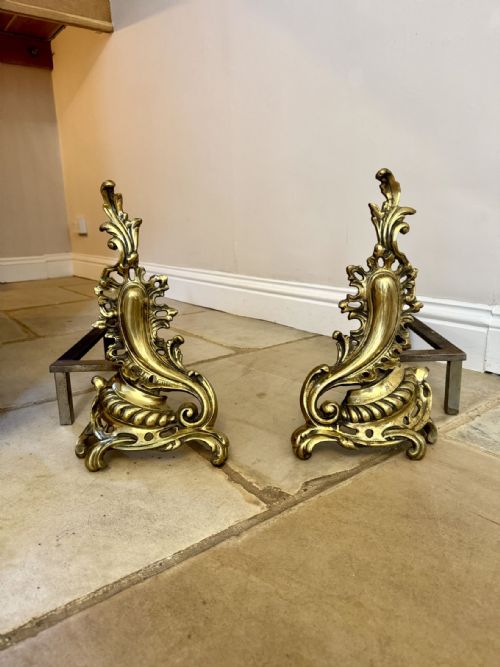
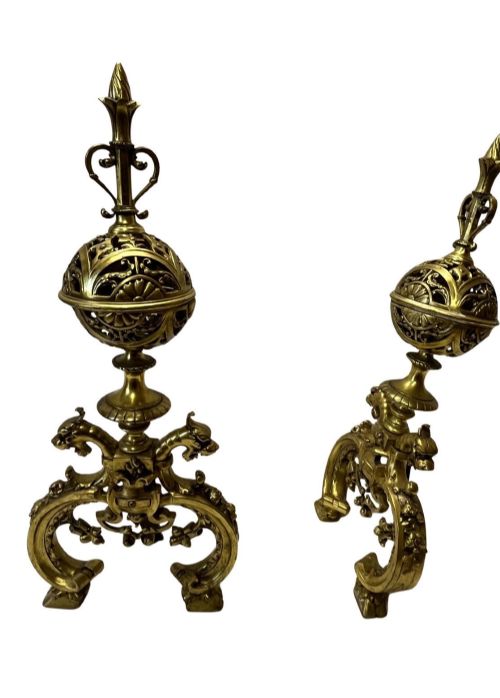
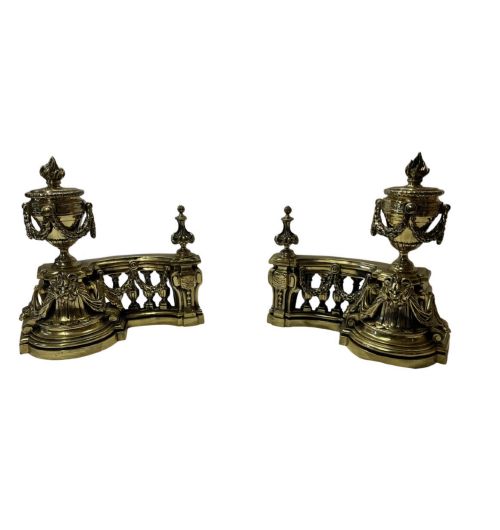
These ornate fireplace chenets bring architectural weight and decorative flourish to a hearth, offering the robust practicality of heavy metalwork alongside elaborate period styling.
Ornate Fireplace Chenets
Ornate fireplace chenets are hearth furniture designed to support logs within an open fireplace, frequently appearing alongside terms such as fire dogs and andirons. Buyers searching for ornate fireplace chenets encounter substantial pairs cast in heavy metals, often styled to echo continental and domestic design revivals.
The selections available here lean heavily toward nineteenth-century production, spanning the decades from eighteen-fifty through to nineteen-twenty. These pieces range from grand French Rococo and Baroque revivals to domestic Victorian interpretations, each serving to elevate the visual presence of a fireplace opening.
Materials and construction methods
Makers relied on durable metals capable of withstanding intense hearth heat while holding intricate decorative detail. Cast brass, iron, and cast iron provided the structural backbone for these hefty pairs, ensuring stability on the hearth floor.
Surface finish distinguished simpler utility items from display pieces through the application of gilt bronze, ormolu, and plain bronze finishes. Fine casting techniques allowed workshops to render elaborate scrollwork, flora, and revival motifs with crisp relief.
Ornate Fireplace Chenets Retail Price Guide 2026
Typical asking prices for ornate fireplace chenets among the pieces listed under this phrase on Sellingantiques today, from the lower quarter to the upper quarter. They describe what is for sale here now, not the wider market.
Some chenets feature adjustable fender forms, proving that even nineteenth-century hearth guards appreciated a modular approach to keeping sparks off the rug.
Distinguishing quality in metalwork
Quality rests primarily in the crispness of the casting and the depth of the chased surface detail. Superior pairs show sharp relief in the scrolling foliage and figures, avoiding the softened edges typical of secondary recast copies.
Substantial weight and material integrity set the finer examples apart from lighter utilitarian hardware. The choice of genuine ormolu or heavy fire gilt bronze over simpler lacquered brass indicates a higher tier of original manufacture.
The Ornate Fireplace Chenets Glossary
- Chenet
- An alternative term for an andiron or fire dog used to support logs in an open hearth. They frequently feature decorative front terminals designed to be seen when the fireplace is unlit.
- Ormolu
- Gilt bronze created by applying a finely ground high-carat gold-mercury amalgam to a bronze base. This technique produces a warm, rich surface glow characteristic of high-end French decorative metalwork.
- Baroque Revival
- A nineteenth-century design movement resurrecting the dramatic curves, heavy ornamentation, and theatrical scale of the seventeenth century. Pieces in this style emphasise robust movement and grand proportions.
- Rococo
- An eighteenth-century style revived extensively in the nineteenth century, defined by asymmetrical C-scrolls, shell motifs, and naturalistic plant forms. It remains one of the most common decorative vocabularies found on these hearth accessories.
Ornate Fireplace Chenets: Frequently Asked Questions
What is the difference between chenets and andirons?
Chenets and andirons are essentially the same object, with the former term often used for pieces originating from or styled after French decorative traditions. Both terms describe heavy metal supports placed inside a hearth to keep logs elevated for better airflow.
While some regional variations in design exist, buyers can treat the terms interchangeably when searching for decorative hearth metalwork of this period.
How do I date a pair of chenets?
Dating relies on examining the casting methods, the uniformity of fixing screws or nuts, and the stylistic vocabulary employed by the maker. Nineteenth-century revival pieces often incorporate machine-threaded components alongside hand-finished surfaces.
Comparing the specific revival style, such as Louis XVI or Italian Renaissance, against known period production windows helps narrow down the decade of manufacture.
Can these be used in a working fireplace?
Most of these heavy metal pairs are robust enough to support wood fires, provided the metal is cast iron or solid brass. However, pieces with delicate ormolu or fire gilt finishes are often reserved for decorative hearth placement to preserve the surface.
Checking the metal thickness and back bar condition determines whether a pair suits daily service or purely decorative display.
How should I clean antique brass and bronze?
Maintenance requires minimal intervention to preserve the historic patina built up over generations. A gentle dusting with a soft dry cloth is usually sufficient for regular upkeep, avoiding harsh chemical brass cleaners that strip the aged surface.
If the metal requires deeper cleaning, a mild soap solution and thorough drying prevent moisture damage without destroying the underlying character.