
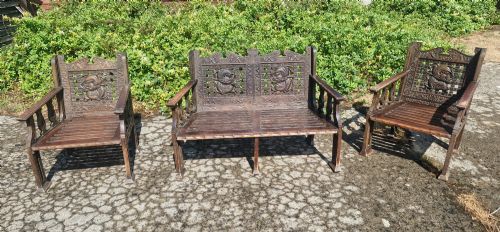
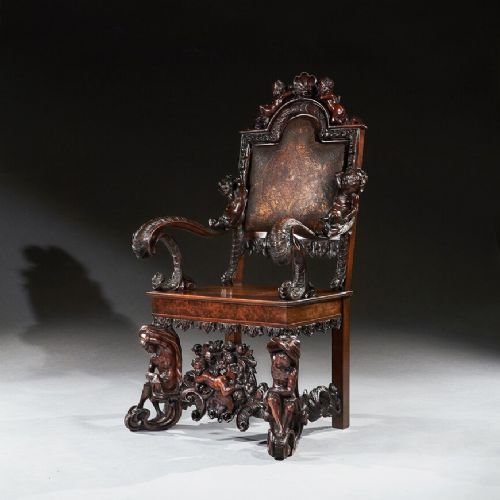
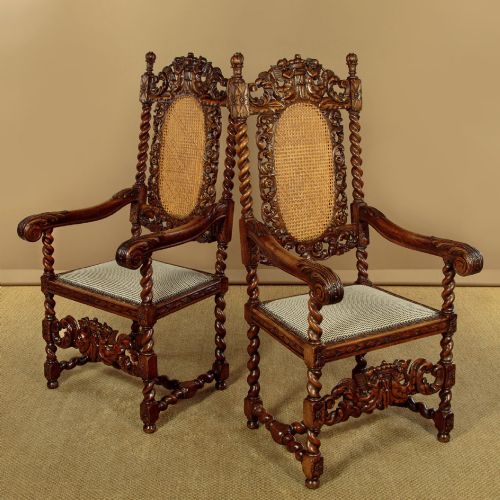
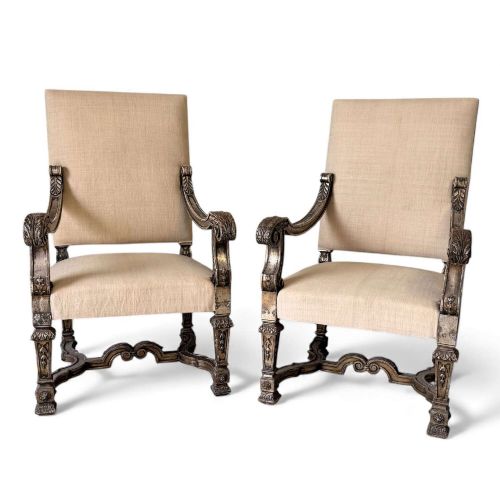



Ornate Carved Wooden Seat
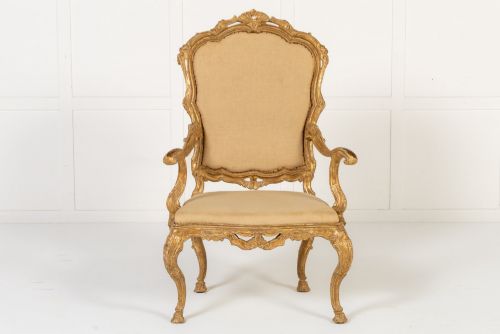
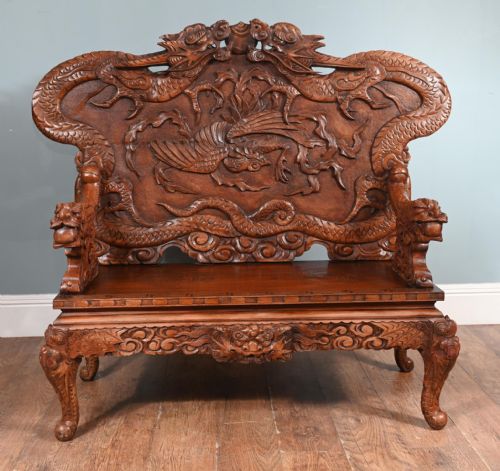
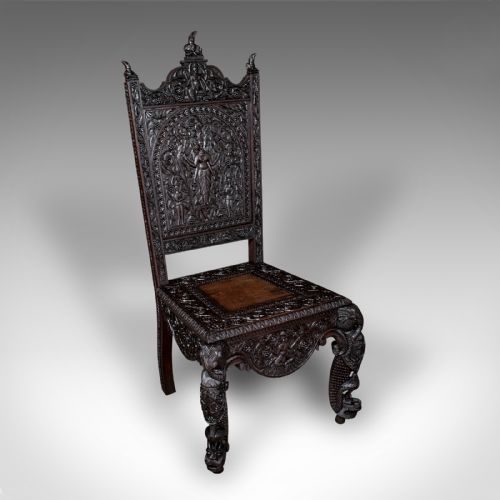
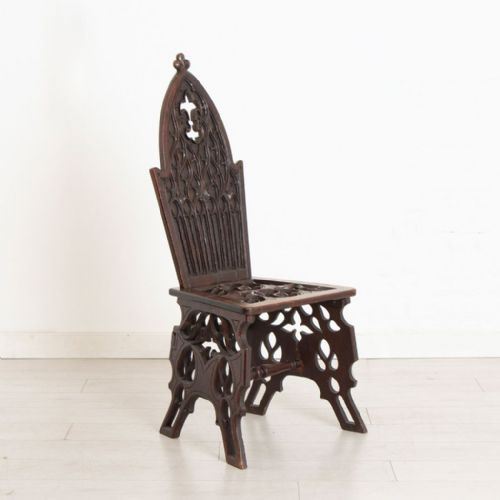
An ornate carved wooden seat brings heavy nineteenth-century presence and intricate craftsmanship into a room.
Ornate Carved Wooden Seat
An ornate carved wooden seat covers a wide range of forms including armchairs, hall chairs, benches, settles, and sofas created primarily during the nineteenth century. Buyers searching this phrase meet everything from European revivalist armchairs to Anglo-Indian and Ceylonese veranda seating.
How they were made
Makers utilised dense timbers such as walnut, teak, oak, and general hardwoods to support deep, elaborate chisel work. Giltwood, bone inlay, marquetry, and cinnabar lacquer frequently augment the primary wooden structures.
Workshops applied sculptural relief carving, turning, and joinery techniques by hand, often incorporating upholstered elements in fabric or linen alongside brass fittings.
The listings span the eighteenth, nineteenth, and early twentieth centuries, featuring walnut, teak, oak, and giltwood finishes.
What varies in quality
The depth, sharpness, and architectural ambition of the carved ornament separate standard production from exhibition pieces. Relief work executed with crisp undercut details and balanced proportions demonstrates superior workshop output.
The choice of timber and the integration of decorative additions such as bone inlay, marquetry, or gilding determine the refinement of the finished seat.
Andrea Brustolon
The Ornate Carved Wooden Seat Glossary
- Settle
- A wooden bench with high backboards, solid arms, and often a storage box beneath the seat. It was designed to keep draughts away in domestic halls.
- Marquetry
- The art of applying pieces of veneer to a structure to form decorative patterns. Craftsmen use various coloured woods and bone to build pictorial scenes.
- Giltwood
- Timber that has been coated with gold leaf or gold paint. This finish creates a brilliant reflective surface popular in Baroque and Rococo revival furniture.
- Cinnabar lacquer
- A technique involving multiple layers of red lacquer applied to a base and carved when dry. It yields rich relief patterns on Asian decorative objects.
Ornate Carved Wooden Seat: Frequently Asked Questions
Where should I place an ornate carved wooden seat?
These pieces suit reception halls, drawing rooms, or conservatories where their sculptural frames can be viewed from multiple angles. They function best as focal points rather than casual lounging furniture.
Because the timber and carving are substantial, pairing them with simpler surroundings allows the detail of the wood to stand out clearly.
How do I identify a Renaissance revival chair?
Renaissance revival pieces usually display architectural motifs like columns, strapwork, and deeply carved crest rails. Walnut is the predominant timber for this heavy style.
Look for turned legs connected by ornate stretchers and upholstery fixed with decorative brass tacks.
What is the difference between an armchair and a hall chair?
Armchairs feature upholstered or carved wooden armrests designed for comfort in living spaces. Hall chairs are rigid, upright wooden seats intended for brief use in entranceways.
Hall chairs often showcase more aggressive or heraldic carving since they were meant to impress visitors upon arrival.
How do I care for antique carved wooden seating?
Dust the intricate crevices regularly with a soft brush to prevent dirt buildup in the relief work. Keep the timber away from direct heat sources to avoid splitting the dry wood.
Applying occasional appropriate wax preserves the sheen of walnut and oak without masking the grain.