


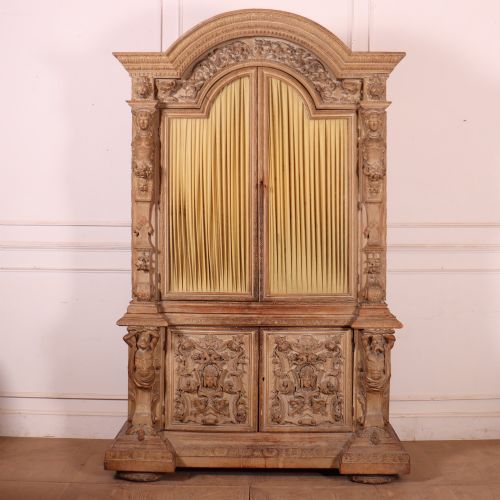


Ornate Carved Wood Cabinet
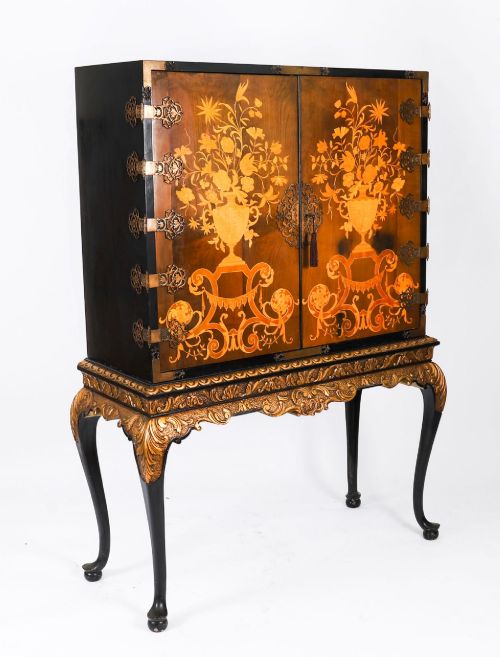
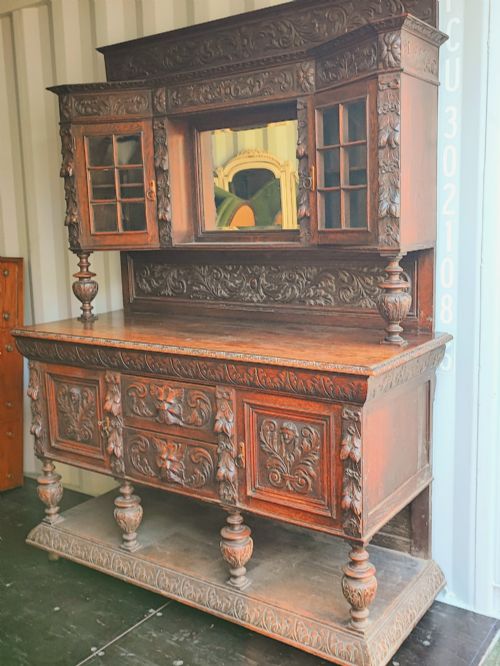
An ornate carved wood cabinet brings deep relief work, rich timber figure and historic presence into a room.
Ornate Carved Wood Cabinet
An ornate carved wood cabinet encompasses substantial sideboards, display cabinets, vitrines and storage pieces shaped by Victorian, Edwardian and earlier hands. The selection here leans heavily towards substantial Victorian and nineteenth-century oak, walnut and teak forms carrying deep relief carving.
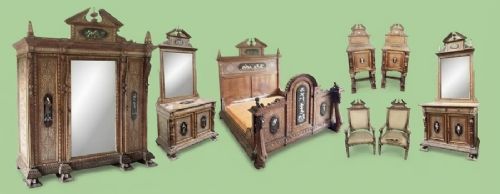
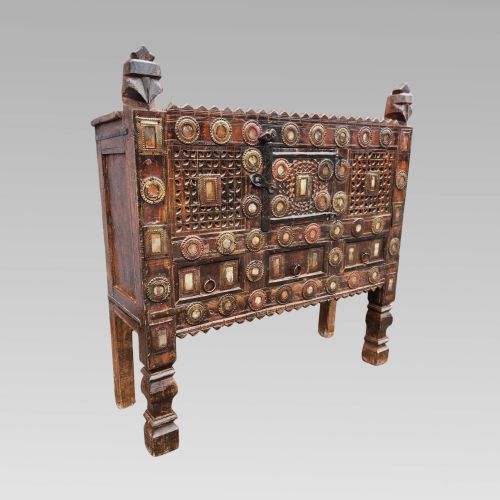
Buyers encounter diverse regional iterations ranging from Italian Renaissance Revival and French style display pieces to Anglo-Indian dowry chests and Davenport writing desks. Each form serves both a utilitarian storage function and a bold decorative role within an interior.
The typology stretches from tall open-front bookcases and cocktail cabinets to table top cabinets and pedestals, uniting them through elaborate chisel work and sculptural timber framing.
How they were made
Maker workshops relied on dense hardwoods such as oak, walnut, teak, padauk and rosewood, selected for their stability under heavy sculptural subtraction. Craftsmen worked these timbers using traditional hand chisels and gouges to build up layered relief surfaces.
Secondary elements often incorporate glass panels, brass hardware and marquetry inlay to contrast with the dark carved structure. Cabinetmakers joined framing timbers through mortise and tenon methods, ensuring the carcass could support extensive surface ornamentation.
Ornate Carved Wood Cabinet Retail Price Guide 2026
Typical asking prices for ornate carved wood cabinet among the pieces listed under this phrase on Sellingantiques today, from the lower quarter to the upper quarter. They describe what is for sale here now, not the wider market.
Recorded object types include sideboards, Davenport desks, cocktail cabinets, and vitrines.
What varies in quality
Depth, crispness and ambition of the chisel work separate pedestrian joinery from master sculptor output. Pieces carrying the touch of named workshops or known sculptors display an anatomical and spatial confidence in the carving that standard factory production misses.
Timber selection and grain matching across large facades dictate the baseline integrity of the carcass. Superior examples maintain structural proportion without relying on applied surface decoration to mask weak underlying joinery.
Waring & Gillows·Sigmund Jaray, Wien
The Ornate Carved Wood Cabinet Glossary
- Relief carving
- Relief carving. A sculptural technique where figures or ornamentation project from a flat background timber surface.
- Vitrine
- Vitrine. A glass-fronted display cabinet specifically designed for exhibiting porcelain, books or curiosities.
- Marquetry
- Marquetry. The art of applying fitted pieces of veneer to a structure to form decorative patterns or pictorial scenes.
- Pedestal sideboard
- Pedestal sideboard. A large dining room storage unit featuring flanking cupboards beneath a central surface.
Ornate Carved Wood Cabinet: Frequently Asked Questions
Where should I place a carved cabinet?
Position your cabinet against a flat wall where natural light can catch the depth of the chisel work without direct sun bleaching the timber. Give the piece enough clearance so that heavy sideboards or display units do not crowd the surrounding furniture.
Ensure the floor beneath is level to prevent doors from binding within their carved frames over time.
How do I clean carved wood surfaces?
Dust the intricate recesses regularly using a soft-bristled brush to prevent particulate buildup in the carved channels. Avoid silicone-based polishes that leave a gummy residue inside the timber grain.
Feed the wood periodically with a traditional wax to maintain the natural lustre of the walnut, oak or teak.
What is an Anglo-Indian cabinet?
Anglo-Indian pieces combine traditional British furniture forms with dense, indigenous Indian carving styles executed in exotic timbers like teak and padauk. These cabinets reflect nineteenth-century stylistic exchanges between British commissioners and local craftsmen.
They often feature motifs drawn from regional flora and fauna carved in high relief across every available surface.
How do I distinguish revival styles?
Renaissance Revival and Jacobean Revival pieces draw heavily on seventeenth-century architectural motifs, heavy moulding and formal symmetry. Look at the boldness of the cartouches and strapwork to gauge the specific period inspiration.
French style display cabinets tend to favour lighter serpentine curves, scrolling giltwood and delicate glazing bars compared to heavier English oak carver work.