



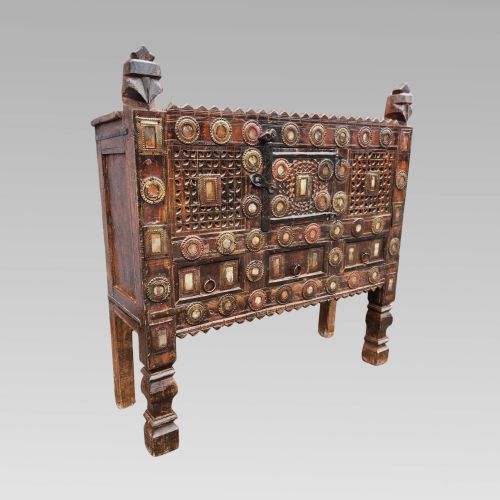


Ornate Carved Sideboard
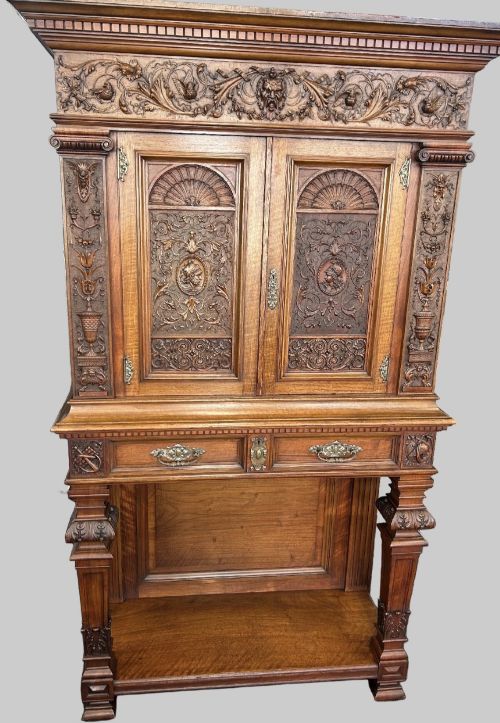
An ornate carved sideboard brings deep historical timber and theatrical relief into a room, anchoring the space with centuries of skilled joinery.
Ornate Carved Sideboard
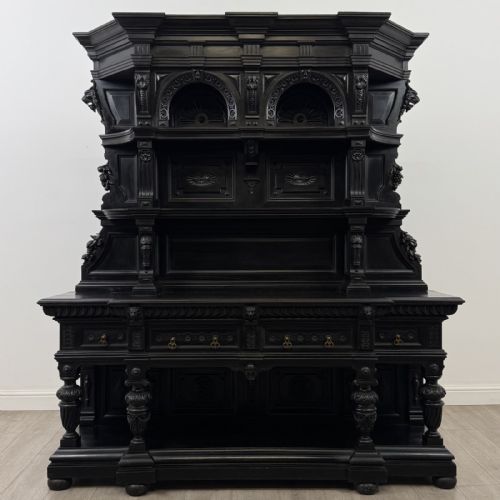
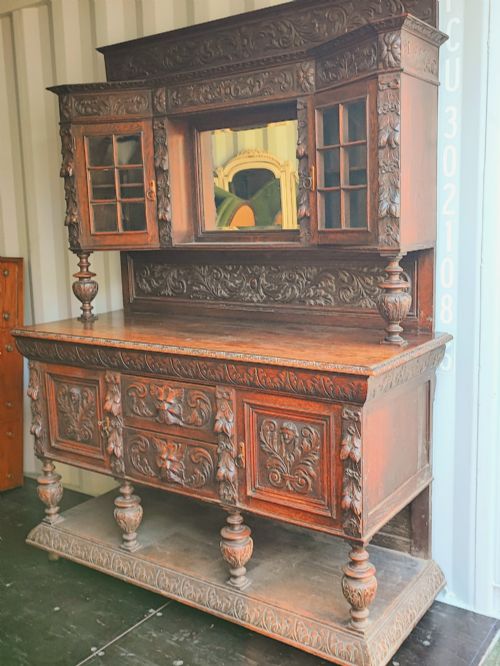
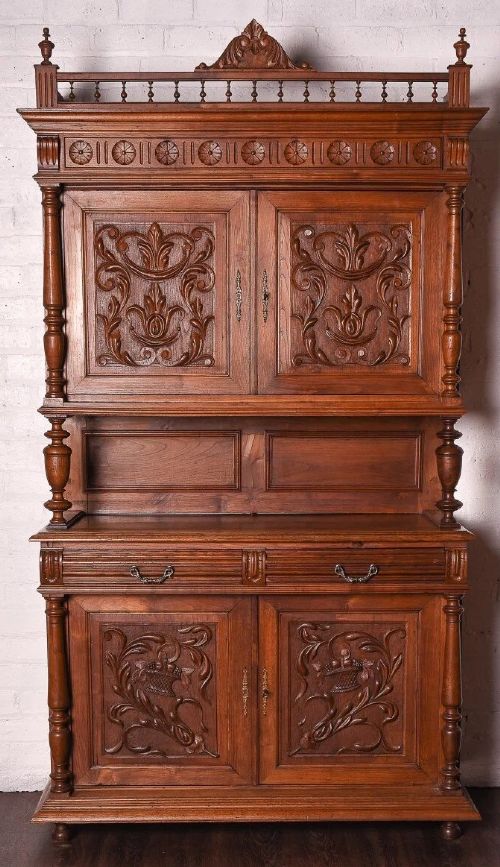
When you search for an ornate carved sideboard, you meet substantial storage furniture dominated by heavy relief work, figural motifs, and architectural revivals. The versions most commonly found here date from the Victorian era and the broader nineteenth century, constructed primarily in solid oak and walnut.
Forms range from large mirror-back buffets and inverted breakfront pedestals to smaller side cabinets and pot cupboards. Makers drew heavily on Renaissance, Jacobean, and Gothic revivals, alongside distinct regional traditions such as Anglo-Indian and Indian folk art work.
These items served primarily for the display of plate and the storage of dining linen or spirits in formal nineteenth-century interiors. Today, they function just as powerfully as focal storage units in spacious modern halls and dining rooms.
How they were made
The construction relies heavily on dense timbers like oak, walnut, and teak, often paired with secondary elements in brass, marble, and iron. Artisans worked these hard timbers by hand, using deep chip carving, pierced relief, and applied mouldings to build up theatrical surface depth.
Structural elements frequently combine mortise and tenon joinery with applied decorative panelling, turned columns, and carved figural details such as lion masks. Many pieces integrate inset marble tops, bevelled glass panels, or contrasting ebonised highlights to accentuate the carved dimensionality.
Ornate Carved Sideboard Retail Price Guide 2026
Typical asking prices for ornate carved sideboard among the pieces listed under this phrase on Sellingantiques today, from the lower quarter to the upper quarter. They describe what is for sale here now, not the wider market.
Design influences span European Renaissance revivals alongside Anglo-Indian and regional folk art traditions.
What varies in quality
Quality separates along the crispness of the chisel work and the depth of the timber selection. Superior examples display sharp, undercut relief where figures and foliage emerge cleanly from the background without mechanical softening.
The choice of raw material also dictates the tier, moving from standard figured oak and walnut up to dense padauk, satinwood, and intricate marquetry inlays. Integrated hardware, such as original brass mounts and structural marble slabs, further elevates the grade of the build.
Gillows·Sigmund Jaray, Wien
The Ornate Carved Sideboard Glossary
- Breakfront
- A piece of furniture whose central section projects forward from the flanking sides. This architectural arrangement creates dynamic shadow lines across the carved facade.
- Ebonised
- Timber treated with a chemical stain or black finish to imitate expensive ebony. It was frequently utilised on Victorian furniture to provide dramatic contrast against carved panels.
- Marquetry
- The art of applying decorative veneer pieces to a structure to form intricate pictorial patterns. It appears on finer revival cabinets alongside heavier relief carving.
- Pedestal
- A structural support base beneath the main cabinet body, often panelled and carved. In nineteenth-century sideboards, pedestals help balance the heavy upper weight.
- Buffet
- A sideboard or low cabinet historically used for serving food and displaying plate. Nineteenth-century iterations often feature substantial mirror backs and tiered shelving.
Ornate Carved Sideboard: Frequently Asked Questions
How do I clean a carved wooden sideboard?
Dust the deep relief work regularly with a soft, dry brush to prevent dirt accumulation in the crevices. Apply quality beeswax sparingly and buff gently with a soft cloth to nourish the historic timber without building up heavy residues.
Avoid liquid cleaners and silicone sprays, which can soften old wax finishes and discolour exposed grain. Keep the furniture away from direct heat sources to prevent timber shrinkage and panel splitting.
Where should I place a heavy sideboard?
Position the piece against a sturdy, load-bearing wall to safely anchor its considerable weight and prevent tipping. Ensure the floor surface is level so the doors and drawers operate smoothly within their handcrafted frames.
Keep the cabinet out of direct sunlight to protect sensitive walnut, rosewood, and inlaid marquetry surfaces from fading. Allow adequate clearance around the doors and drawers for easy access in your daily routine.
How do I tell Victorian revivals apart?
Look closely at the specific vocabulary of the carving, such as the flat strapwork of Jacobean styles or the classical figures of the Renaissance revival. The choice of timber often provides a clue, with dark ebonised finishes and heavy oak pointing toward mid-nineteenth-century British production.
Examine the construction methods inside the cupboards and drawers, including hand-cut dovetails and backboards. These interior details help distinguish nineteenth-century workshop manufacturing from later twentieth-century reproductions.
Can I use a sideboard in a modern room?
These cabinets provide exceptional storage capacity for modern living spaces while adding rich historical texture to minimalist or neutral interiors. Use the broad top surface to display lamps, ceramics, or art rather than heavy Victorian dinnerware.
The deep internal shelving easily accommodates modern dining ware, media equipment, or general household storage. Mixing period woodwork with contemporary seating creates a balanced and layered interior scheme.