
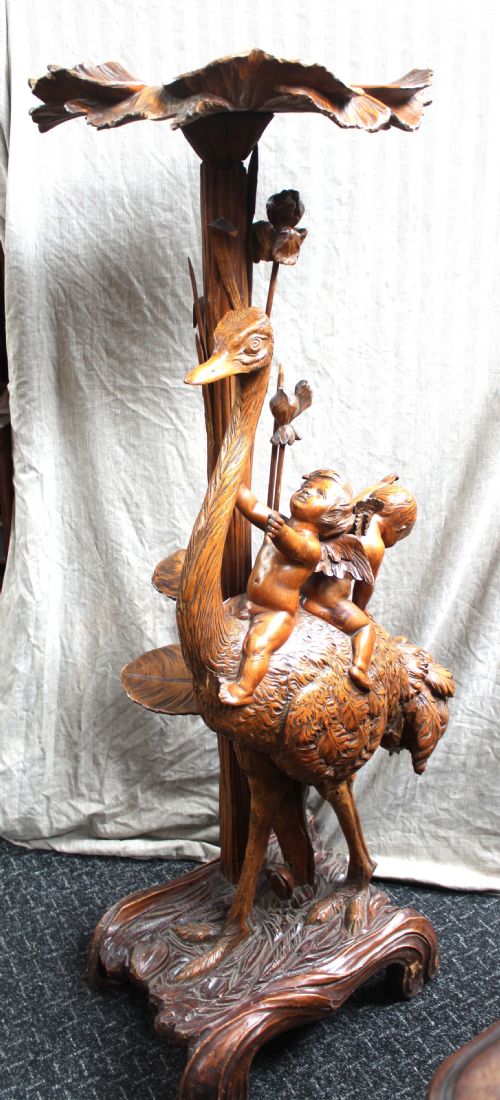


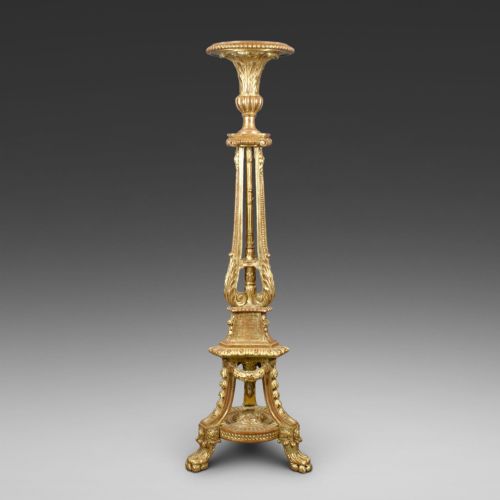


Ornate Carved Column Stand
These ornate carved column stand examples bring distinct architectural presence and display height into a room, drawing the eye upwards through classical proportions and detailed surface work.
Ornate Carved Column Stand
An ornate carved column stand functions primarily as a decorative support for sculpture, plants, or lighting, lifting objects off the floor to create visual hierarchy in a room. These vertical furnishings appear across various historical periods, ranging from late nineteenth century Italian workshops to Edwardian production, taking the form of pedestals, torcheres, and plant stands.
The material vocabulary of an ornate carved column stand spans carved walnut, teak, and giltwood alongside structural stone elements like alabaster and red stone. Forms vary from Italian Renaissance Revival and Rococo Revival revivalist pieces to Anglo-Indian and Oriental interpretations, offering both slender columnar silhouettes and broader pedestal bases.
Buyers encountering this selection meet diverse decorative manifestations, including standard lamps adapted from architectural columns, gilt torcheres, and painted side tables. Each piece combines functional elevation with sculptural carving, reflecting the stylistic preoccupations of periods from the eighteen seventies through the nineteen thirties.
Materials and construction methods
Makers of an ornate carved column stand typically utilised solid woods such as walnut and teak, applying deep relief carving directly into the timber grain. Surfaces frequently received layers of gesso and gold leaf or paint, building up the rich reflective finishes characteristic of giltwood torcheres and Italian pedestals.
Geographic origins represented in the selections include Italian, Indian, and domestic British or European vernacular workshops.
Distinctions in craftsmanship
The distinction between standard examples and superior instances of an ornate carved column stand lies in the depth and crispness of the hand carving. Finer pieces demonstrate meticulous undercut foliage and balanced proportions, whereas simpler items rely on shallow surface incisions and heavier application of gesso without the same manual dexterity.
Material selection dictates much of the baseline quality, with solid hardwoods and genuine alabaster tops commanding greater presence than softer pine cores or substitute compositions. The integrity of the original giltwood or painted finish, along with structural stability under weight, separates utilitarian supports from high decorative works.
The Ornate Carved Column Stand Glossary
- Torchere
- A tall stand designed to support a lamp or candleholder. These fixtures often feature slender wooden shafts and decorated bases.
- Giltwood
- Timber coated with fine gold leaf or gold powder applied over a prepared gesso ground. This technique creates a luminous metallic surface on decorative furniture.
- Alabaster
- A fine-grained mineral stone used for carving decorative objects and column tops. Its translucent quality permits soft light diffusion.
- Gesso
- A plaster mixture applied to wood surfaces as a smooth base for gilding or painting. It allows carvers to crisp up fine ornamental details before applying leaf.
- Rococo Revival
- A nineteenth-century design movement inspired by the asymmetrical curves and shell motifs of the eighteenth century. Furniture from this style displays exuberant scrollwork and organic forms.
Ornate Carved Column Stand: Frequently Asked Questions
What were these stands originally used for?
These vertical furnishings served as pedestals for displaying art, busts, or large floral arrangements in formal drawing rooms. They also functioned as elevated supports for lighting before the widespread adoption of wired electricity.
Over time, homeowners repurposed them as independent sculptural elements or plant stands within domestic interiors.
How do I place an ornate stand in a modern room?
Position a column stand in an empty corner to add verticality and break up flat expanses of wall. They work effectively as display surfaces for ceramic vessels or bronzes rather than holding heavy books.
Keep the surrounding space clear so the carved details and silhouette remain visible from multiple angles.
How do I tell Italian Revival from Edwardian pieces?
Italian Revival examples from the nineteenth century typically feature heavier giltwood surfaces, intricate Renaissance motifs, and substantial wooden cores. They lean towards theatrical ornamentation and classical architectural references.
Edwardian pieces often present lighter timbers, simpler Oriental or domestic styling, and more restrained decorative carving suitable for smaller Edwardian homes.
Are stone top stands safe for heavy items?
Stands featuring alabaster or red stone tops provide a stable, dense surface for supporting weighted decorative objects and stone busts. The natural weight of the stone also lowers the centre of gravity for the column.
Care should be taken to centre the displayed object evenly to maintain balance across the wooden base below.