


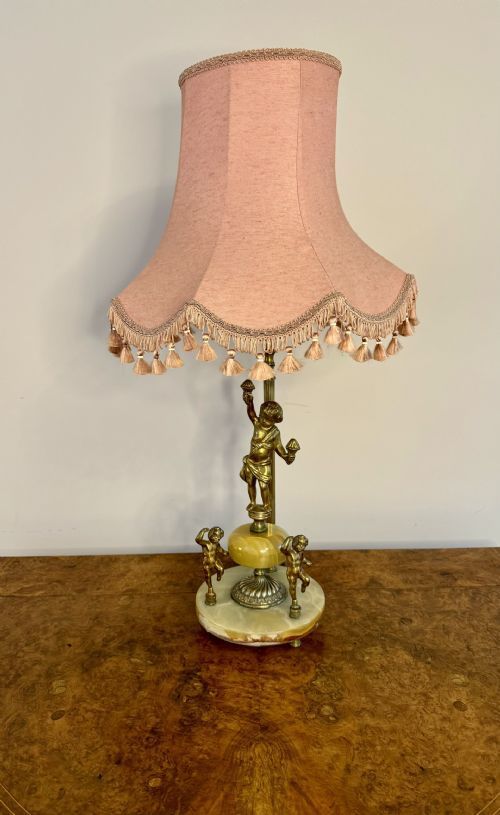


Ornate Brass Side Lamp
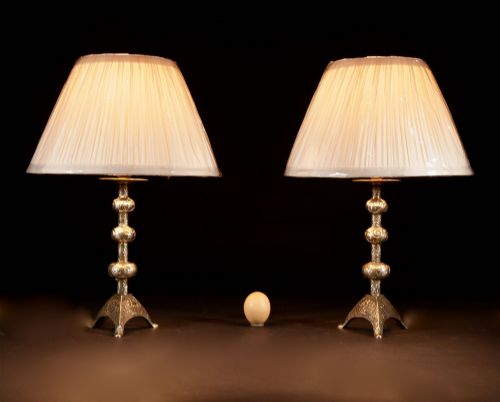
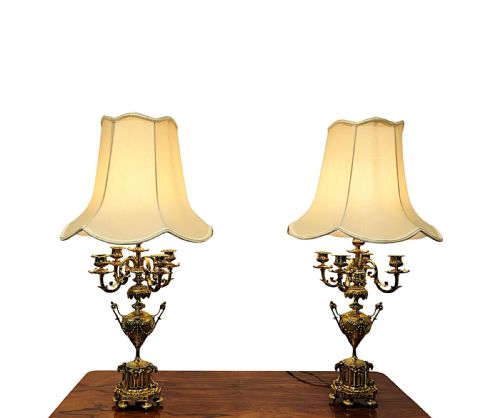
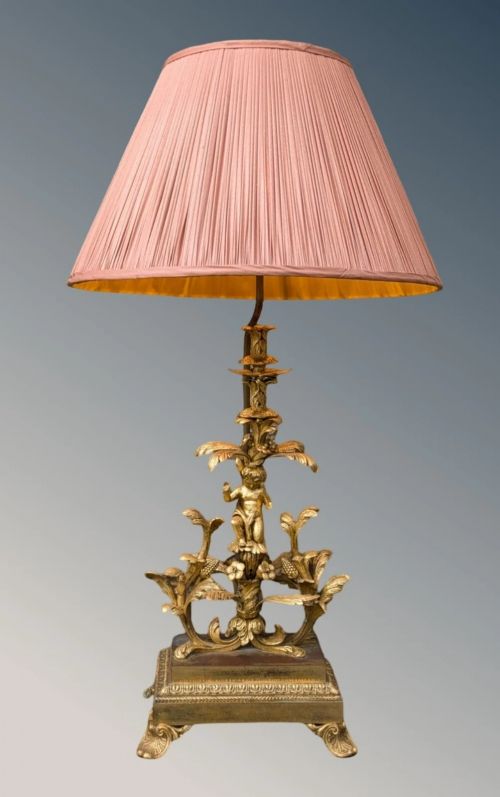
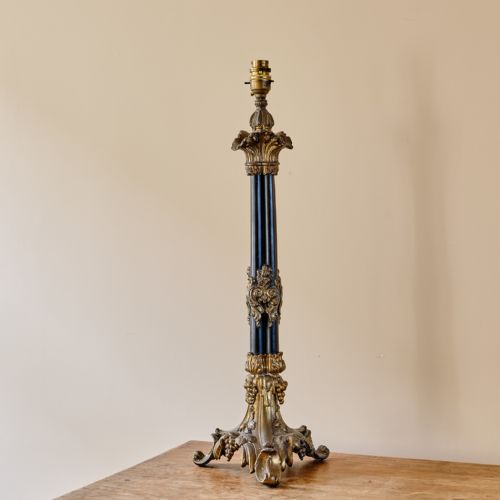
These ornate brass side lamps bring heavy Victorian and Edwardian weight and cast-metal detail to side tables.
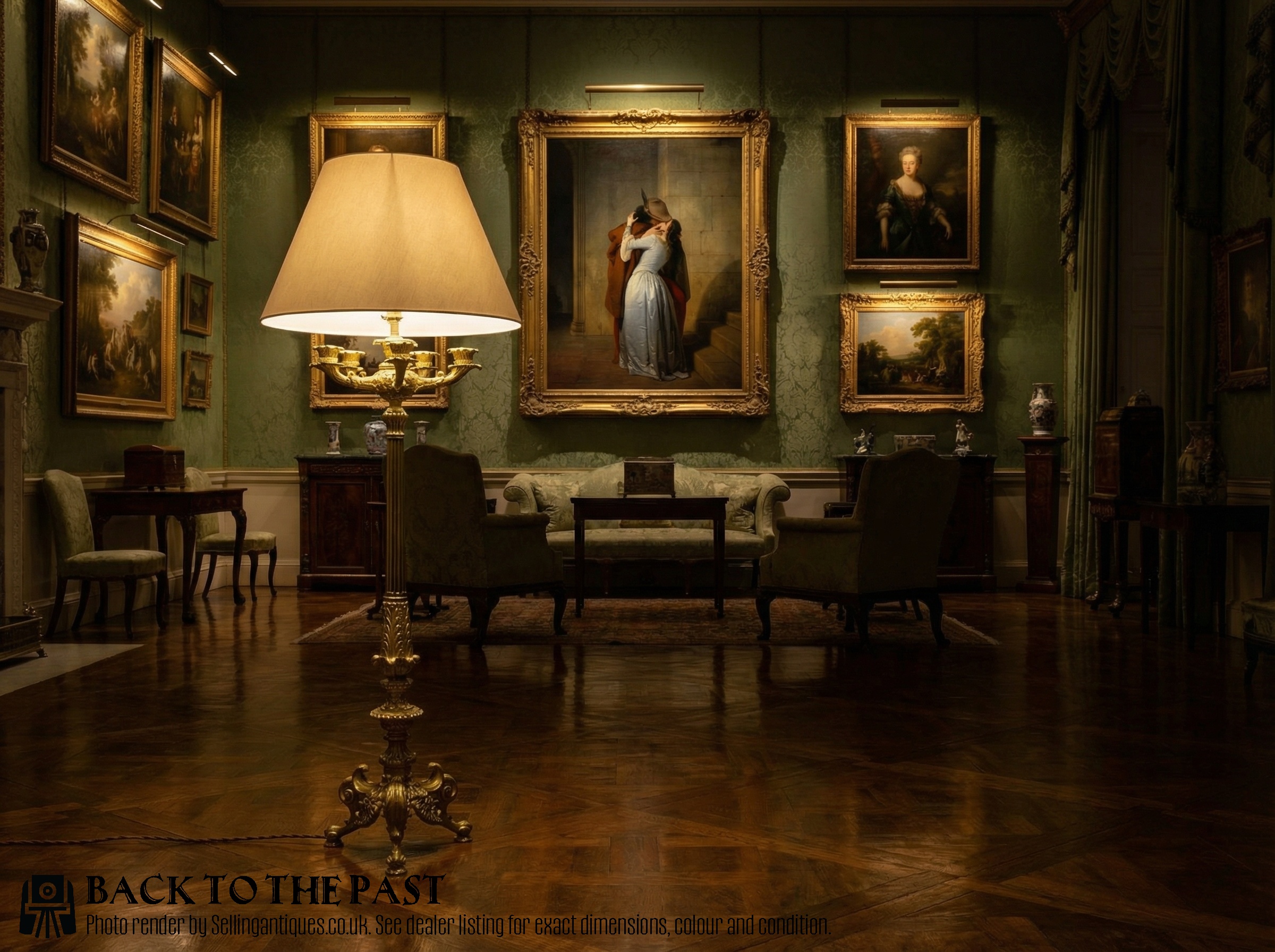
Ornate Brass Side Lamp
When you search for an ornate brass side lamp, you meet cast and repoussé lighting pieces from the nineteenth and early twentieth centuries. These encompass table lamps, converted candelabra, and lamp bases originating from Victorian, Edwardian, and French revival workshops.
The version you are most likely to encounter on this page is a nineteenth-century or Edwardian table lamp combining cast brass with marble, crystal, or onyx elements. Many pieces exhibit distinct stylistic references, ranging from Romanesque Revival and Neoclassical to heavy French Rococo and Chateau interpretations.
Forms vary from single-stem bases with intricate metalwork to paired multi-branch candelabra adapted for modern wiring. The combination of brass, gilt bronze, and spelter creates a heavy, decorative profile suited for placement on side tables and pedestals.
Materials and construction
Makers utilised brass, gilt bronze, and spelter as the primary structural metals, often shaping them through casting and hand-finishing. Repoussé techniques allowed artisans to hammer detailed relief patterns directly into the metal surface.
Many bases incorporate contrasting materials such as veined marble, onyx, glass, and crystal to add weight and visual depth. Some examples integrate mahogany wooden elements or fabric components to complete the lighting fixture.
Ornate Brass Side Lamp Retail Price Guide 2026
Typical asking prices for ornate brass side lamp among the pieces listed under this phrase on Sellingantiques today, from the lower quarter to the upper quarter. They describe what is for sale here now, not the wider market.
Some heavy metal bases hide nineteenth-century wiring channels carved by hand.
Evaluating craftsmanship and build
Quality separates pieces by the crispness of the cast detailing and the depth of the hand-chased ornamentation. Finer examples show sharp relief work in the foliage and scroll motifs without the softness seen in simpler production runs.
The selection of secondary materials marks the distinction between standard and superior pieces. Solid marble plinths, heavy fire-gilt bronze, and intact crystal drops indicate higher workshop standards than lighter spelter alternatives.
The Ornate Brass Side Lamp Glossary
- Repoussé
- A metalworking technique where an artisan hammers ornament from the reverse side to form a raised design in relief. This method defines the textured surfaces of many nineteenth-century lighting pieces.
- Spelter
- An alloy of zinc and lead used as a cheaper substitute for bronze and brass during the Victorian period. It accepts gilding and patination well, though it remains softer than true bronze.
- Ormolu
- A method of applying finely ground high-carat gold to a bronze base using a mercury amalgam. Genuine pieces show a warm, deep lustre that distinguishes them from modern electroplated finishes.
- Candelabra
- A branched candlestick designed to hold multiple taper candles before many were later converted to electricity. Converted pairs retain their original arm configurations while housing modern lamp fittings.
- Girandole
- An ornate branched lighting fixture or wall sconce often adorned with cut-glass crystal pendants. These prisms scatter light across the room when the lamp is lit.
Ornate Brass Side Lamp: Frequently Asked Questions
How do I wire an antique lamp?
Rewiring requires feeding modern heat-resistant flex through the central channel of the brass stem, bypassing older perished insulation.
A qualified electrician should handle the internal connections to ensure safety while preserving the original decorative metal housing.
Can I polish antique brass?
Aggressive cleaning removes the accumulated oxidation and darkening that builds up over decades of age.
Most collectors prefer to leave the stable patina untouched, dusting the metal gently with a soft dry cloth.
Are these lamps heavy?
The combination of solid brass castings, thick metal mounts, and dense stone bases gives these pieces considerable weight.
This heft prevents the lamps from tipping easily when placed on small side tables or pedestals.
What is French style brass?
French style brass lighting draws on Rococo and Chateau designs featuring asymmetric scrollwork, acanthus leaves, and gilt bronze mounts.
These pieces were produced in both France and Britain during the nineteenth century to satisfy demand for continental interior decoration.