
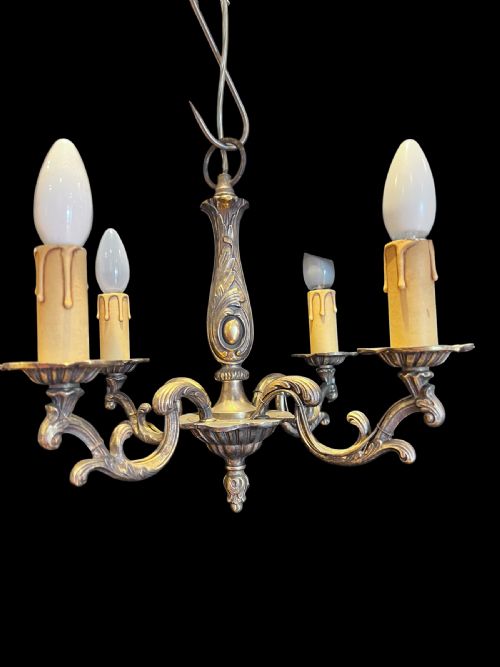
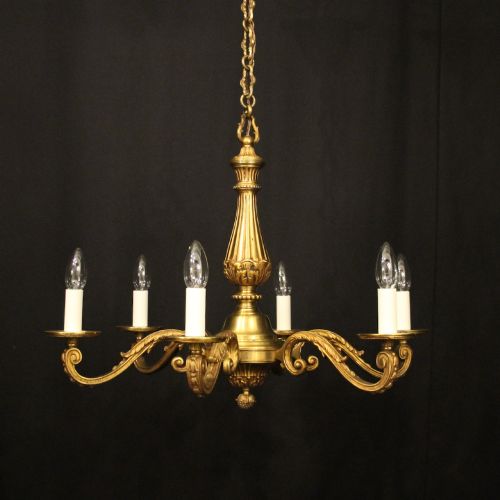
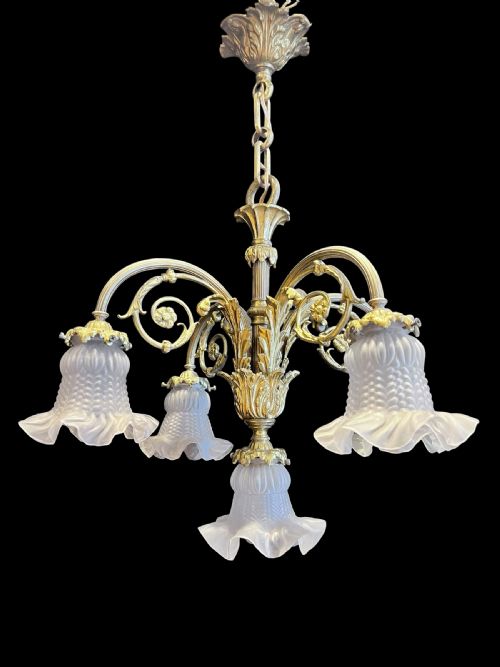
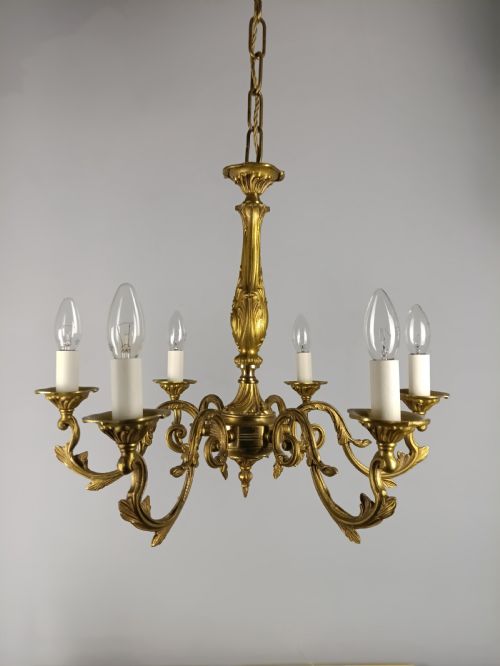
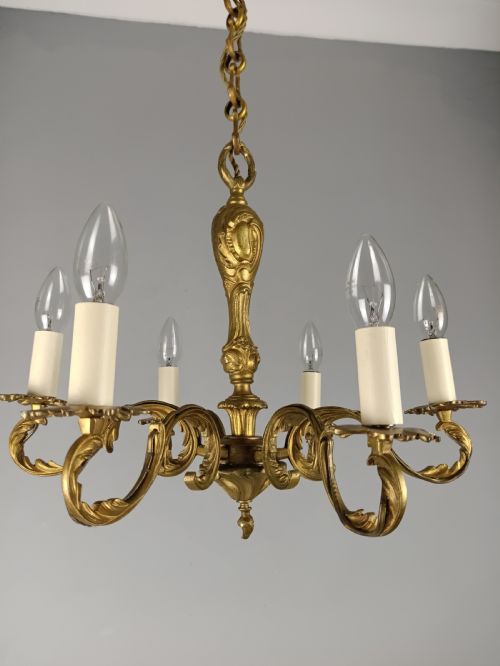

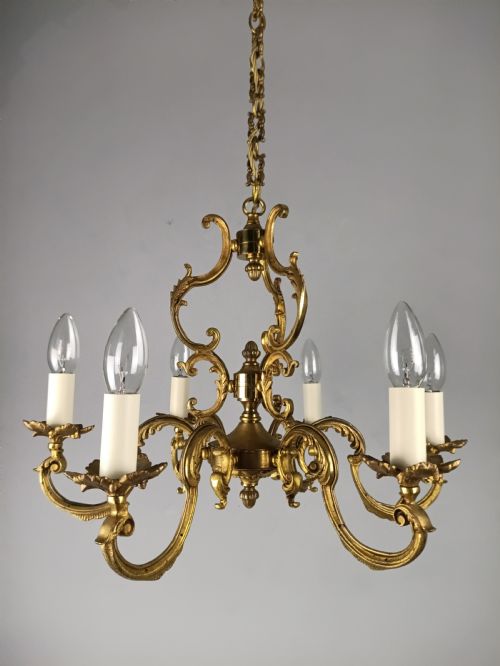


Ornate Brass Light Fitting
An ornate brass light fitting brings warmth and historic weight to a room through heavy cast metal and glass.
Ornate Brass Light Fitting
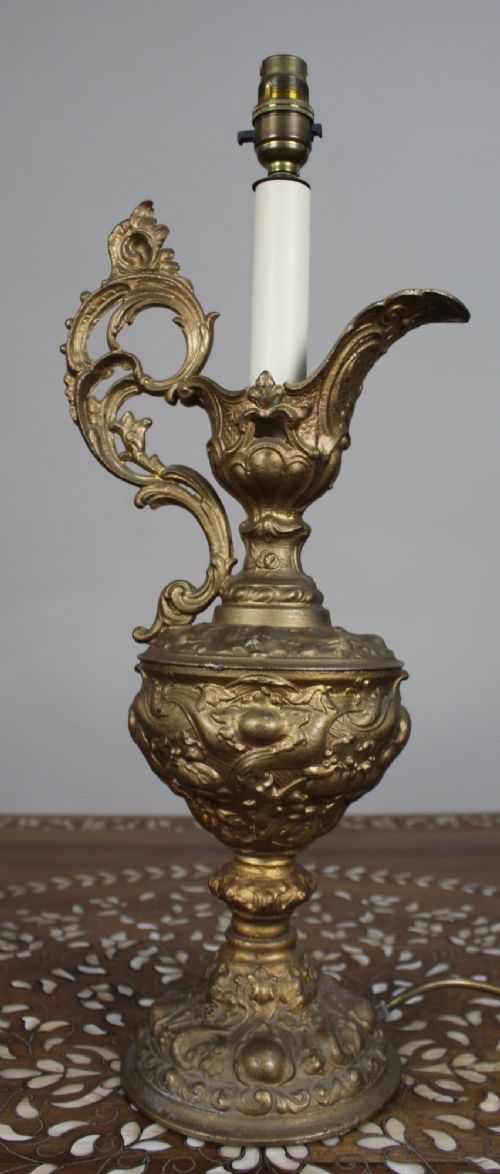
An ornate brass light fitting is typically a chandelier, wall sconce, or ceiling rose originating from the nineteenth century or the early decades of the twentieth century. These pieces emerge predominantly in French provincial and neoclassical styles, carrying complex floral or scroll motifs.
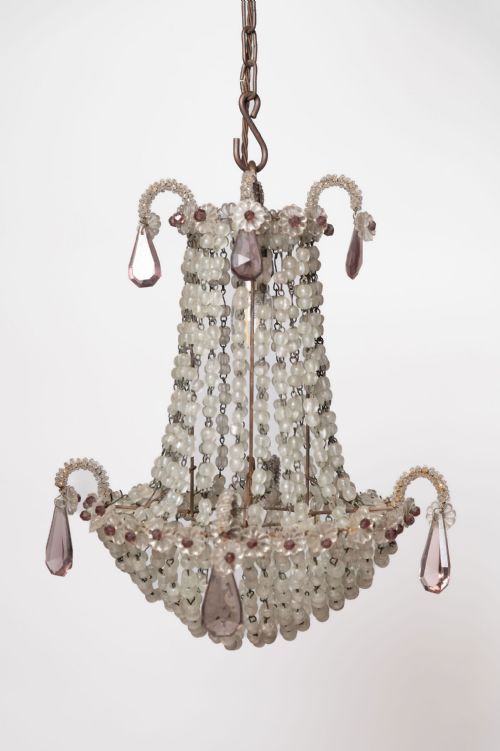
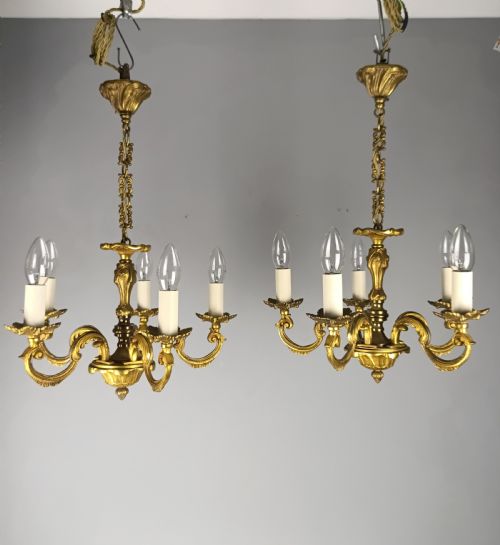
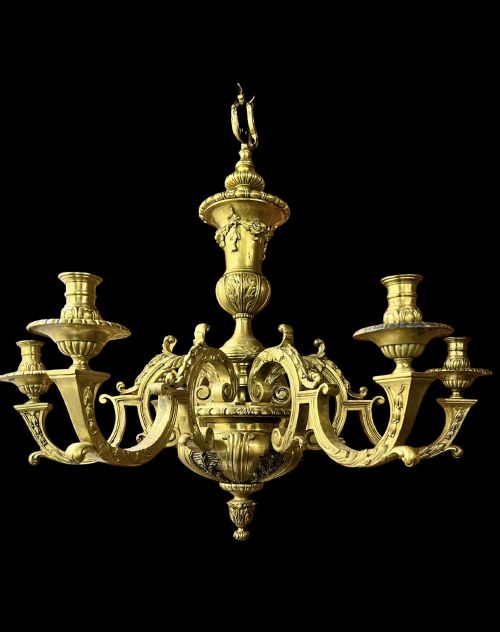
Buyers seeking an ornate brass light fitting will most frequently encounter multi-arm chandeliers cast in gilt bronze or brass, often dressed with crystal drops. Wall lights and pairs of sconces also feature strongly across the Victorian and Edwardian periods.
The selection ranges from robust, cast brass ceiling roses to grand sixteen-light fixtures designed for high-ceilinged drawing rooms. Continental workshops dominate the heavier gilded forms, while British examples lean towards domestic utility.
Materials and construction
Makers built these fixtures using cast brass, bronze, and gilt metal, often finishing the surfaces with fire gilding or gold leaf. Structural components were frequently assembled from heavy cast brass sections joined by threaded rods and secured with bolted nuts.
Decorative elements like acanthus leaves and cherubs were produced separately through sand casting or lost-wax casting before being hand-chased to sharpen the detail. Glass components, including crystal drops and lamp shades, were mouth-blown or moulded separately to hang from pierced brass bezels.
Several Edwardian brass chandeliers arrive complete with cheerful cast cherubs clinging to the central stems.
Judging quality
The distinction between ordinary and exceptional work lies in the crispness of the chasing and the weight of the casting. Superior fixtures display deep, hand-tooled leaf work and heavy gauge brass arms that do not flex under their own weight.
Surface finish separates workshops, as genuine fire-gilded bronze retains a deep, buttery lustre that ages softly over generations compared to flat modern electroplating. The integration of structural mountings also reveals the maker's hand, where screws are hidden and joints fit flush without visible gaps.
The Ornate Brass Light Fitting Glossary
- Ormolu
- Gilded bronze, where a layer of gold amalgam is applied to a bronze base and heated to drive off the mercury. This technique creates a durable, warm metallic finish found on finer French pieces.
- Chasing
- The art of finishing a metal casting by hand with hammers and punches to sharpen details and add texture. Fine chasing distinguishes bespoke luxury fixtures from mass-produced foundry work.
- Candelabra
- A branched lighting fixture designed to hold multiple candles or, in later conversions, electric lamps. They frequently match the decorative scheme of larger ceiling chandeliers.
- Acanthus
- A classical leaf ornamentation carved or cast into brass mounts and arm joints. It draws directly from ancient architectural stone carving traditions.
- Ceiling Rose
- An ornamental plaster or cast metal disc affixed to the ceiling from which a chandelier or pendant light hangs. They protect the ceiling surface and frame the fixture.
Ornate Brass Light Fitting: Frequently Asked Questions
How do I clean antique brass?
Dust the metal gently with a soft, dry brush to prevent dirt accumulation in the recessed cast details. Avoid harsh chemical polishes that strip away historical patination and damage delicate gilt surfaces.
For stubborn grime, use a damp cloth with mild soap, drying the metal immediately to prevent spotting. Preserving the natural aged tone maintains the character and value of the piece.
Can these fittings be rewired safely?
Most antique fixtures require modern electrical rewiring to meet current safety standards before installation. A qualified electrician can thread modern wiring through the existing brass arms without altering the outer structure.
It is wise to retain original lampholders where possible, converting their interiors rather than discarding the external metal housings. This preserves the historic integrity while ensuring safe daily use.
How do I hang a heavy chandelier?
Heavy cast bronze and brass chandeliers require direct support from a ceiling joist rather than resting on plaster alone. A professional installer must use a steel mounting bracket rated for the specific weight of the fixture.
Checking the ceiling construction beforehand prevents structural damage and ensures the multi-light fitting hangs securely. Balance the arms carefully during assembly to ensure the piece centres correctly.
Are replacement crystal drops available?
Matching antique glass or crystal drops requires searching specialist salvage dealers for period-appropriate replacements. Look closely at the cut pattern, glass clarity, and attachment wire style to find a suitable pair.
Slight variations in tint are common in mouth-blown glass, so gathering spares from the same manufacturing era helps maintain visual harmony.
How do I date an antique chandelier?
Dating relies on examining the casting techniques, screw thread types, and stylistic motifs present on the metal frame. Victorian and Edwardian pieces often feature machine-threaded screws, whereas earlier nineteenth-century fittings display hand-cut threads.
French Rococo revival styles point towards specific mid-to-late nineteenth-century revivals rather than original eighteenth-century production. Comparing the wiring channels and mounting brackets further clarifies the era of manufacture.