
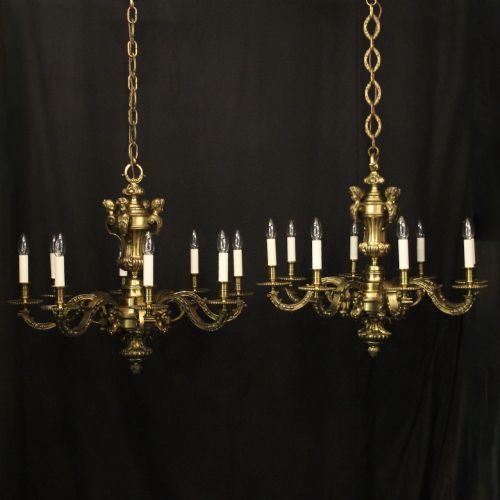
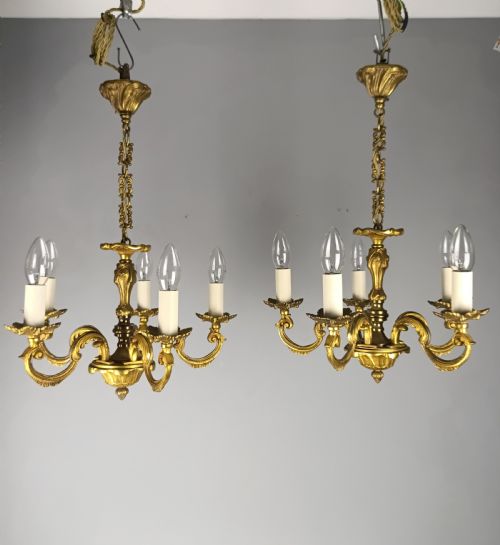


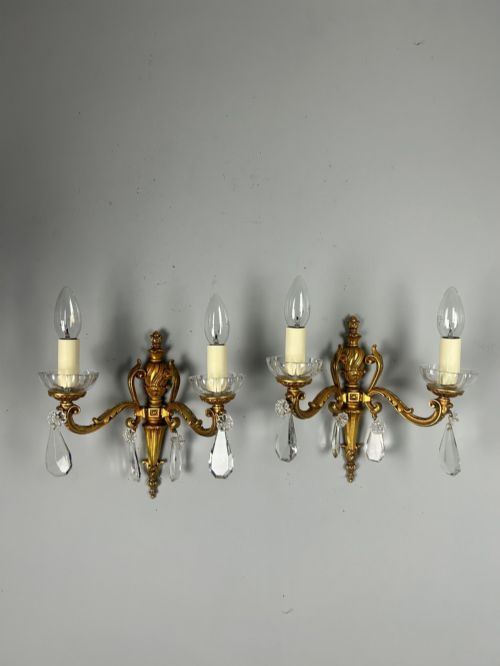
Pair French Bronze Chandeliers
These pair french bronze chandeliers bring classic Continental illumination to high ceilings, offering balanced grandeur through matched lighting.
Pair French Bronze Chandeliers
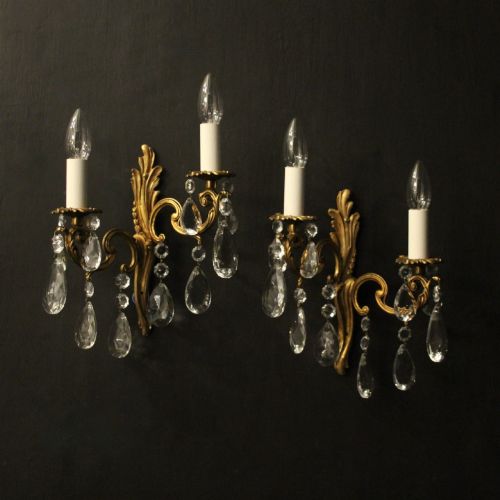
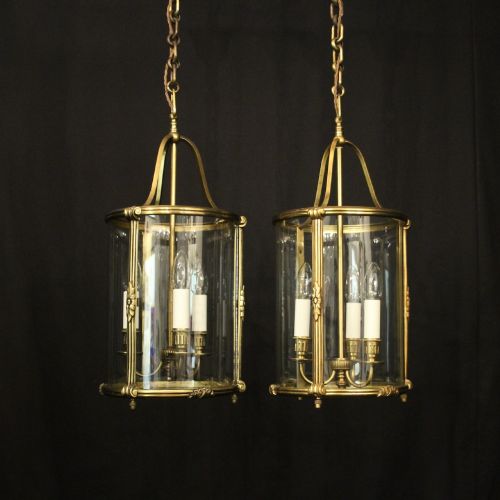
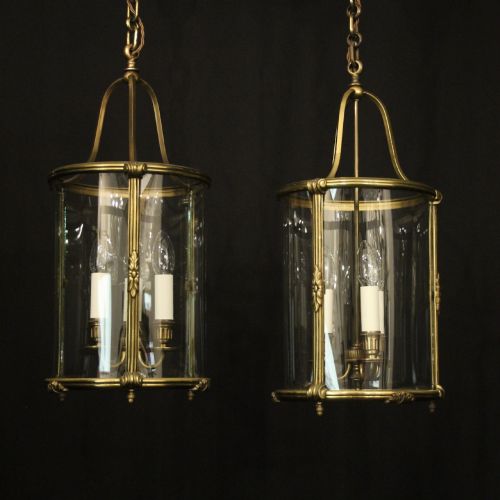
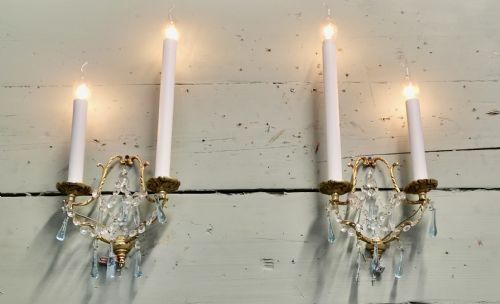
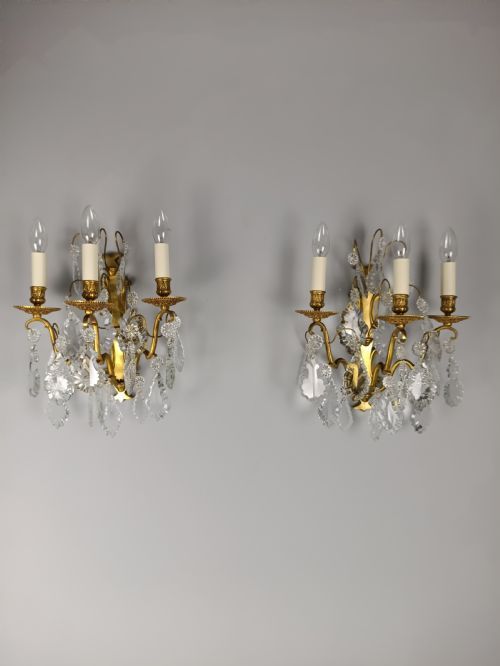
Beyond central ceiling lights, the category extends to matched wall lights, hall lanterns, and smaller sconces sharing the same bronze framework. These lighting fixtures serve to illuminate grand reception rooms and dining spaces with coordinated metalwork.
Origins stretch from the late nineteenth century into the interwar period, displaying heavy influence from French Rococo, Empire, and Neoclassical design. Buyers encounter both unadorned dark bronze frames and heavily gilded bronze structures.
How they were made
Foundry casting formed the solid bronze and brass skeletons, creating sturdy arms and decorative backplates designed to support multiple light branches. Artisans then chased the metal surfaces by hand to sharpen foliage, scrolls, and figural details.
Gilding was applied via fire-gilding or gold leaf techniques onto the bronze substrates, yielding rich ormolu surfaces alongside dark patinated bronze. Cut crystal drops, pendeloques, and glass beads were hand-wired onto the frames using small metal pins.
Wiring components added during later adaptations sit alongside original candle tubes and drip pans made of carved bone, wood, or metal. Lantern variants incorporated convex glass panes secured within metal cages.
Materials across the selection combine bronze, gilded brass, cut crystal, and convex glass.
What varies in quality
The integration and clarity of the crystal elements distinguish standard fixtures from superior examples. High-grade cut crystal displays sharp facets and heavy lead content, whereas pressed glass appears duller and lighter.
The weight of the bronze frame and the consistency of the gilding or original patina determine the overall robustness and visual depth of the pair.
The Pair French Bronze Chandeliers Glossary
- Ormolu
- Gilded bronze produced by applying a mercury-gold amalgam to a bronze base and heating it. This technique creates a durable, golden surface finish seen on many classical fixtures.
- Pendeloque
- A hanging glass or crystal drop cut with multiple facets. These pendants catch and refract light across the room.
- Birdcage
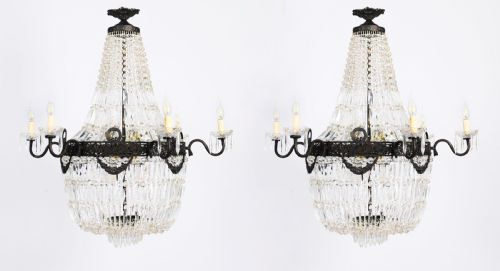
- A structural frame style where metal bands curve upward to resemble an open cage. Crystal strands are draped over this skeletal armature.
- Chasing
- The manual tool work applied to a cast metal surface to refine textures and sharpen details. It separates high-grade foundry work from raw castings.
- Tent chandelier
- A lighting form featuring an upper conical array of crystal beads gathered toward a central ring. Below this canopy, the main tier of lights extends outward.
Pair French Bronze Chandeliers: Frequently Asked Questions
How do I hang a heavy pair?
These heavy bronze fixtures require professional ceiling joist assessment and steel mounting hooks rated well beyond the combined weight of the metal and crystal.
Electrical wiring must also be inspected by a qualified electrician to ensure the internal channels safely handle modern household voltage.
Are matching wall lights available?
Matched sets frequently include coordinating wall sconces and lantern pairs designed to complement the primary ceiling fixtures.
These smaller pieces utilise identical bronze casting methods and crystal drops to maintain stylistic continuity throughout adjacent hallways and rooms.
How do I clean crystal drops?
Crystal pendants and glass beads should be washed individually using warm water and mild soap while still attached, or carefully removed for soaking.
Dry each piece with a lint-free cloth to restore maximum sparkle before rehanging them on the bronze arms.
What styles dominate this selection?
French Rococo, Louis Revival, and Neoclassical designs form the core aesthetic of these pieces, reflecting historical periods from the nineteenth and early twentieth centuries.
Dark bronze finishes contrast with bright gilded ormolu surfaces across the various available forms.