
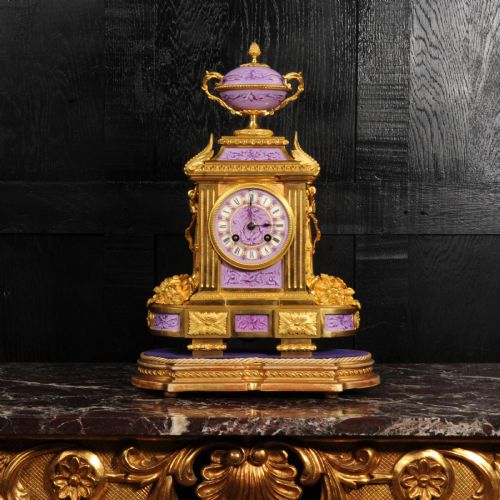
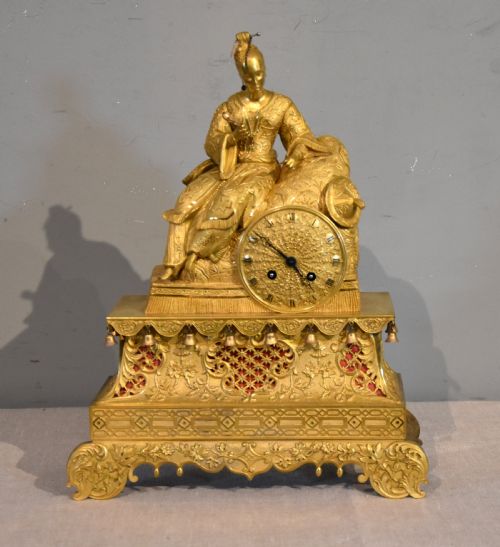

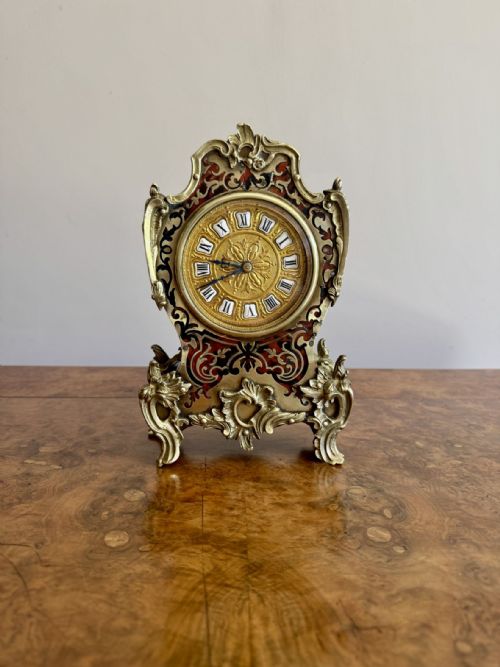


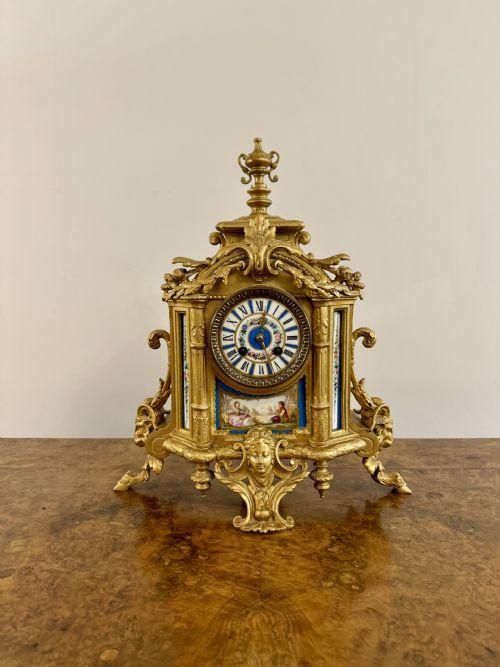


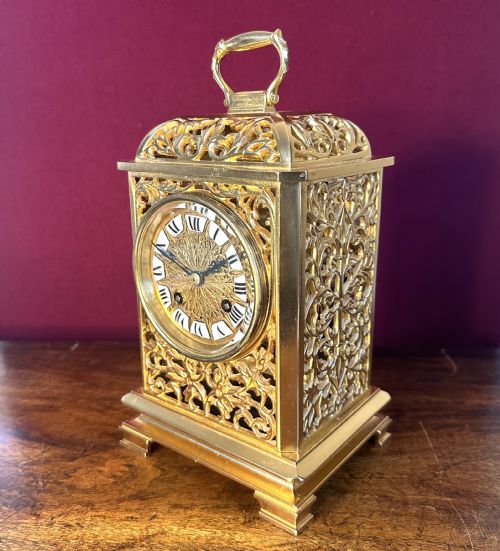


Ornate Brass Desk Clock
An ornate brass desk clock brings a heavy, gleaming presence of the nineteenth century onto any surface.

Ornate Brass Desk Clock
An ornate brass desk clock brings together metalwork and timekeeping, appearing most often in nineteenth-century Victorian, Regency, and Edwardian forms. Buyers look for these pieces to anchor a desk or mantel with substantial weight and detailed casting.
The selection ranges from compact carriage clocks housed in glass and gilt cases to larger mantel pieces and miniature longcase designs. French workshops produced many of the examples seen here, often incorporating Louis style elements or Rococo revival curves.
Materials extend beyond plain metal into marble, enamel panels, and Sèvres porcelain inserts. This mix of heavy cast brass and delicate decorative additions defines the objects gathered under this search phrase.

Materials and Construction
Foundry workers shaped the primary housings using brass, gilt bronze, and ormolu, applying fire gilding or chemical treatments to achieve a lasting golden sheen. Glass panels were cut to enclose four-glass movements, allowing light to pass through the inner mechanism.
Decorative details rely on champlevé enamel, hand-painted porcelain plaques, and carved marble bases. Mechanics inside depended on precise gear trains, sometimes driven by fusee movements or platform escapements set within heavy cast cases.
Ornate Brass Desk Clock Retail Price Guide 2026
Typical asking prices for ornate brass desk clock among the pieces listed under this phrase on Sellingantiques today, from the lower quarter to the upper quarter. They describe what is for sale here now, not the wider market.
Some miniature carriage clocks were built small enough for the Chinese export market, travelling thousands of miles across the sea.
Markers of Quality
The refinement of the casting separates standard production from exceptional work, visible in the depth of chased foliage and the crispness of scrollwork. Heavier cases with thick brass plates and solid marble or porcelain elements hold their structural integrity better over time.
The complexity of the movement inside dictates mechanical standing. Twin fusee setups, striking trains, and signed backplates from known makers indicate higher workshop standards than simple, unbranded timepieces.
Achille Brocot·William Payne·John Barwise of London·Samuel Marti·Luxor·Henri Jacot·Seth Thomas
The Ornate Brass Desk Clock Glossary
- Ormolu
- Gilded bronze, where a mercury and gold amalgam was applied to cast bronze and heated. This technique produced a deep, lasting golden surface on nineteenth-century clock cases.
- Carriage clock
- A small, portable timekeeper fitted with a handle and glass sides. Originally designed for travel, these pieces sit securely on desks and tables.
- Champlevé
- An enamelling technique where troughs are dug into the metal surface and filled with coloured glass paste before firing. It creates vibrant patterns across brass clock panels.
- Fusee
- A conical pulley used in mechanical clocks to maintain even power as the mainspring unwinds. This mechanism improves timekeeping accuracy across the power reserve.
- Garniture set
- A grouping consisting of a central clock flanked by matching decorative objects such as urns or candelabra. These sets were designed to sit together on a mantelpiece.
Ornate Brass Desk Clock: Frequently Asked Questions
How do I wind a mechanical desk clock?
Most mechanical clocks use a small metal key inserted into the dial or backplate to tension the spring. Turn the key gently until you feel firm resistance, avoiding overwinding.
Ensure you match the correct key size to the square winding arbor to prevent stripping the metal. Regular, careful winding keeps the gear train moving smoothly.
Where should I place a heavy brass clock?
Select a level, stable surface such as a sturdy desk, heavy mantelpiece, or bookshelf away from direct sunlight. The weight of brass and marble requires solid support to prevent tipping.
Keep the clock away from damp environments and constant temperature fluctuations to protect delicate enamel dials and interior steel components.
How do I tell a Victorian clock from a Regency one?
Regency pieces often display cleaner architectural lines and classical restraint, influenced by earlier Georgian design. Victorian examples tend towards heavier ornamentation, Rococo revival curves, and exuberant cast brass decoration.
Examining the maker signature, dial style, and case materials helps clarify the manufacturing period when visual cues overlap.