




Ornamental Mantel Clock
An ornamental mantel clock sits proudly at the centre of a room, bringing both time and decorative presence to a surface.
Ornamental Mantel Clock
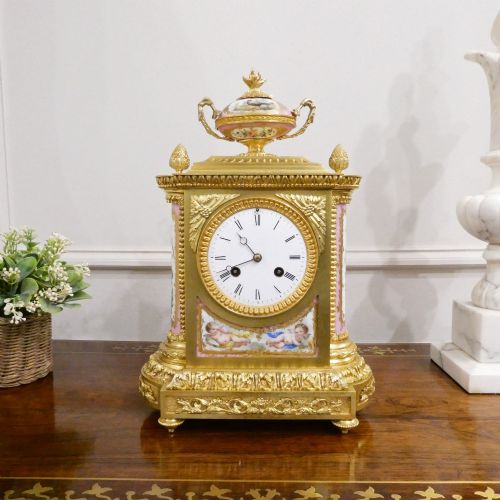
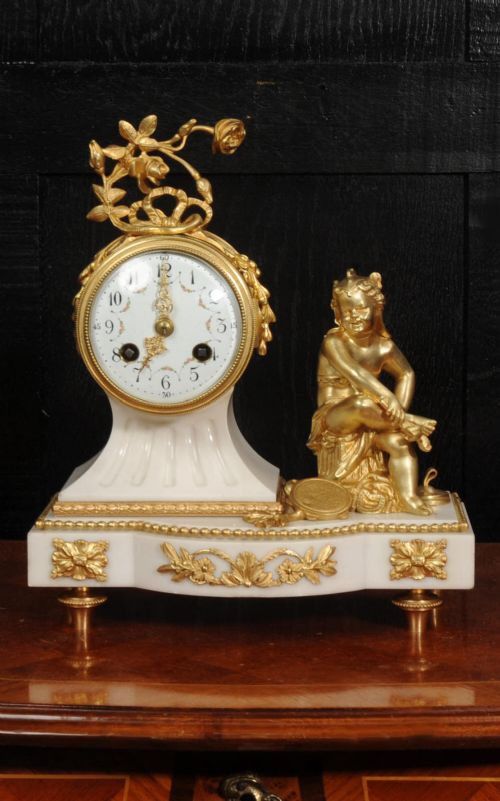
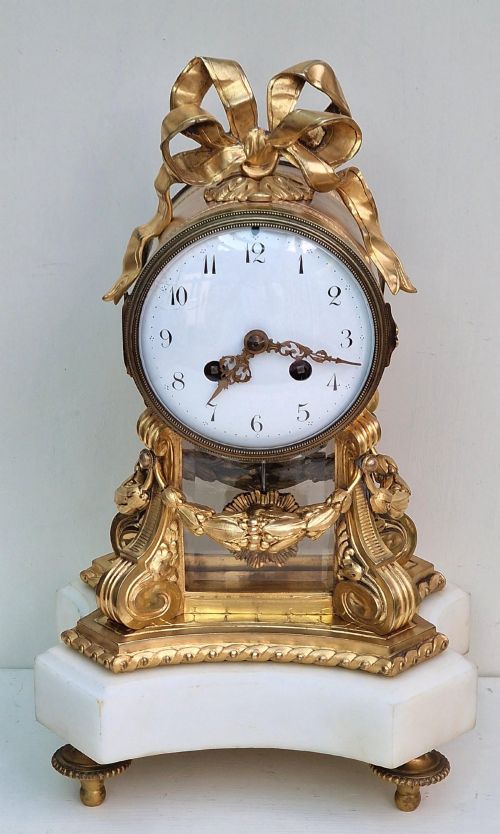
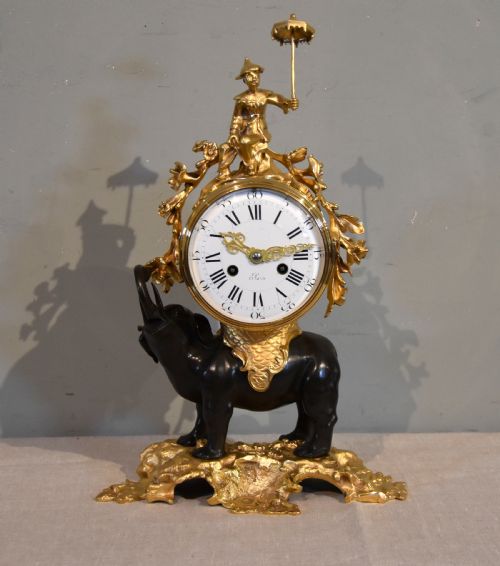
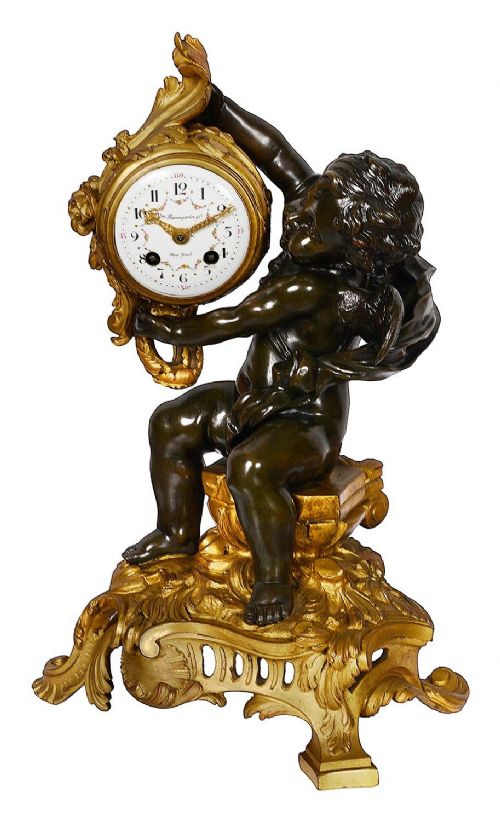
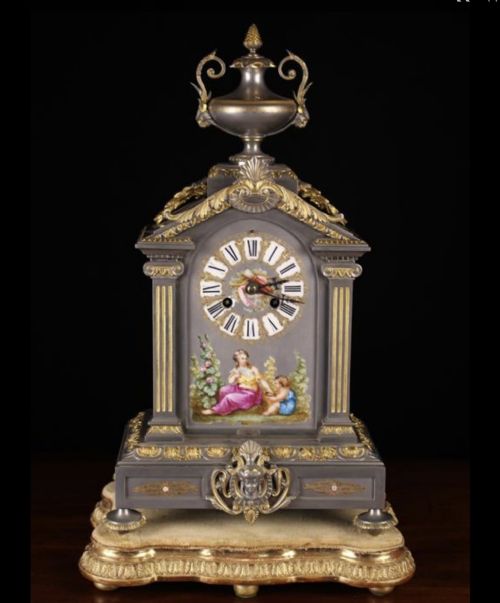
An ornamental mantel clock is a functional timepiece designed primarily for display on a shelf, table, or fireplace surround. When you search for this phrase, you encounter a variety of forms spanning the eighteenth, nineteenth, and early twentieth centuries. The pieces on this page are predominantly French in origin, taking shapes that range from architectural portico designs to figural sculptures involving animals, cherubs, and classical motifs.
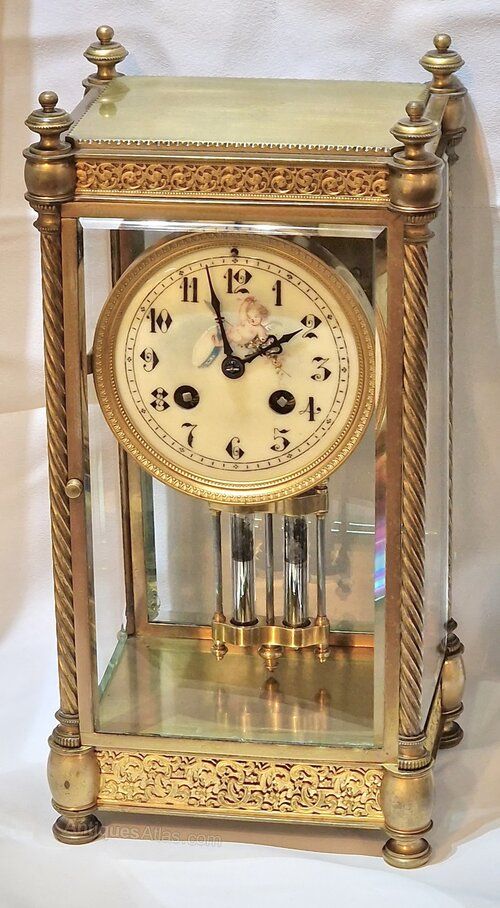
The objects combine timekeeping mechanisms with sculptural artistry, frequently utilising glass panels to reveal internal movements or porcelain plaques painted with scenes and floral motifs. Some adopt unusual configurations like the four-glass design or the mystery clock suspended within a lyre frame. Each version serves as a focal point, marrying engineering with decorative sculpture.
How they were made
Craftsmen utilised cast metals such as bronze, brass, and gilt ormolu as the structural foundation for many of these timepieces. Ormolu, a finely ground gold amalgam applied to bronze, provided a bright, durable finish that defined the luxury output of French workshops. These metallic mounts were cast, chased by hand, and assembled to frame enamel dials and intricate gear trains.
Marble and alabaster frequently formed the heavy architectural bases and pillars of the clocks, providing stable foundations for the metalwork. White, green, and black marble slabs were cut, polished, and fitted with bronze feet and bezels. Alongside stone, porcelain components were introduced, decorated with hand-painted glazes and enamel details to add colour and texture.
Specialised clockmakers constructed the mechanical movements, often housing eight-day striking systems that required periodic winding. Enamel dials were fired and hand-painted with Roman or Arabic numerals, sometimes protected behind convex glass within a hinged brass bezel. The union of cabinetmakers, bronze-founders, and horologists allowed these complex decorative objects to function reliably.
Materials documented across the available pieces include gilt bronze, ormolu, marble, porcelain, alabaster, brass, glass, and enamel.
What varies in quality
The depth and crispness of the chasing on the bronze and ormolu mounts separate standard production from superior work. Finer examples display sharp relief in sculptural figures, leaves, and scrollwork, where a hand chisel has refined the cast metal after it left the mould. Lesser pieces rely on softer, shallower casts with minimal hand finishing.
The choice and integration of materials dictate the standing of a piece within the range. Clocks that combine multiple select materials, such as matched porcelain plaques, fine white marble bases, and mercury-gilded bronze, represent more ambitious manufacturing efforts. Simpler constructions use plated base metals and single-material bodies with basic surface decoration.
The complexity of the movement and the reputation of the maker influence the calibre of the clock. Signed movements by notable mechanists or Parisian firms demonstrate superior horological engineering, often featuring quality escapements and striking mechanisms. Unsigned or generic movements placed inside decorative cases sit at the more accessible end of the scale.
Jean-Baptiste Delettrez·Japy Freres·Henry Dasson·Lemerle Charpentier·Chater And Son·James Murray·F Marti
The Ornamental Mantel Clock Glossary
- Ormolu
- Gilded bronze produced by applying a mercury and gold amalgam to a bronze base and heating it until the mercury vapourised. This technique created a lasting golden finish seen on many nineteenth-century French clock mounts.
- Clock Garniture
- A matching set consisting of a central mantel clock accompanied by two side pieces, such as candelabra or urns. These sets were designed to create a symmetrical arrangement on a fireplace mantel.
- Portico Clock
- A clock featuring an architectural case shaped like a classical portico, supported by columns or pillars. They frequently house the pendulum swinging visibly between the upright supports.
- Four Glass Clock
- A timepiece encased in four glass panels that allow an unobstructed view of the mechanical movement from all sides. These often feature an enamel dial and a suspended, compensated pendulum.
- Enamel Dial
- A clock face made by fusing powdered glass onto a metal plate at high temperatures. They provide a smooth, durable white surface for painted numerals and minute tracks.
Ornamental Mantel Clock: Frequently Asked Questions
How do I wind an ornamental mantel clock?
Most mechanical mantel clocks use a key inserted into winding holes on the dial to tension the mainsprings. Care must be taken not to over-wind the movement, turning the key gently until resistance is felt.
Striking clocks require the strike train to be wound alongside the time train to ensure the hours and half-hours chime correctly. Consulting the specific mechanism type helps prevent damage to the internal gears.
Where should I place an ornamental mantel clock?
These clocks find their traditional home on a mantelpiece, sideboard, or console table where their decorative cases can be admired. A stable, level surface is essential to ensure the pendulum swings evenly and the clock keeps accurate time.
Direct sunlight and damp environments should be avoided to protect sensitive enamel dials, fire-gilded surfaces, and wooden or marble bases from gradual deterioration.
How do I tell French and English clocks apart?
French mantel clocks typically feature ornate ormolu mounts, porcelain elements, and architectural marble cases influenced by continental design movements. Their movements are often stamped with maker marks like those of Japy Freres or Marti.
English clocks, such as bracket or fusee models, often favour sober timber cases like mahogany or rosewood, sometimes incorporating lacquerwork and brass carrying handles. Their internal fusee chains regulate the power delivery differently from standard continental spring barrels.
How do I maintain an antique clock movement?
An antique clock movement requires professional cleaning and lubrication every few years to remove accumulated dust and old oil from the pivots and gears. Running a dry mechanism causes unnecessary wear on the brass components.
Setting the beat and ensuring the clock rests level will keep the pendulum ticking steadily between professional services. Moving the hands should be done carefully according to the design of the specific escapement.