




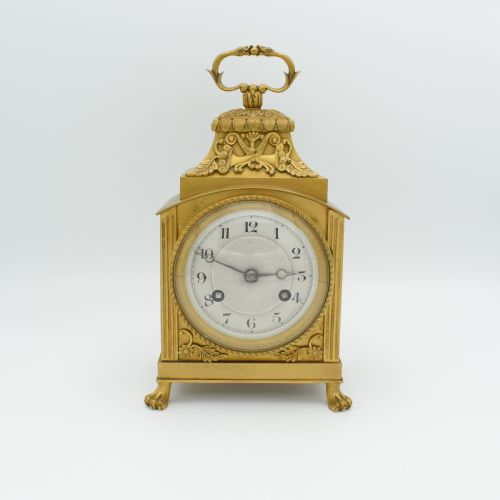


Ornamental Desk Clock
An ornamental desk clock brings heavy gilt bronze, gleaming marble, and French revival design straight to a working surface.

Ornamental Desk Clock
When you search for an ornamental desk clock, you are looking at substantial timepieces designed primarily to display status and intricate craftsmanship rather than simply tell the time. Most pieces meeting this description hail from the nineteenth century, taking the form of mantel clocks, desk clocks, and carriage clocks with heavy decorative presence.
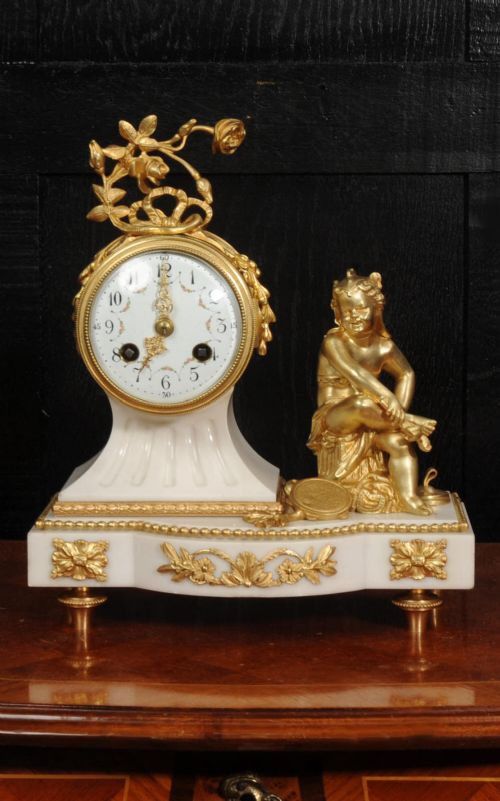
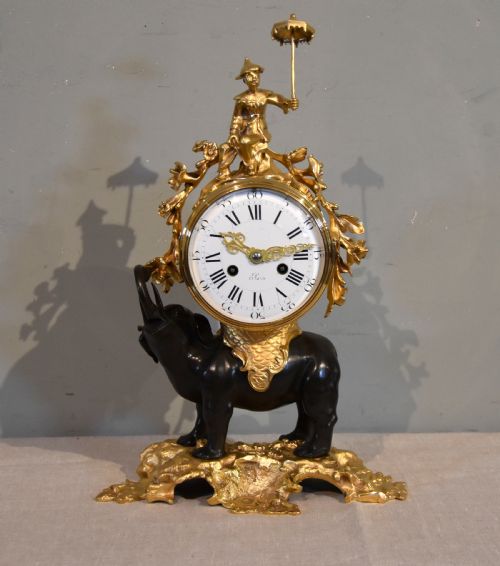
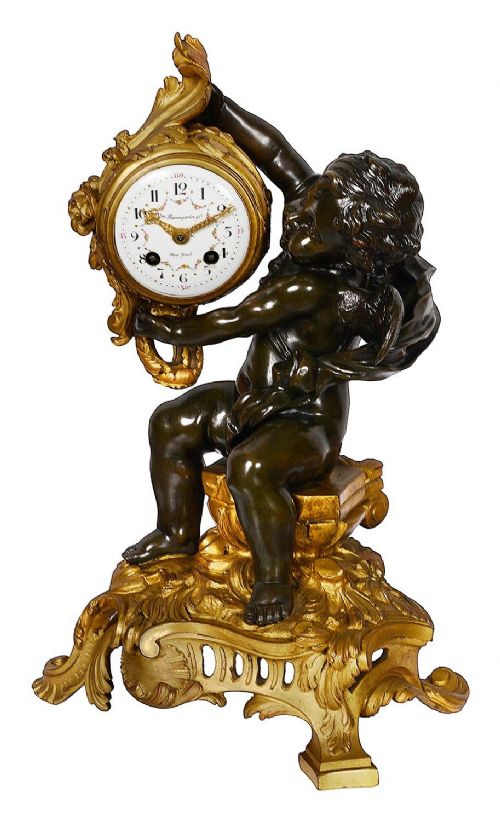
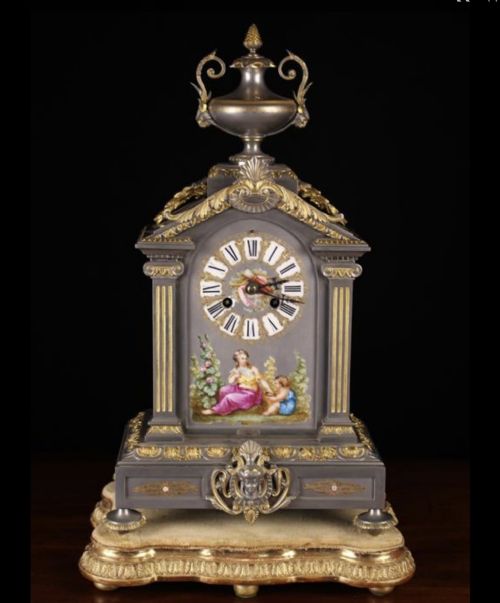
The versions you are most likely to meet on this page lean heavily into French styles, including Rococo Revival, Empire, and Louis XVI designs. Makers housed these movements in robust housings of marble, alabaster, glass, and cast metal, often featuring figural elements such as cherubs, elephants, and lions.
Many of these objects rely on eight-day movements that require regular winding using a key. Their physical presence ranges from compact glass-panelled desk pieces to grander columned or lyre-shaped mantel clocks resting on swept front bases.
Materials and construction methods
Foundries utilised heavy casting techniques for metals, shaping ormolu, gilt bronze, brass, and gilt metal into elaborate sculptural housings. These metallic elements were frequently fire-gilded or polished to create deep, lasting lustre that withstood decades of handling.
Stonework provided substantial structural bases and architectural frames, utilising white marble, coloured marble, and alabaster cut to precise geometric or swept curves. Glass panels were integrated to allow visibility of internal escapements and enamel dial faces, which often featured hand-painted numerals and delicate subsidiary details.
Listings feature items spanning the 1860s through to 1900, capturing the shift from Victorian opulence to late nineteenth-century French classicism.
Assessing quality in period horology
Quality reveals itself most clearly in the crispness of the cast metal ornamentation and the depth of the gilding. Superior examples display sharply chiselled acanthus leaves, finely modelled figural forms, and solid marble bases free from crude repairs or mismatched components.
The integrity of the internal movement and the legibility of the enamelled dial further separate standard production items from workshop masterpieces. Signed movements by notable makers generally indicate higher grade manufacturing standards and greater care in mechanical execution.
Japy Freres·Ravrio·Lemerle Charpentier·F Marti
The Ornamental Desk Clock Glossary
- Ormolu
- Gilded bronze produced through a mercury amalgamation process or advanced electroplating techniques. This finish imparts a rich, golden warmth to decorative metal mounts.
- Enamel
- A durable vitreous substance fused to a metal dial face through high-temperature firing. It provides a smooth, bright white background for painted clock numerals.
- Mystery clock
- A timepiece where the drive mechanism is cleverly concealed or disguised, making the movement appear almost magical to the observer.
- Pendule d'Officier
- A portable military-style mantel clock often fitted with a distinctive carrying handle and travel case, originating in France.
- Four glass clock
- A decorative clock enclosed in glass panels on all four sides, exposing the intricate brass gear train and pendulum to ambient light.
Ornamental Desk Clock: Frequently Asked Questions
How do I wind an eight day clock?
Use the appropriate winding key to turn the arbors located on the enamel dial face until gentle resistance is felt. Care must be taken not to overwind the mainspring.
Ensure the key matches the square drive securely to avoid slipping and damaging the surrounding dial work or movement plates.
Where should I place a heavy marble clock?
Position the clock on a sturdy, level surface capable of supporting considerable weight, such as a sturdy partner desk or a strong console table. A stable foundation prevents vibrations that can disrupt the delicate balance of the pendulum.
Keep the piece away from direct sunlight and moisture sources to protect the sensitive marble surfaces and gilt metal finishes from degradation.
How do I tell if a clock is French nineteenth century?
Examine the movement backplate for stamped foundry marks, serial numbers, and medals awarded at Parisian exhibitions. The presence of specific revival styles like Louis XVI or Empire combined with heavy ormolu mounts points directly to this era.
Turn the piece over to inspect the cast bronze components and marble construction methods typical of nineteenth-century European workshops.
What is a mystery mantel clock?
A mystery clock utilises ingenious mechanical design to obscure how the hands are driven. These pieces often feature suspended dials or transparent glass elements that baffle the viewer.
Such horological novelties were prized for showing off the technical ingenuity of the clockmaker alongside decorative beauty.