
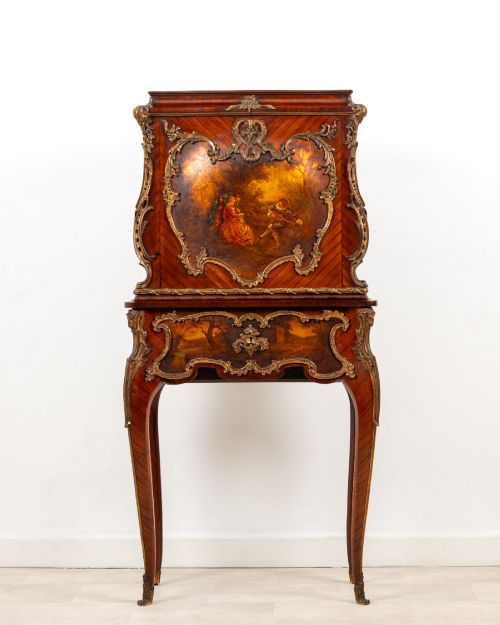

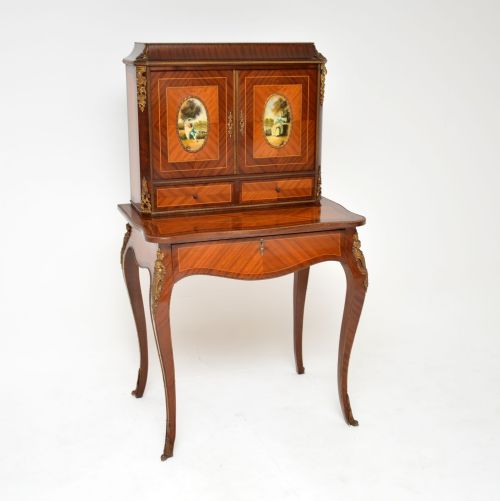
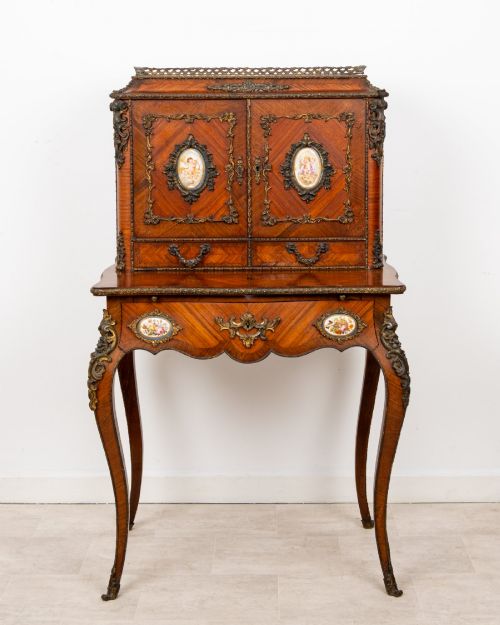
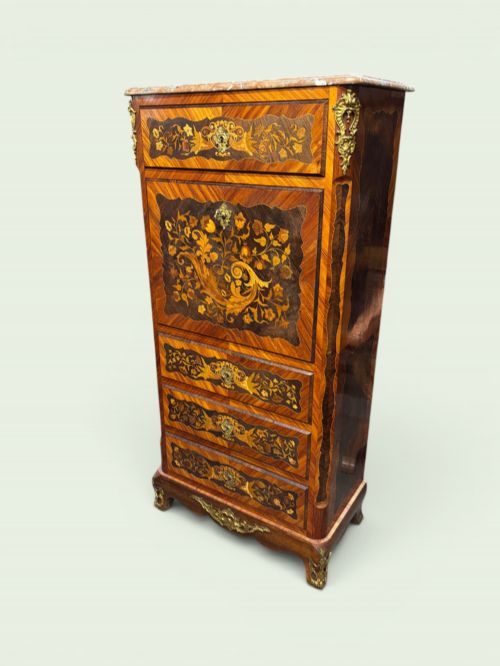




Ormolu Writing Cabinet
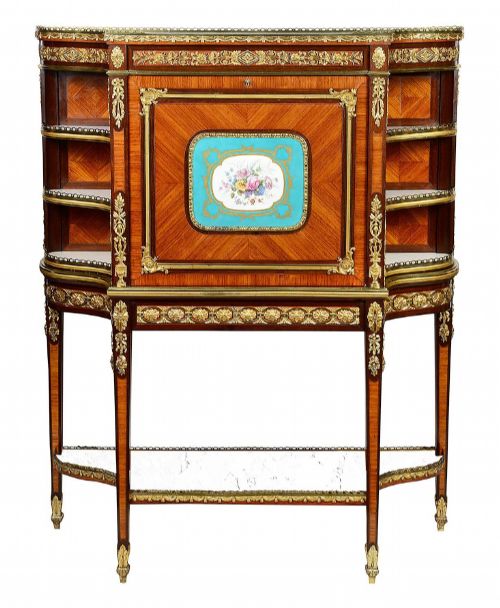
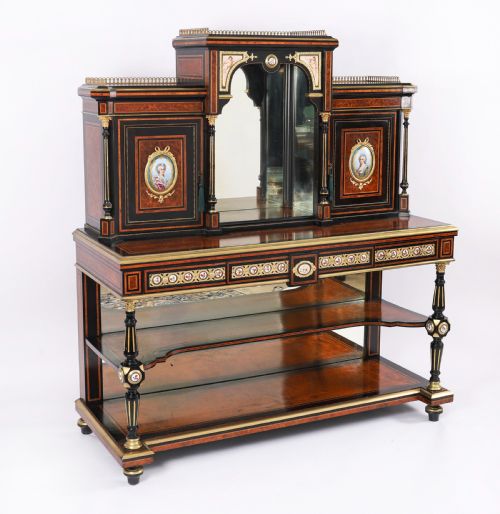
An ormolu writing cabinet brings together fine timber and chased gilt bronze mounts for a functional piece of furniture that serves as a desk.
Ormolu Writing Cabinet
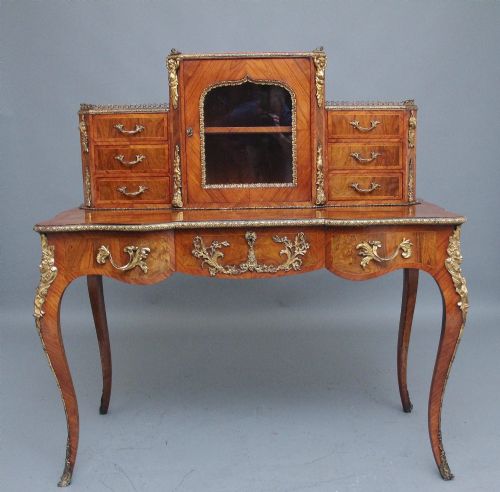
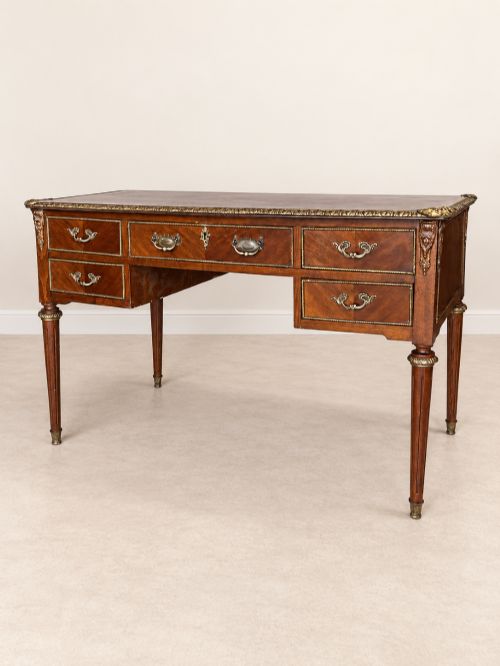
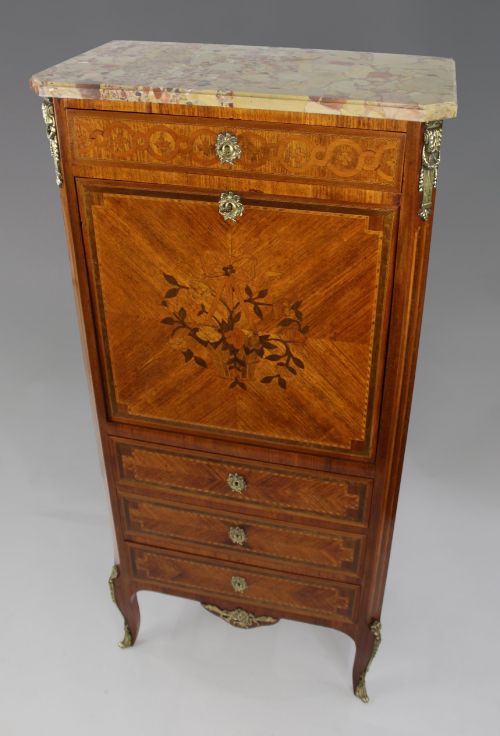
An ormolu writing cabinet typically takes the form of a secretaire abattant, bonheur du jour, or escritoire designed for correspondence and light administrative tasks. These pieces mostly originate from the nineteenth century, drawing heavily on French revival styles such as Louis XV and Louis XVI alongside Victorian cabinet-making traditions.
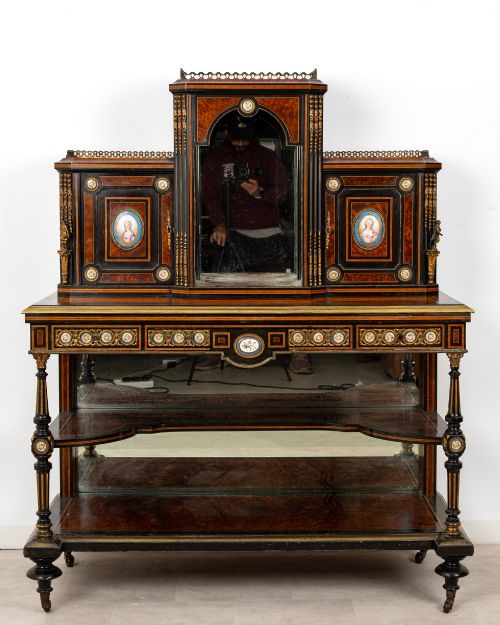
The most common variants encountered in these listings are walnut and kingwood pieces featuring drop-front writing surfaces, concealed drawers, and decorative porcelain plaques. They range from compact ladies desks to taller wall-anchored cabinets incorporating marble tops and glazed display sections.
How they were made
Cabinet-makers constructed carcass frames from timbers such as mahogany, walnut, and oak, then applied decorative veneering in kingwood, satinwood, and amboyna. Marquetry and parquetry patterns created geometric or floral motifs across the exterior surfaces.
Gilt bronze ormolu mounts were cast and chased before being fixed to corners, friezes, and feet to highlight the structural lines. Marble tops and inset porcelain plaques from factories like Sevres completed the assembly.
Listings feature eighteenth and nineteenth-century design revivals, including Louis XV, Louis XVI, and Empire styles executed in kingwood and walnut.
What varies in quality
The precision of the cabinet work distinguishes standard production from superior pieces, particularly in the tightness of veneer joints and the crispness of marquetry details. Finer examples maintain accurate alignment in internal drawer compartments and secret mechanisms.
The quality of the ormolu mounts creates a significant divergence in overall execution, where deeply chased and securely fitted bronze hardware elevates the piece. The selection of figured timber grains and intact Vernis Martin panels further separates ordinary examples from notable workshop outputs.
Maison Krieger·Blake London·Jean Werner·Linke
The Ormolu Writing Cabinet Glossary
- Ormolu
- Gilt bronze mounts used for decorative trimming on furniture. This technique involves applying finely ground gold to a bronze base.
- Secrétaire à abattant
- A tall writing cabinet featuring a drop-front panel that conceals a fitted interior of small drawers and compartments. This form became popular in 19th-century French interiors.
- Bonheur du jour
- A small, light ladies writing desk featuring a small cabinet or set of drawers on top of the writing surface. These pieces emerged during the Louis XV period.
- Marquetry
- The art of applying decorative pieces of veneer to a structure to form intricate designs or pictures. Makers utilised contrasting woods like kingwood and walnut for visual depth.
- Vernis Martin
- A type of simulated Japanese lacquer developed in France during the 18th century. It appears on decorative panels within fine cabinet work.
Ormolu Writing Cabinet: Frequently Asked Questions
What is an ormolu writing cabinet?
An ormolu writing cabinet is a designated piece of antique furniture that combines a timber writing desk or compartment with cast and gilded bronze mounts. These items primarily date from the nineteenth century and reflect classic French design revivals.
Such furniture was built to serve both a practical writing function and a decorative role within formal reception rooms. The integration of bronze details and exotic wood veneers defines their distinctive aesthetic.
How do I identify a bonheur du jour?
A bonheur du jour is identified by its compact proportions and the presence of a small superstructure or cabinet mounted directly on the back of the writing surface. They frequently include small drawers and pigeonholes above the main desk.
These pieces were traditionally intended for light correspondence and display. Their design prioritised elegance and mobility over heavy storage capacity.
What timber was used for these cabinets?
Cabinet-makers utilised a foundation of solid woods like oak or mahogany, surfacing them with decorative veneers. Kingwood, walnut, amboyna, and satinwood appeared frequently in crossbanding and marquetry.
These woods were chosen for their distinct grain patterns and colour variations. Parquetry designs often combined multiple timber species to create geometric patterns across the exterior.
Where were these writing cabinets made?
The majority of these writing cabinets originated in France, often in Paris workshops following established design traditions. English cabinet-makers also produced comparable pieces influenced by French aesthetics.
Production spanned the nineteenth century, encompassing various revivals of earlier court styles. Regional workshops across Europe adapted these forms for local domestic markets.