

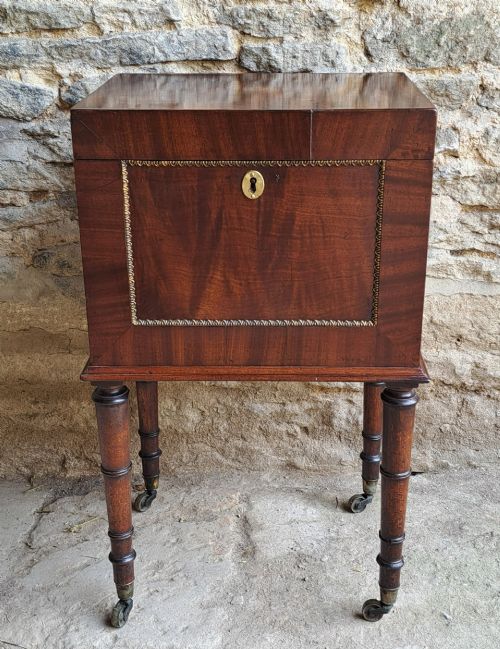
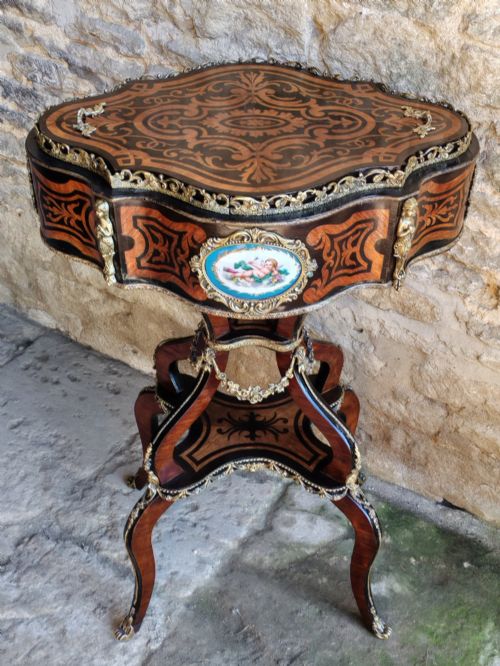


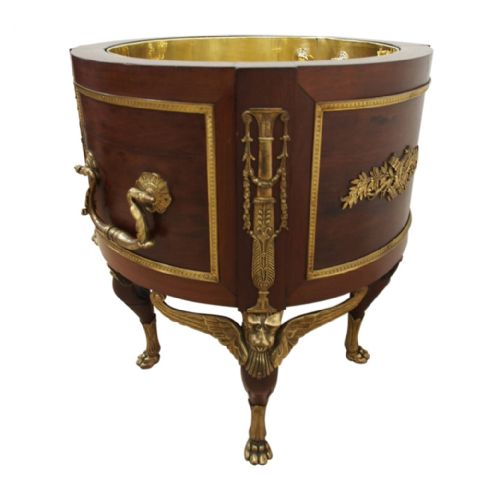
Ormolu Wine Cooler
An ormolu wine cooler brings weight and gleam to a room, pairing cold metal with rich timber and glass.
Ormolu Wine Cooler
An ormolu wine cooler stands as a substantial piece of dining and entertaining furniture, designed to hold bottles and ice while catching the candlelight. When you search for an ormolu wine cooler, you encounter forms that double as planters, jardiniere tables, and occasional stands.
The pieces on this page span the nineteenth century, stretching from the early Regency period through Victorian designs up to Edwardian revivals. Mahogany, rosewood, walnut, and ebonised timber provide the primary bodies, often fitted with liners and decorative gilt mounts.
French influences dominate the selection, with Louis XVI Revival, Empire, and Napoleon III styles appearing frequently. Buyers often meet hybrid forms listed interchangeably as cellarettes, jardinieres, and champagne coolers due to their shared depths and metal linings.
Materials and construction
Cabinetmakers constructed the main bodies of these pieces from dense hardwoods like mahogany and kingwood, frequently employing burr walnut marquetry to create intricate surface patterns. These timbers provided the structural strength needed to hold heavy metal liners and wet contents.
Gilt bronze and ormolu form the signature decorative vocabulary, cast and chased before being applied to corners, borders, and handles. Cut glass also appears in select champagne coolers, combining faceted transparency with cast bronze mounts.
Ormolu Wine Cooler Retail Price Guide 2026
Typical asking prices for ormolu wine cooler among the pieces listed under this phrase on Sellingantiques today, from the lower quarter to the upper quarter. They describe what is for sale here now, not the wider market.
Victorian dining rooms occasionally required furniture that could hide the wine bottles one moment and display ferns the next.
The markers of distinction
Quality in these pieces rests upon the crispness of the bronze casting and the depth of the hand-chasing on the mountings. Finer examples show sharp relief and careful finishing rather than soft edges or uniform factory smoothing.
The choice of timber and the precision of the marquetry inlay further separate standard production from superior workshop output. Grain matching across panels and tightly fitted joints indicate greater skill in the cabinetmaker's workshop.
The Ormolu Wine Cooler Glossary
- Ormolu
- Gilded bronze, produced by applying a mercury-gilding amalgam to cast bronze. The technique creates a durable golden surface that resists tarnishing over decades of use.
- Cellaret
- A lockable container used originally for storing bottles of wine beneath the dining sideboard or beside the table. Nineteenth-century examples often adopt this term even when adapted for display.
- Jardiniere
- A decorative stand or container intended for holding potted plants and floral arrangements. Many nineteenth-century vessels served interchangeably for plants and bottle cooling.
- Marquetry
- The art of applying small pieces of veneer to a structure to form decorative patterns and pictures. Walnut and exotic woods frequently feature in this detailed craft.
Ormolu Wine Cooler: Frequently Asked Questions
What is an ormolu wine cooler?
An ormolu wine cooler is a nineteenth-century serving vessel or piece of furniture mounted with gilded bronze. These items were built to hold ice and bottles during formal meals.
Over time, many of these vessels transitioned into multi-purpose furnishings used as planters or occasional tables in reception rooms.
How were they used historically?
Servants filled the central compartments with ice and wine bottles to keep drinks chilled near the dining table. The waterproof liners protected the timber structures from moisture.
They stood within easy reach of the host, combining utility with decorative display during lengthy nineteenth-century dinners.
How do I date a piece?
Dating relies on identifying the underlying timber, the revival style, and the casting techniques of the bronze mounts. Regency and early nineteenth-century pieces tend to feature cleaner architectural lines, while Victorian and Edwardian items often incorporate heavier revival ornamentation.
Comparing the secondary woods inside the structure helps confirm the period of manufacture.
Can I use it as a planter?
Many of these pieces were built to function as jardinieres or planters alongside wine cooling. The metal liners inside typically accommodate potted plants safely.
Care must be taken to protect antique wood and gilding from water splashes and damp soil during regular watering.