
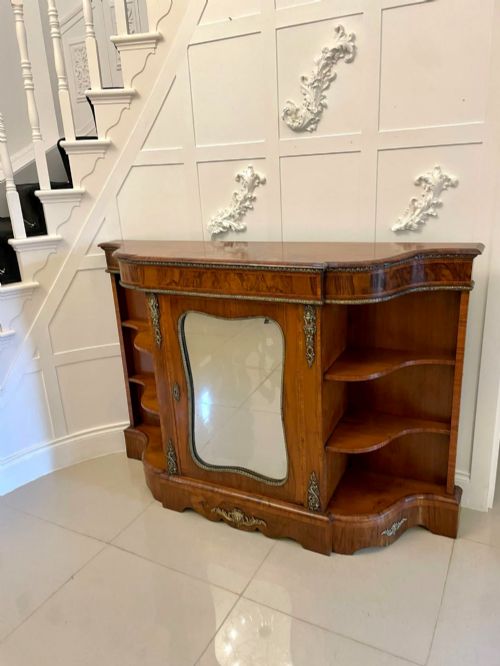
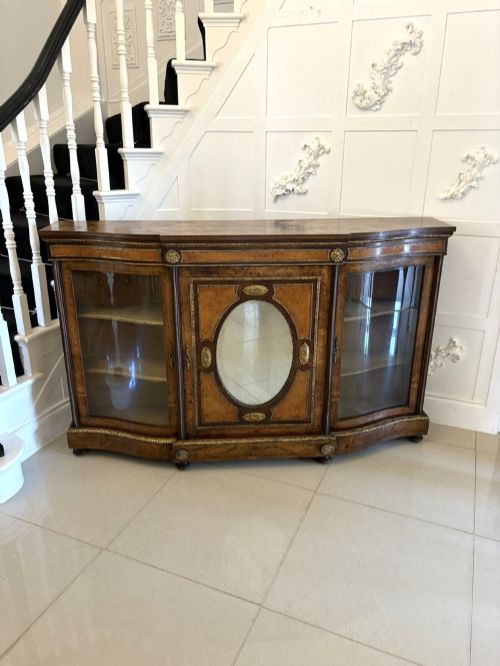
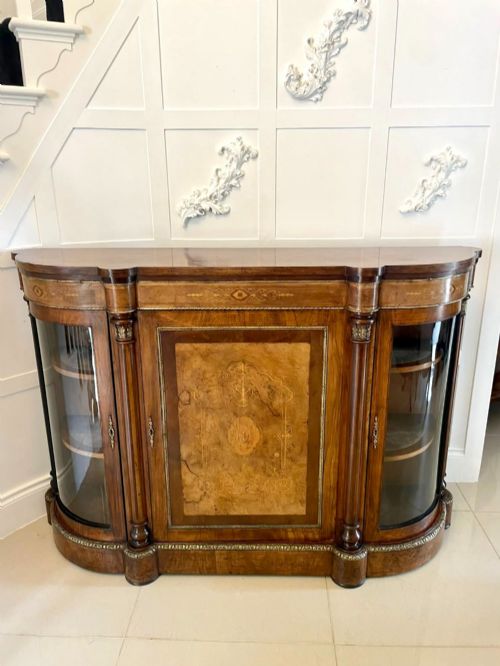
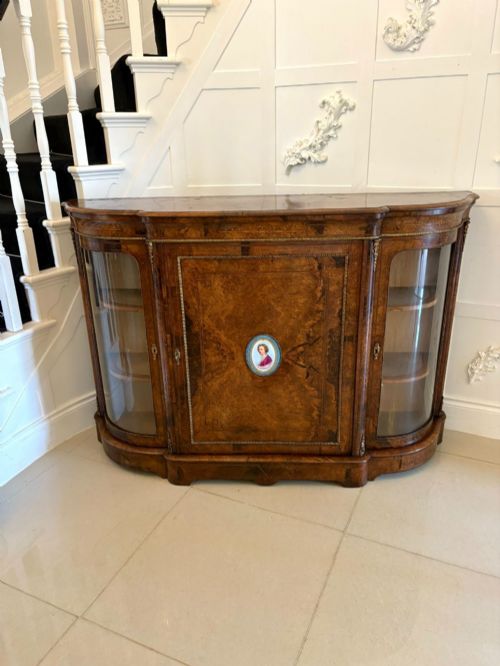


Ormolu Walnut Sideboard
When you search for an ormolu walnut sideboard, you are looking at substantial Victorian and continental display pieces designed to anchor a principal room.
Ormolu Walnut Sideboard
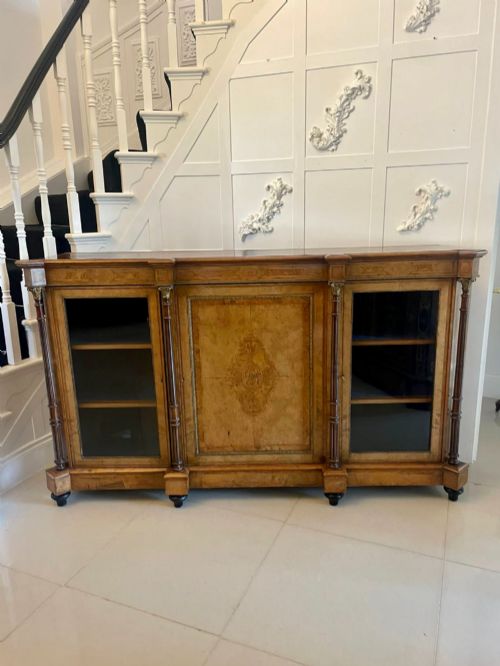
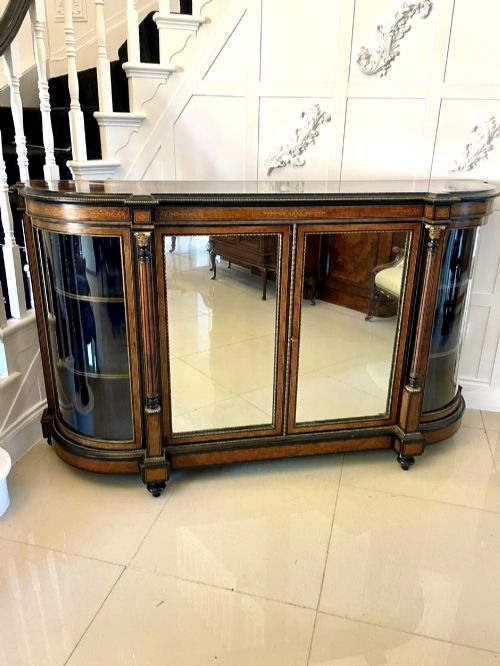
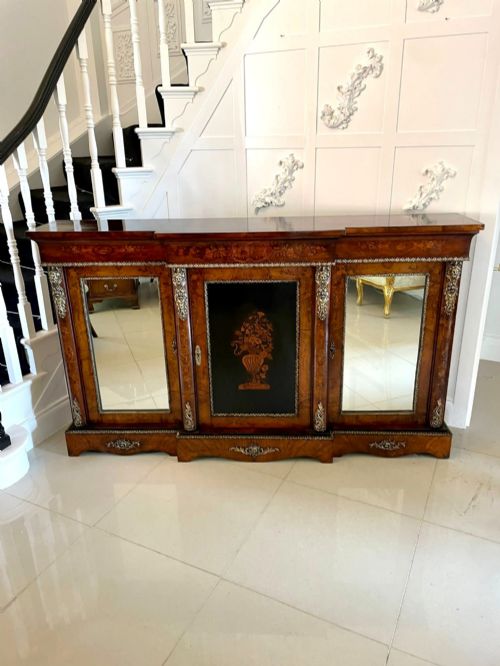
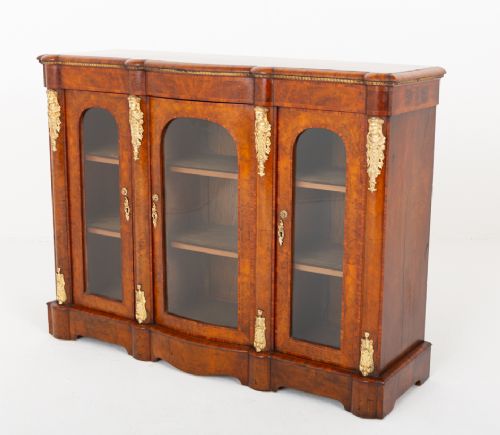
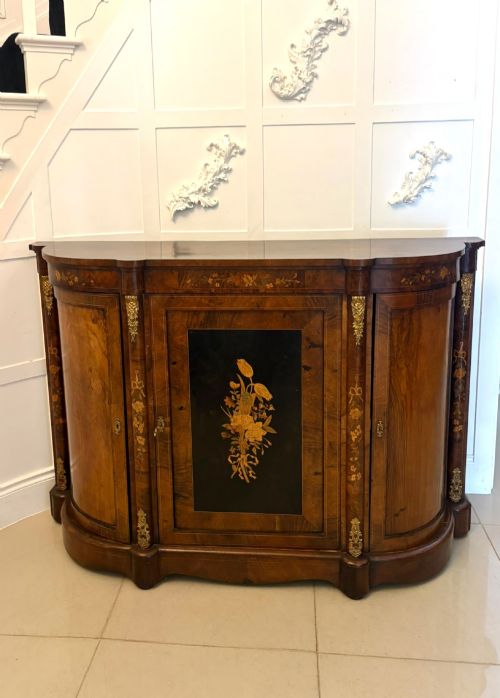
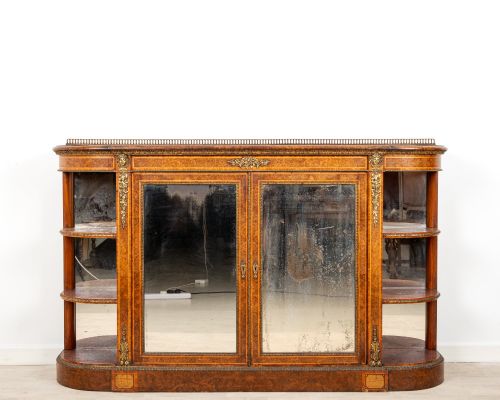
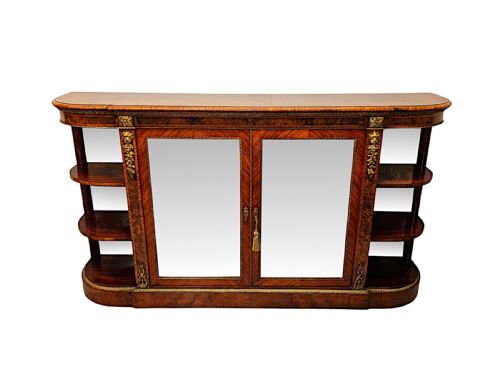
An ormolu walnut sideboard brings together heavily figured timber and gilt bronze mounts, appearing predominantly as Victorian credenzas, side cabinets, and French-inspired commodes dating from the mid-nineteenth century onwards. These forms serve primarily as display and storage furniture, often featuring glazed central doors flanked by curved side cabinets.
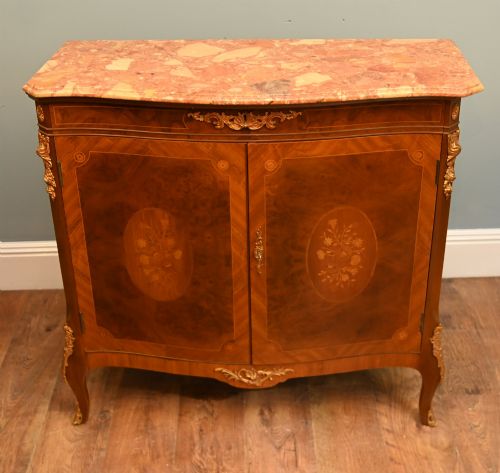
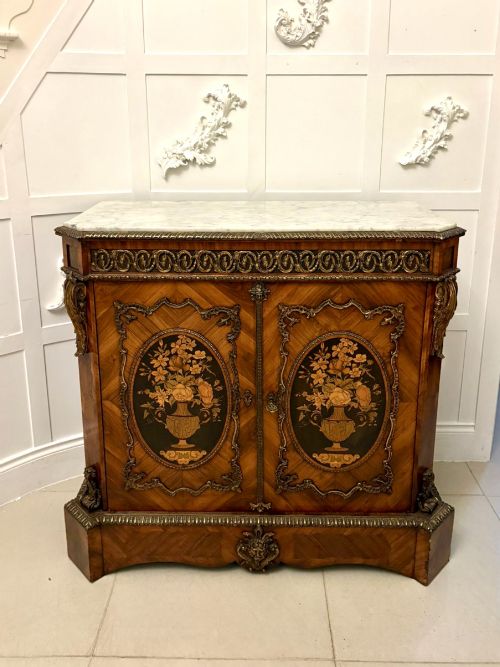
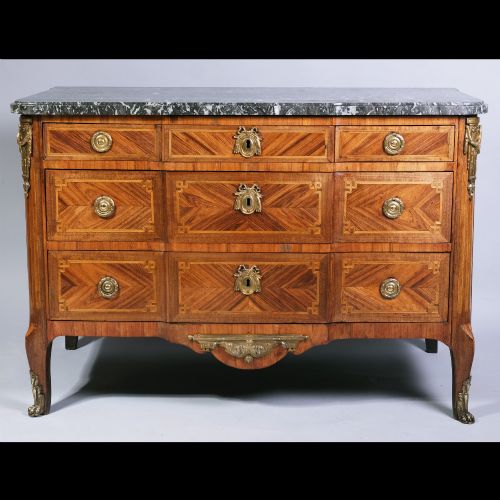
The version most commonly met on this page is the Victorian burr walnut credenza, frequently ornamented with floral marquetry and boxwood inlay alongside cast ormolu mounts. Alongside these English pieces sit continental examples, including marble-topped Louis XV and Louis XVI style buffets and commodes.
How they were made
Cabinet makers utilised dense walnut and highly figured burr walnut veneers laid over solid secondary timbers, often cutting the grain to create symmetrical patterns across large cabinet doors and serpentine fronts. Marquetry panels incorporate lighter woods such as boxwood, alongside occasional rosewood and ebony, to form intricate floral and geometric motifs.
Gilt bronze ormolu mounts provide structural accent and architectural framing around panels, mirrored doors, and curved corners. Marble tops, found on many French and continental pieces, sit directly upon the timber carcase, while porcelain plaques and brass stringing complete the surface decoration.
Materials documented across these cabinets include burr walnut, ormolu, marble, porcelain, boxwood inlay, and mirrored glass.
What varies in quality
The distinction between standard production and exhibition quality pieces lies in the crispness of the bronze casting and the depth of the walnut veneer selection. Superior examples display finely chased ormolu mounts with sharp detail and a rich, unblemished burr grain that has been carefully matched across the facade.
Construction methods and secondary detailing further separate tiers of manufacture, visible in the precision of the boxwood inlay, the integrity of the marquetry, and whether the maker's signature or stamp is present on the chassis.
Gillows·Maison Gagneau
The Ormolu Walnut Sideboard Glossary
- Ormolu
- Gilded bronze mounts applied to furniture as decorative enrichment. The technique involves applying a gold amalgam to cast bronze before heating.
- Burr Walnut
- Timber taken from a walnut tree growth, yielding complex, swirling grain patterns highly valued for veneering. It is typically sliced into thin sheets to cover cabinet doors.
- Credenza
- A low dining or display cabinet, frequently featuring a central cupboard with curved glass side compartments. In nineteenth-century examples, it serves as both storage and a surface for ornaments.
- Marquetry
- Inlaid patterns of wood veneer forming pictorial or floral designs on furniture surfaces. Craftsmen assemble different timber species into paper-thin sheets before gluing them down.
- Parquetry
- Geometric wood inlay forming repeating patterns such as cubes or stripes. It differs from marquetry through its strict geometric arrangement rather than pictorial design.
Ormolu Walnut Sideboard: Frequently Asked Questions
What is the difference between a credenza and a sideboard?
A credenza is typically lower and more decorative, often featuring glass-fronted side cabinets designed for display rather than heavy dining storage. Sideboards lean more towards practical dining room use with larger cupboards and drawers.
On this page, the terms frequently overlap, with many pieces combining the enclosed central shelving of a credenza with the generous proportions of a sideboard.
Where were these cabinets placed in a Victorian home?
These pieces usually occupied prominent positions against the walls of formal drawing rooms or reception spaces, functioning as surfaces for displaying porcelain, clocks, and ornaments.
Their glazed doors and mirrored backs were specifically intended to reflect natural light and showcase decorative collections to visiting guests.
How do I care for burr walnut and ormolu?
Burr walnut requires stable humidity and minimal direct sunlight to prevent the underlying veneer from drying or cracking over time. Gentle dusting with a dry, soft cloth preserves the polished surface without stripping the aged patina.
Ormolu mounts should be kept free of moisture and harsh cleaning agents, as abrasive polishes can permanently damage the historic mercury or gold gilding.
Are marble tops original to these cabinets?
Marble tops on French and continental commodes and sideboards are generally original, serving as heavy, durable surfaces designed to complement the gilt mounts. English Victorian credenzas, by contrast, typically feature matching walnut or marquetry tops.
When examining a marble-topped piece, look for consistent edge profiling and proper seating within the timber rebate to confirm its authenticity.