

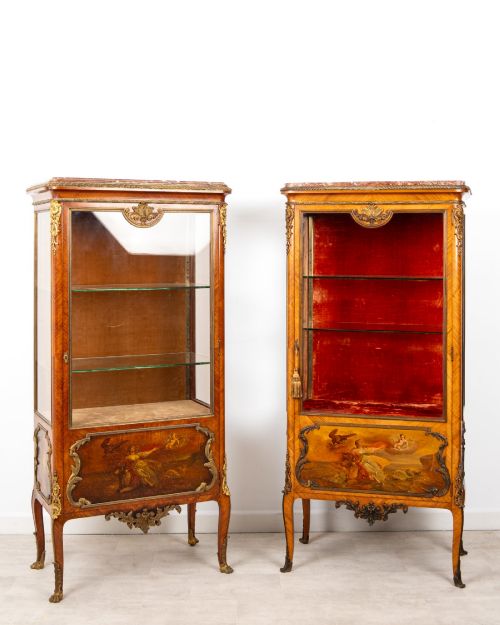


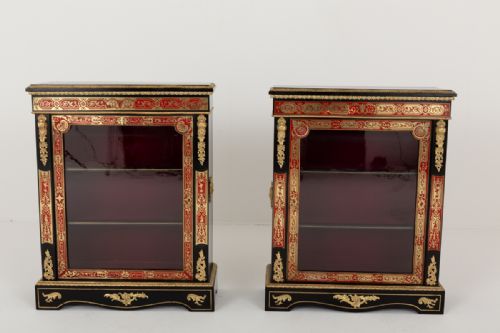

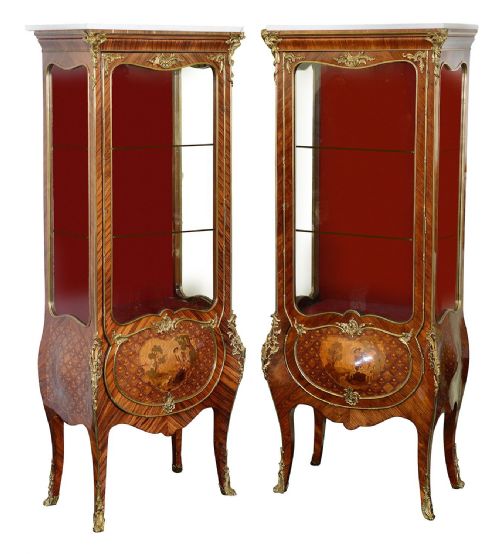


Ormolu Vitrine Pair
An ormolu vitrine pair brings gilt-bronze mounts and glazed display space together in matched proportion, offering a balanced focal point for any room.
Ormolu Vitrine Pair
An ormolu vitrine pair consists of matched glazed display cabinets ornamented with gilt-bronze mounts, designed to showcase collections of small objects. These pieces emerge predominantly from the nineteenth century, reflecting Victorian and French revival tastes such as Louis XV and Louis XVI styles.
The most frequently met version is the nineteenth-century French or English pier cabinet or display cabinet, featuring extensive ormolu mounts and glass panels to three sides. These pairs provide symmetrical storage and display for domestic interiors.
What varies in quality
The crispness and depth of the ormolu casting separate standard mounts from finer work, where hand-chasing adds sharp detail and definition to the bronze surfaces. The weight and richness of the fire-gilding also indicate the standard of production.
Cabinetwork quality shows in the selection of timber veneers, the precision of the Boulle inlay or marquetry, and the stability of the carcass joints over time. Matched pairs require consistent timber grain and identical mount placement to maintain visual harmony.
The integration of painted panels, such as Vernis Martin work, and the quality of the glass panels contribute further distinctions in the grade of the finished cabinets.
Ormolu Vitrine Pair Retail Price Guide 2026
Typical asking prices for ormolu vitrine pair among the pieces listed under this phrase on Sellingantiques today, from the lower quarter to the upper quarter. They describe what is for sale here now, not the wider market.
Tortoiseshell and brass Boulle inlay catches the candlelight, ensuring these cabinets remain lively company long after sunset.
Paul Somani·Gouffel
The Ormolu Vitrine Pair Glossary
- Ormolu
- Gilt-bronze mounts applied as decorative ornaments to furniture. This technique involves coating base metal with a gold amalgam and heating it to bond the finish.
- Vitrine
- A glazed display cabinet designed for showing porcelain, glass, or small objets d'art. The glass panels on multiple sides allow light to enter and illuminate the contents.
- Boulle
- Marquetry work utilising brass and tortoiseshell, developed in France and popular in nineteenth-century revival furniture. The contrasting materials create intricate patterns across the cabinet door fronts.
- Pier cabinet
- A narrow cabinet designed to stand against the wall space between windows. These pieces often feature glass doors and rich timber veneers.
- Vernis Martin
- A simulated Japanese lacquer technique developed in France, used to create painted decorative panels on fine furniture. It employs multiple layers of varnish to achieve a translucent finish.
Ormolu Vitrine Pair: Frequently Asked Questions
What is an ormolu vitrine pair used for?
These matched cabinets serve to display collections of porcelain, silver, and small decorative objects behind glass doors.
They also function as architectural focal points within a room, utilising reflective glass and gilt bronze to brighten dark corners.
How do I care for ormolu mounts?
Dust the gilt-bronze mounts gently with a soft, dry brush to prevent the accumulation of dirt in the chased recesses.
Avoid chemical polishes and abrasive cloths, which can strip the fire-gilded surface from the bronze.
How do I distinguish French and English cabinets?
French pieces from the nineteenth century frequently employ kingwood, mahogany, and elaborate Boulle inlay alongside distinct Louis XV or Louis XVI revival ormolu mounts.
English examples more commonly feature walnut, satinwood, and marquetry in pier cabinet forms suited to Victorian domestic interiors.
How should I place a pair in a room?
Matched pairs look best arranged symmetrically on either side of a fireplace, doorway, or large window to preserve balanced proportions.
Ensure the placement protects the timber veneers and marble tops from direct, prolonged sunlight.