
Ormolu Twin Sconces
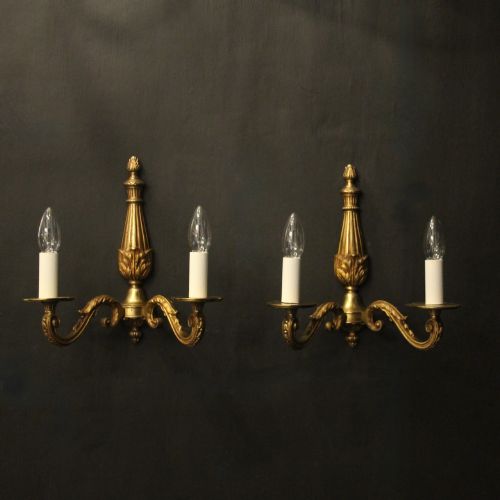
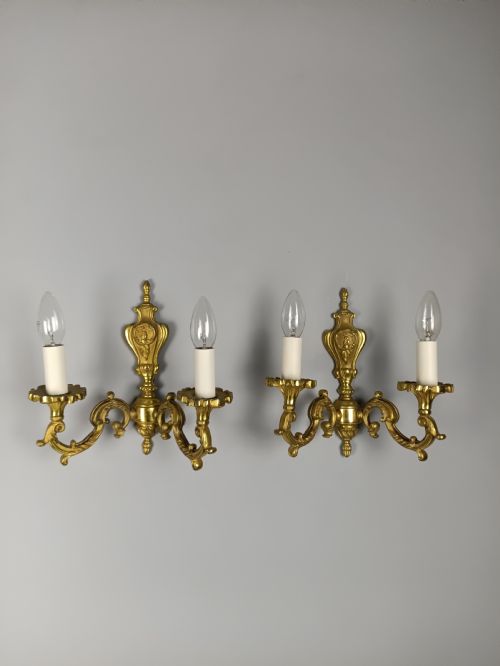
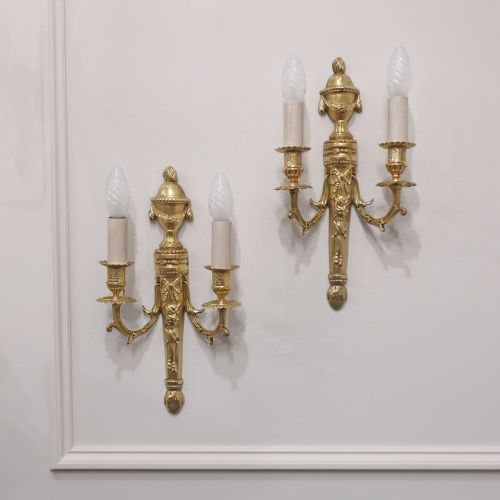
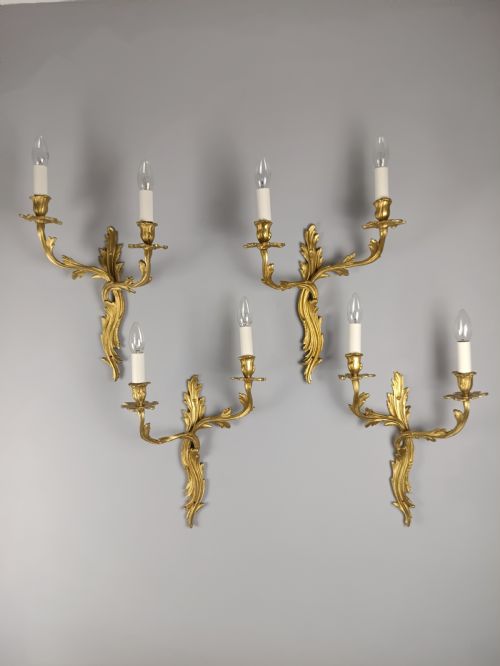
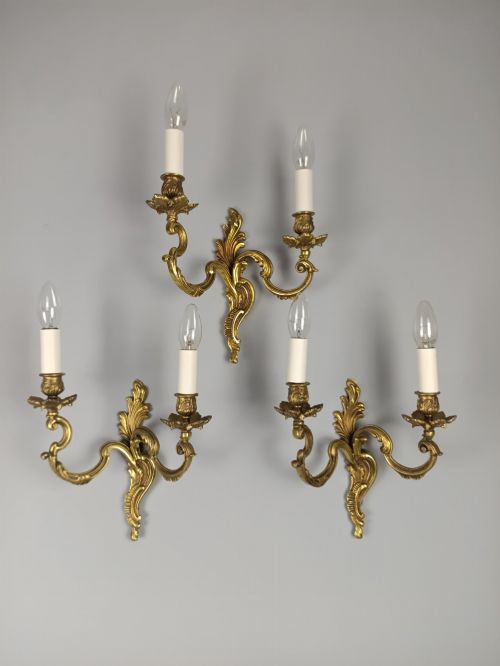
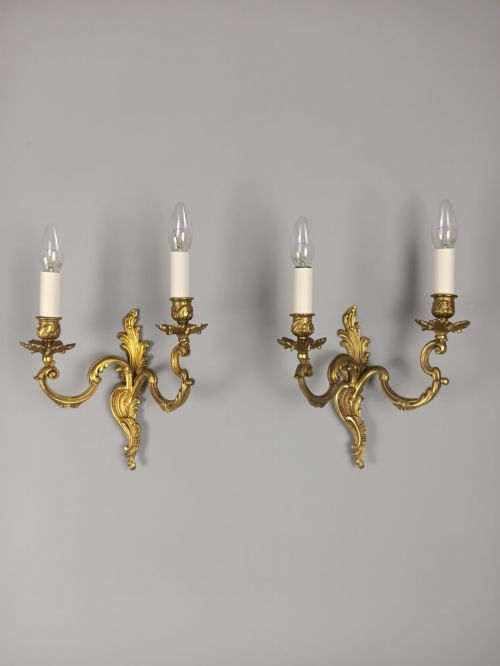
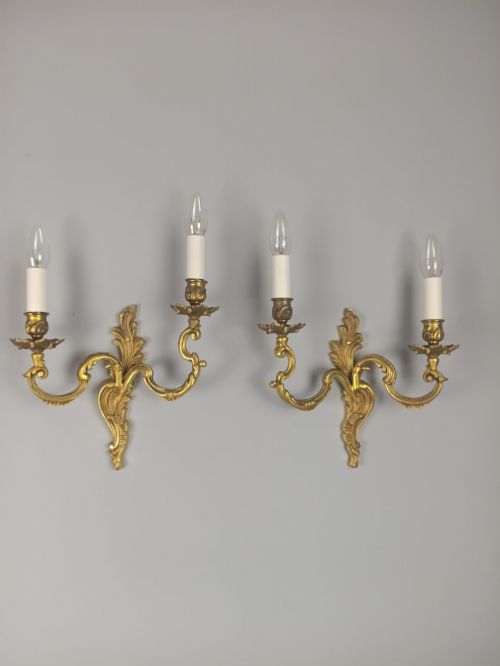
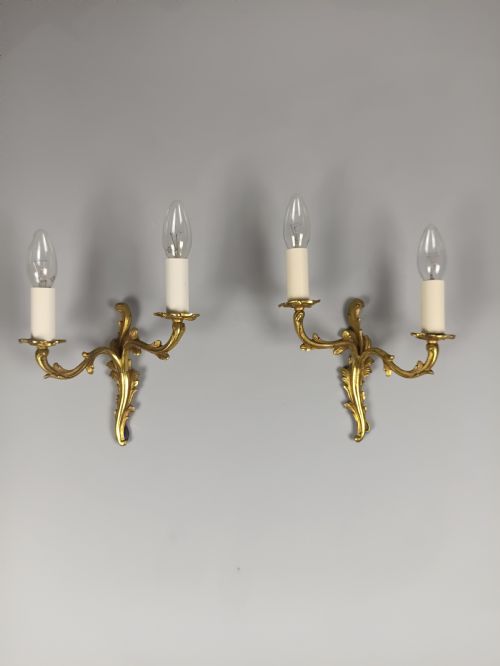
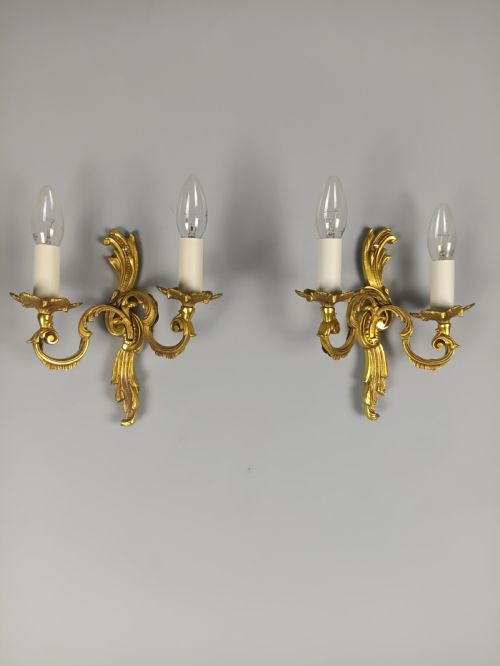
These ormolu twin sconces are French and English wall lights cast in bronze or brass with gilt finishes, designed to hold two candles or bulbs.
Ormolu Twin Sconces
When you search for ormolu twin sconces, you encounter decorative wall lights designed with two arms to illuminate a room by candle or electric light. The inventory here consists largely of French pairs and sets originating from the nineteenth and early twentieth centuries, including the nineteen-twenties and nineteen-thirties.
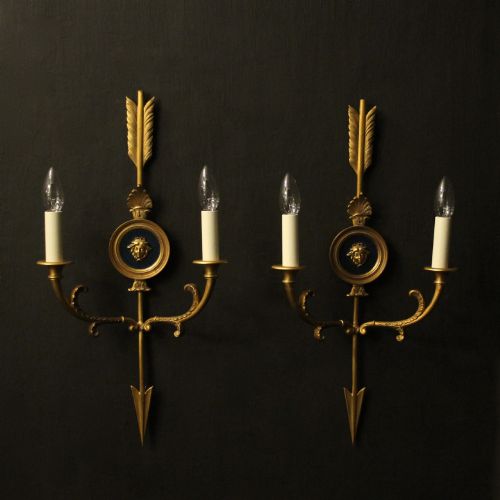
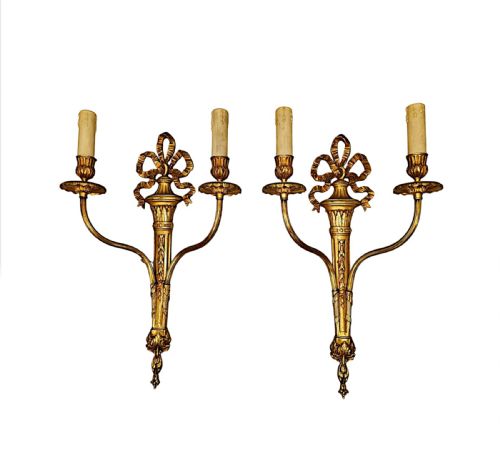
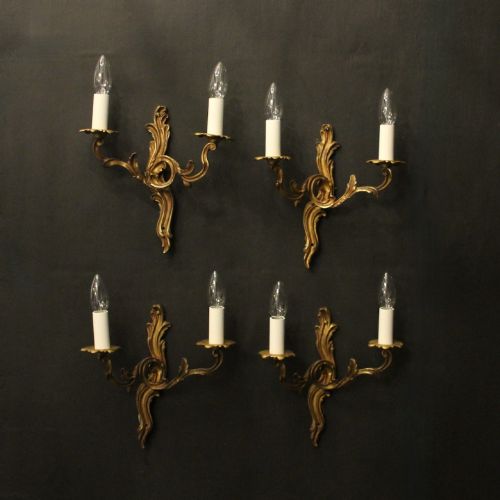
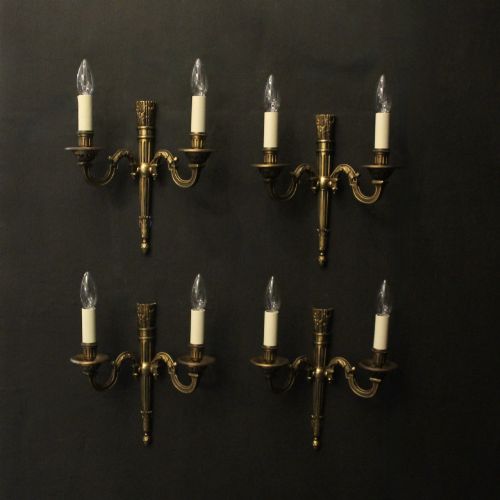
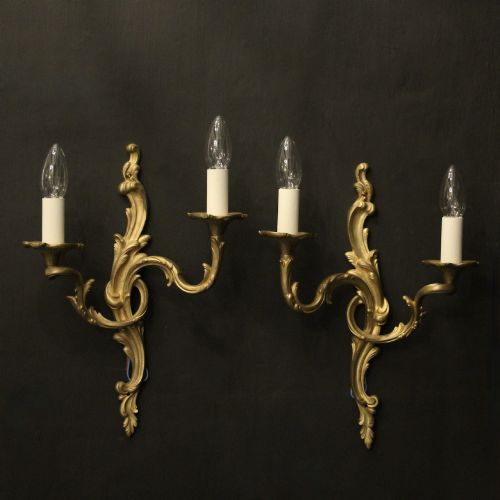
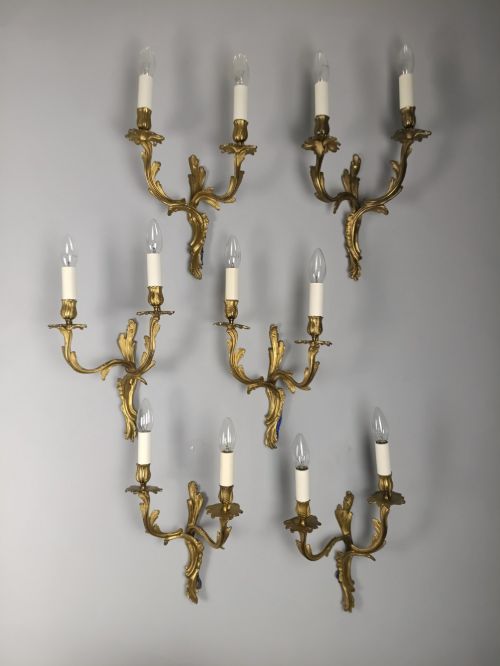
The forms span several distinct styles such as French Rococo, Neoclassical, Empire, and Louis XIV Revival, alongside Adam and Italian variants. Most examples function as wall lights or wall sconces, frequently appearing in matched pairs or larger sets of four and six branches.
How they were made
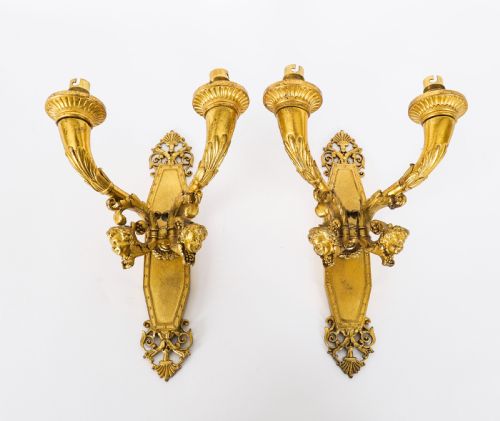
The construction relies heavily on cast metals such as bronze, brass, and gilt metal, finished with ormolu or gilding to create a brilliant metallic surface. Artisans shaped these materials into twin arms and backplates using traditional casting techniques, often incorporating detailed figures like cherubs or ornate foliage.
The surface treatment combines mercury gilding or modern electroplating on a base of bronze or brass, resulting in the characteristic golden sheen associated with ormolu. Individual components are fastened together securely, with many surviving examples subsequently rewired for modern electrical use.
Listings include items from the Victorian era, the nineteenth century, and early decades of the twentieth century up to nineteen-thirty.
What varies in quality
The distinction between tiers of quality rests in the crispness of the cast ornamentation and the depth of the metal finishing. Finer pieces display sharply defined scrollwork, acanthus leaves, or figurative elements like cherubs, whereas simpler examples rely on smoother, more generalised surfaces.
The weight of the bronze or brass and the uniformity of the gilt layer further differentiate standard production from superior work. Monumental pairs and marked items by makers such as Casier often demonstrate a higher degree of sculptural ambition in their branch configuration.
Casier
The Ormolu Twin Sconces Glossary
- Ormolu
- A golden-coloured alloy of copper and zinc, or mercury gilding applied to bronze, used extensively for decorative hardware and lighting. This finish gives antique wall lights their characteristic lustre.
- Sconce
- A wall-mounted lighting fixture designed to project illumination into a room using candles or electric bulbs. These objects typically feature one or more arms extending from a decorative backplate.
- Rococo
- An ornate decorative style characterised by asymmetry, scrollwork, and naturalistic plant motifs. It appears frequently on nineteenth-century French wall lights.
- Empire
- A neoclassical design style inspired by the culture of ancient Rome and Greece, prevalent during the nineteenth century. Pieces in this style often incorporate formal symmetry and classical military motifs.
Ormolu Twin Sconces: Frequently Asked Questions
How do I wire antique sconces?
Most antique wall lights are adapted for modern electrical wiring by running a discreet flex through the backplate and arms. Professional installation ensures that historical brass and bronze components remain secure against the wall.
Rewired pairs allow you to integrate nineteenth-century lighting safely into contemporary domestic interiors without altering their exterior appearance.
Are these sconces French or English?
The vast majority of the inventory originates from France, spanning regional workshops and larger Parisian manufacturing traditions. A smaller selection comprises English and Italian production.
Stylistic cues such as Rococo curves or Neoclassical symmetry usually point toward French craftsmanship from the nineteenth or early twentieth century.
What periods do these lights cover?
The available lighting spans from the nineteenth century through the nineteen-thirties, encompassing Victorian, Edwardian, and later revival periods. Dates range from early nineteenth-century creations up to items produced around nineteen-thirty.
Earlier pieces often display hand-chased details in gilt bronze, while later twentieth-century sets reflect enduring historicist tastes.
Can I use candles in them?
Certain wall lights retain their original candle-holders, while others have been converted to electricity over time. Inspecting the drip pans and nozzles reveals whether they accommodate standard taper candles or electrical fittings.
Using them with candles creates an authentic period atmosphere, provided the sconces are securely mounted to solid wall surfaces.