
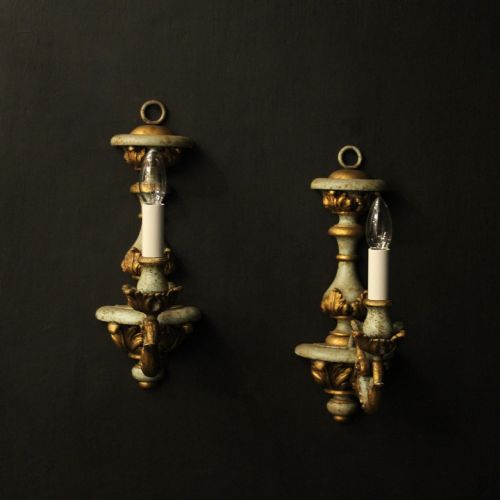
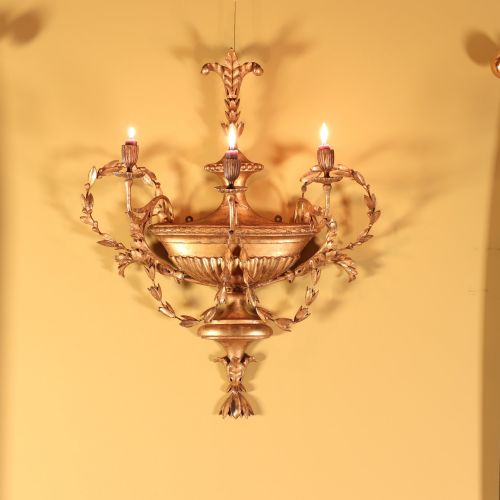
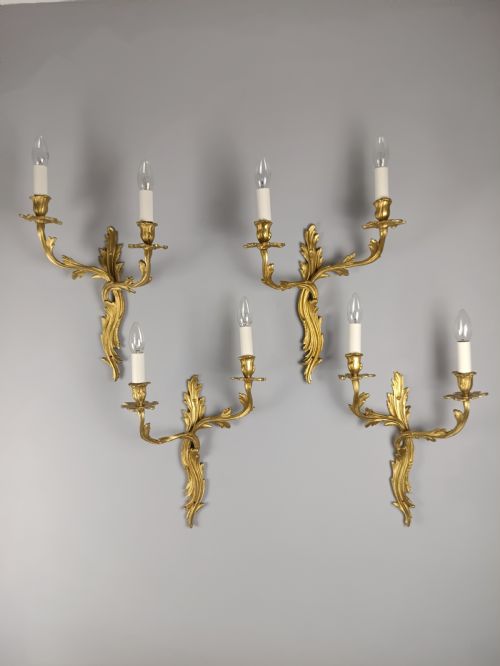
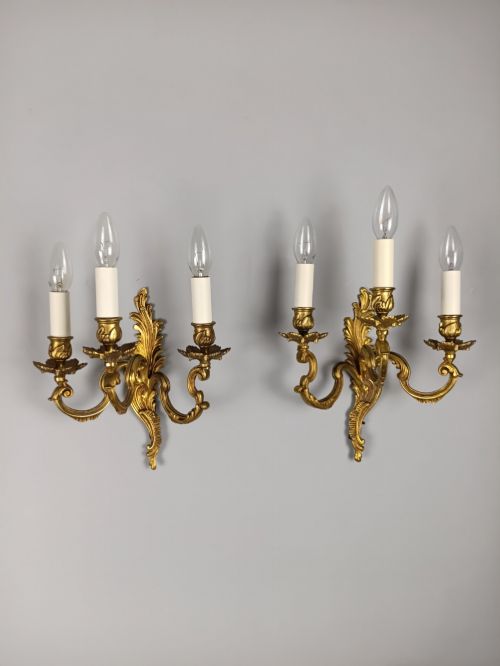



Classical Wall Appliques
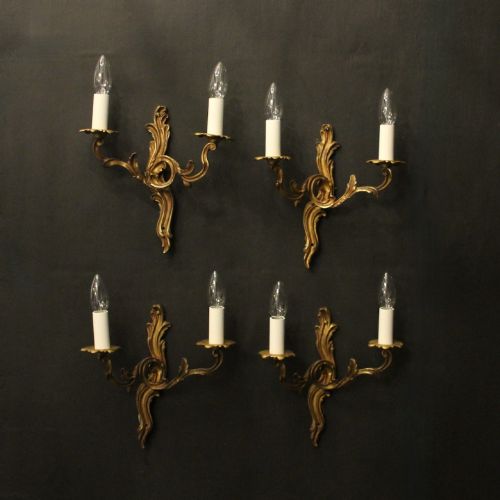
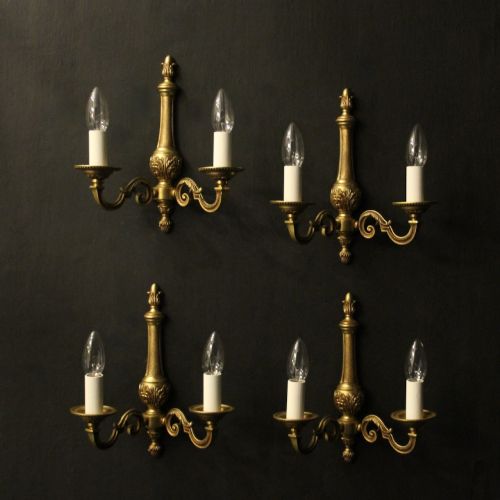
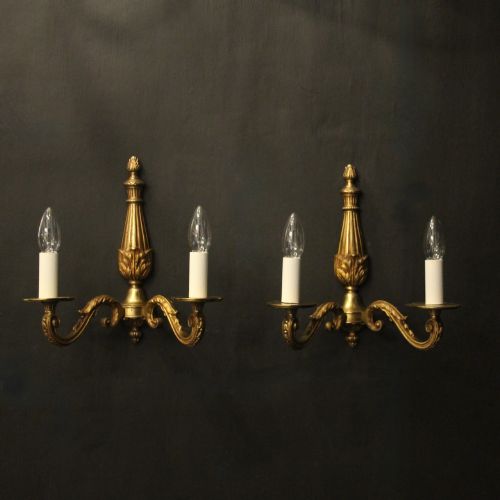
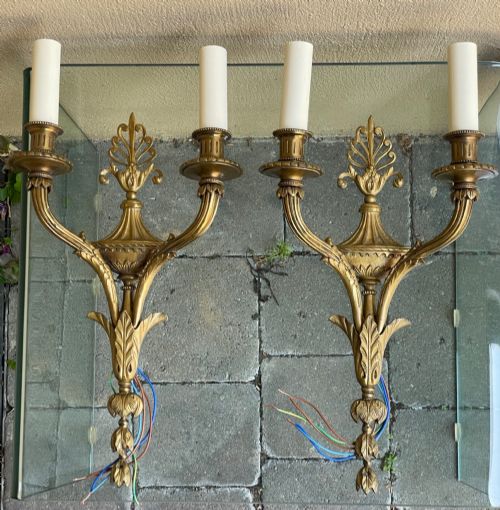
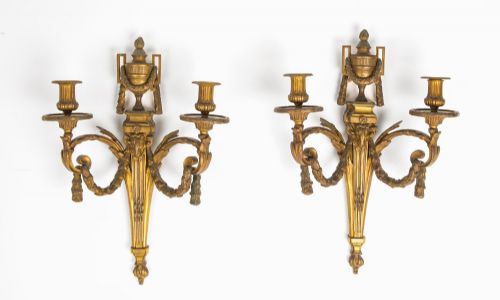
These classical wall appliques bring architectural dignity and warm illumination to an interior, formed of gilt bronze, brass and ormolu.
Classical Wall Appliques
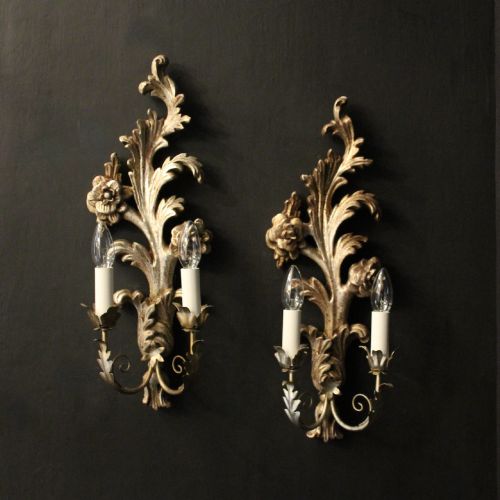
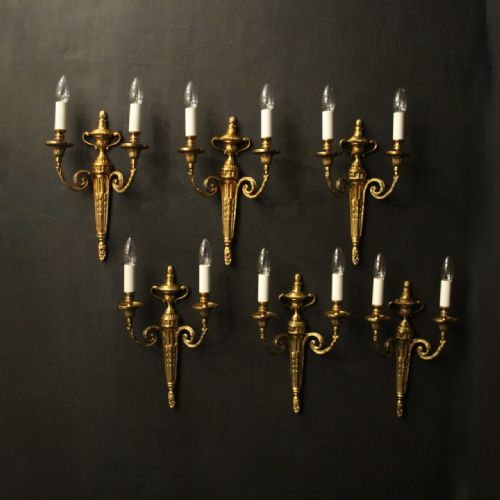
When you search for classical wall appliques, you encounter wall lights, wall sconces and architectural salvage originating chiefly from French and Italian workshops. The pieces span periods from the nineteenth century through the 1930s, encompassing styles such as French Neoclassical, Louis XVI Revival, Rococo and Florentine. You meet matched pairs and larger sets, often configured with twin, triple or multiple arms for illumination.
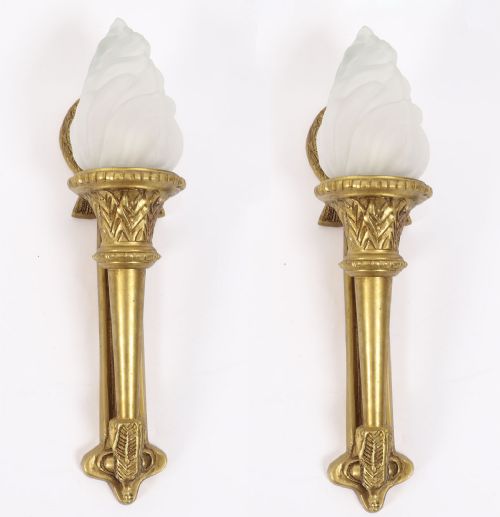
The dominant forms follow classical design vocabulary, including flaming torches, ram's head masks and cherub motifs. French gilt bronze and gilded brass examples predominate on this page, alongside carved silver giltwood and gesso pieces. These fixtures mount directly to walls, projecting candle branches or electric fittings outward to light corridors, drawing rooms and formal spaces.
How they were made
Cast metals form the structural core of these appliques, utilising bronze, brass and ormolu with hand-chased surface detailing. Artisans applied gilding over bronze and brass to achieve a rich golden lustre, while alternative examples feature silver plating or polychrome finishes on carved giltwood and gesso.
Component parts such as arms, backplates and drip pans were cast separately and joined by threaded screws or pins. Glass elements, including flaming torch shades, were integrated into ormolu mounts to complete the fixtures.
Materials documented across the inventory include gilt bronze, brass, ormolu, giltwood and silver-plated metal.
What varies in quality
Heft and solidity in the bronze or brass framework distinguish substantial commissions from lighter commercial output. The preservation of the original mercury gilding or gold leaf surface further separates well-maintained examples from worn or over-cleaned alternatives.
F. & C. Osler
The Classical Wall Appliques Glossary
- Ormolu
- Gilded bronze produced by applying a mercury and gold amalgam to a bronze object before heating to drive off the mercury. This technique creates a durable, deep golden surface finish characteristic of fine French metalwork.
- Giltwood
- Timber, commonly gesso-coated wood, treated with gold leaf or metallic powder to simulate solid gold. It provides a lighter alternative to cast metal while retaining decorative brilliance.
- Wall sconce
- A bracket fixture fixed to a wall to hold candles or electric lamps. These forms project outward to distribute light across a room.
- Neoclassical
- A style drawing inspiration from the classical art and architecture of ancient Greece and Rome. It relies on symmetry, straight lines and classical motifs such as urns, swags and torches.
- Chasing
- The manual refinement of a metal casting using small punches and hammers to sharpen details and texture the surface. Fine chasing distinguishes high-grade ormolu from plain cast metal.
Classical Wall Appliques: Frequently Asked Questions
How do I install antique wall lights?
Consult a qualified electrician to integrate vintage wiring with modern domestic circuits. Many older fixtures require careful mounting to wall studs to support their metal weight.
Ensure that backplates are secured safely before attaching arms or glass elements. Professional installation protects fragile gilt finishes and antique metalwork from accidental damage.
Can these sconces use modern bulbs?
Most antique fixtures accept standard candle-style SES or SES-compatible bulbs once rewired for contemporary electrical standards. Edison-style LED lamps replicate the warm glow of historical candle flames.
Check the internal lamp holders during installation to confirm correct wattage limits for older sockets. Preserving original fittings requires careful handling by a specialist restorer.
How should I clean gilt bronze appliques?
Dust surfaces gently with a soft, dry brush to prevent the accumulation of grime within chased crevices. Avoid commercial metal polishes, as abrasive compounds strip away thin layers of historical gilding.
Professional conservation cleaning is recommended for pieces with heavy tarnish or encrusted residue. Maintaining the dry surface preserves the character of the original ormolu.
How do I date a classical wall light?
Examine the casting method, screw threads and fastening techniques used on the reverse of the backplate. Nineteenth-century examples often feature hand-cut threads and heavy bronze composition, whereas later twentieth-century pieces utilise standardised machine-tooled components.
Stylistic cues such as Louis XVI Revival motifs or Adam revival elements provide further chronological markers. Comparing backplate construction helps differentiate nineteenth-century productions from 1930s interpretations.